"Please try to remember that what they believe, as well as what they do and cause you to endure does not testify to your inferiority but to their inhumanity "
-James Baldwin
The Fire Next Time
 |
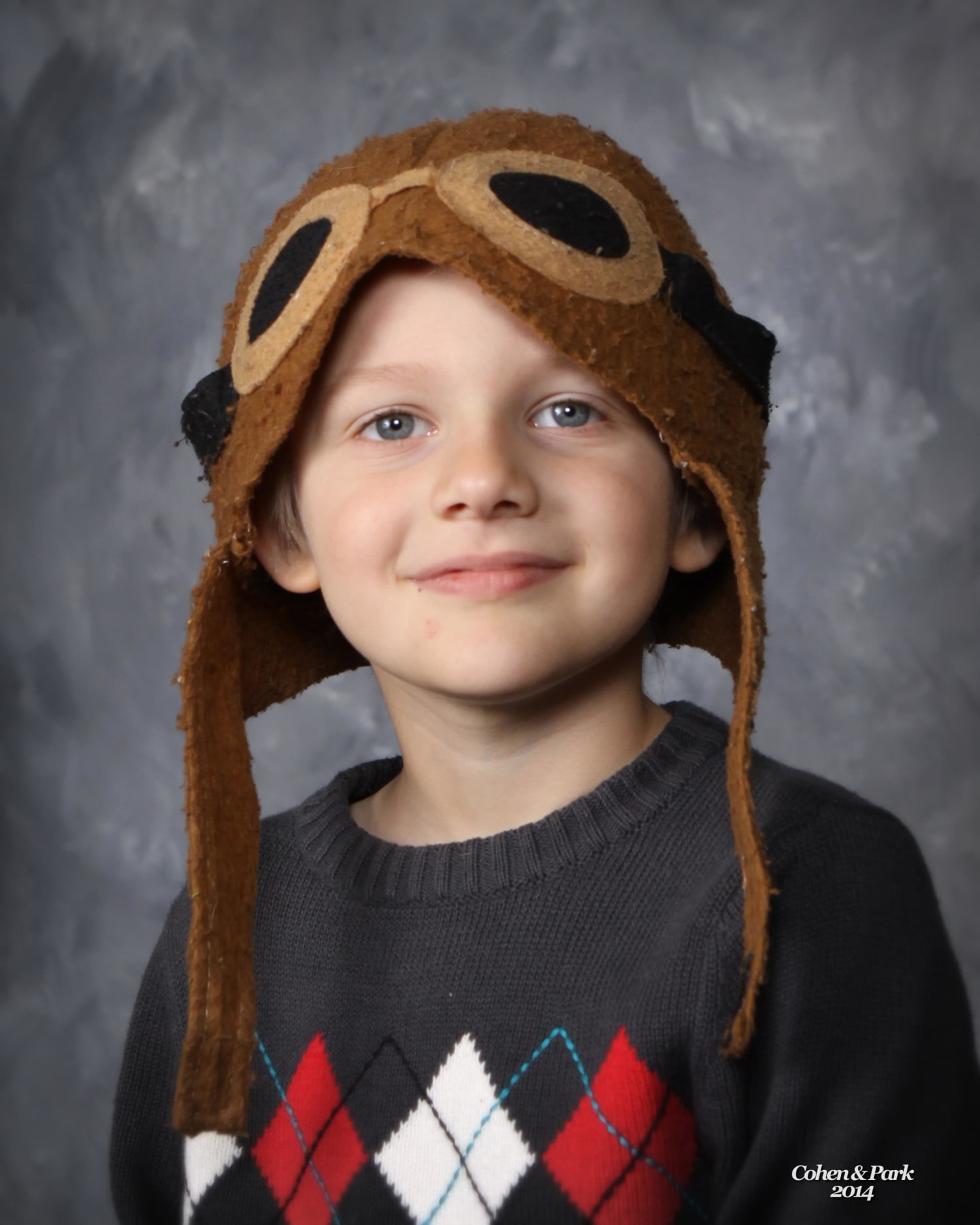
| My biracial nonverbal autistic son, at about age 5, expressing shock through the gestural language he created. Image posted with the consent of subject ©Kerima Cevik |
Mr. Prutsman headed his article with two images, a rainbow infinity symbol image he meant to represent the neurodiversity movement, and a disturbing photograph previously posted by his ASA chapter president alleging to show property damage to the upholstered seats of her car done by her autistic son.
Despite the reality that all content not spontaneously live streamed online is curated content, no one questioned the veracity of the statement that property damage to this car was inflicted by an autistic teen. That was something that bothered me. I wasn't there when the alleged incident took place. I am a stranger viewing this content and reading the hashtag of autism awareness beneath it. How do I know how the seats of this vehicle were damaged? I am presuming the honesty of a parent who shamelessly posts her own son's worst moments for the shock value. People can only ascertain character from words and deeds not from organization position and status. Status and power are not equal to ethics so, despite my presumption that the chapter president wouldn't post a claim that is untrue, it should still be pointed out that broadcasting anything to a public audience needs fact-checking. That means accusations about the behavior of another human being that cannot be verified should be viewed with skepticism when the accused individual is disabled such that they cannot defend themselves.
Despite the reality that all content not spontaneously live streamed online is curated content, no one questioned the veracity of the statement that property damage to this car was inflicted by an autistic teen. That was something that bothered me. I wasn't there when the alleged incident took place. I am a stranger viewing this content and reading the hashtag of autism awareness beneath it. How do I know how the seats of this vehicle were damaged? I am presuming the honesty of a parent who shamelessly posts her own son's worst moments for the shock value. People can only ascertain character from words and deeds not from organization position and status. Status and power are not equal to ethics so, despite my presumption that the chapter president wouldn't post a claim that is untrue, it should still be pointed out that broadcasting anything to a public audience needs fact-checking. That means accusations about the behavior of another human being that cannot be verified should be viewed with skepticism when the accused individual is disabled such that they cannot defend themselves.
His article included a disturbing comparison that clumsily used African Americans and Sickle Cell Disorder. That was, in fact, a type of clueless racial microaggression. But the nature of Prutsman's blog post disturbed me so much I decided to address the inappropriate use of race and race-related illness as an extension of the use of Black suffering by affluent white people to gain an edge in debates having nothing to do with issues of race or African American people like myself elsewhere.
I am guessing his goal was to lay out his thesis while defending his chapter president's right to display negative content about her disabled son on the "raising awareness" excuse of what they both define as the real or true manifestation of autism.
It got me thinking about this large problem I once thought our community would work at solving. The problem is an autism parent emotional sink that is Internet-hosted, blog and social media fed, and toxic.
 |
| My son, and Afro-Latino presenting male, with brown curly hair wearing a black turtleneck sweater, holding his AAC device, an iPad equipped with TouchChat AAC outdoors green trees can be seen in the background. Image posted with the consent of the subject. ©Kerima Cevik |
It isn't because nonverbal autistics like my son are "acute" as Mr. Prutsman infers in his essay. It is my hypothesis that such an emotional sink happens when parents like Mr. Prutsman and his ASA chapter president begin losing the emotional and physical wherewithal to support their disabled family member's needs without help. Under these circumstances, when negative events happen, these parents retaliate by venting their clinical depression, sleep deprivation, frustration, and distress on the autistic offspring by posting their worst moments on social media.
When I named this blog The Autism Wars I meant the wars for accommodation, inclusion, and representation for my son and his neurological peers. The wars for the presumption of his competence. From what I understood of his essay, Mr. Prutsman believes the autism community can be divided into two warring camps and his camp, camp b, is at war with the neurodiversity camp, camp a.
I am not at war with Mr. Prutsman, his oversharing chapter president or the SFASA. If I am at war with anything, it is the culture where ableist attitudes like theirs are incubated.
I am not at war with Mr. Prutsman, his oversharing chapter president or the SFASA. If I am at war with anything, it is the culture where ableist attitudes like theirs are incubated.
Is this group of parents within SFASA, led by its executives like Mr. Prutsman and its chapter president, caught up in what I call the autism parent feedback loop of woe? If so, as this pain/frustration feedback loop escalates unencumbered, is there a genuine risk of catastrophic outcomes?
I have had these concerns since encountering parental rhetoric similar to parts of Mr. Prutsman's essay in blogs by others whose written displays of frustration and despair escalated to a deadly conclusion. That is why seeing such a post from an executive of an autism advocacy chapter so disturbed me. He and his chapter president are part of the leadership of an advocacy organization supposedly existing to champion autistics like my son. What message is this sending to the disabled members of this chapter? I wonder if they realize how many autistic adults parent autistic chidlren? How many such parents will happen upon Prutsman's blog through social media browsing?
Let me take a minute to define how I think this feedback loop works:
6. Without urgent, long-term, quality trauma-informed care for the parents triggering this cycle by generating and posting the curated, negative content such groups need to validate their anger/pain/frustration, people who are caught in this feedback loop risk eventually escalating to violence towards the targeted disabled family members and themselves. The fact that people who have done this are excused for their behavior and the violence is made to seem inevitable (and the fault of the target) further compounds the issue.
The case of Isabelle Stapleton, the autistic young woman who was the target of her mother Kelli's escalating digital exhibitionism and eventually became the victim of her mother's attempt to murder her, is an example of how constant inappropriate validation for posting such negative content online can escalate and become dangerous to the disabled target.
Kelli Stapleton's constant postings of videos and images violating Isabelle's HIPAA rights and her blog about parenting Isabelle deliberately named The Status Woe acquired a large, cult-like following of parents. The tone of frustration and defiance at anyone expressing concern about posting negative content is similar in tone and approach to parts of Mr. Prutsman's written content.
I believe groups and individuals with large public platforms who promote this culture of validating negative content targeting autistic offspring create an attitudinal shift that enables escalating risks of potential harm to the autistic youth targeted by such digital assaults.
The plight of artificial intelligence exposed to negative or offensive social media content gives us a painful clue of what impact negative social media curating and consumption can have on people. Norman the MIT AI fed with Reddit data who now only thinks of murder and death, and Tay, Microsoft's chatbot who Twitter taught to be racist and misogynist, show us that the culture of frustration, perpetual mourning, infantilization, hostile objectification of autistics with high support needs, and resentment that drives oversharing and defense of negative content in these autism parent groups may pervert the minds of exhausted, distressed parents.
Our community has an abnormally high rate of filicide-suicides. I believe this phenomenon needs to be studied in the context of the influence of online groups caught in these feedback loops.
Here is my other concern with his article.
The plight of artificial intelligence exposed to negative or offensive social media content gives us a painful clue of what impact negative social media curating and consumption can have on people. Norman the MIT AI fed with Reddit data who now only thinks of murder and death, and Tay, Microsoft's chatbot who Twitter taught to be racist and misogynist, show us that the culture of frustration, perpetual mourning, infantilization, hostile objectification of autistics with high support needs, and resentment that drives oversharing and defense of negative content in these autism parent groups may pervert the minds of exhausted, distressed parents.
Our community has an abnormally high rate of filicide-suicides. I believe this phenomenon needs to be studied in the context of the influence of online groups caught in these feedback loops.
Here is my other concern with his article.
Mr. Prutsman's thesis in his essay was meant to explain his answering 'yes' to the question “Is it Time to Give Up on a Single Diagnostic Label for Autism?” citing the title of a questionable commentary by Dr. Simon Baron-Cohen in Scientific American.
Prutsman's essay argues for a new label as a kind of weaponized tool for him to wield as an autism dad. His demand for a new label for "acute" autism is not because the group diagnostic designation fails to encompass the entire autistic population, but because he views the label autism as being "tainted" by any group that disagrees with or disputes their parental group's rigid, negative, definition of autism. Prutsman defines severity and indeed autism itself by how he and parents like his chapter president view any negative behaviors rather than by proper diagnostic standards.
Prutsman's essay argues for a new label as a kind of weaponized tool for him to wield as an autism dad. His demand for a new label for "acute" autism is not because the group diagnostic designation fails to encompass the entire autistic population, but because he views the label autism as being "tainted" by any group that disagrees with or disputes their parental group's rigid, negative, definition of autism. Prutsman defines severity and indeed autism itself by how he and parents like his chapter president view any negative behaviors rather than by proper diagnostic standards.
He appears to blame the neurodiversity movement for what he calls 'tainting' of the autism label. Prutsman writes that this tainting happened by presenting autism as an identity, and overemphasis on positive attributes of being autistic by the neurodiversity movement.
What is interesting about how he defines the neurodiversity philosophy is that it is not at all accurate. Unfortunately, the term neurodiversity has been conflated and the popularity of the book NeuroTribes confused rather than clarified the term.
It is clear now that a great many autism parents don't understand the concept. Let me repeat one of the best quotes I have ever read about neurodiversity :
What is interesting about how he defines the neurodiversity philosophy is that it is not at all accurate. Unfortunately, the term neurodiversity has been conflated and the popularity of the book NeuroTribes confused rather than clarified the term.
It is clear now that a great many autism parents don't understand the concept. Let me repeat one of the best quotes I have ever read about neurodiversity :
"Neurodiversity isn't about pretending that autism, other developmental disabilities and psychiatric disabilities are all sunshine and rainbows. It's about believing that we should be able to live our lives on our own terms and that our community should continue to exist, and doing whatever we can to make sure that happens."
- Shain M. Neumeier, Esq.
Mr. Prutsman othered anyone who might object to the targeting of autistic youth by the digital display his chapter president employed. He lumped them together into a stereotyped other by listing any commentary from those he did not know and dismissing it. Under the category of non-relevant commentators, he cited the neurodiversity movement or "group a," non-participating chapter members, and online readers like me who were not local. This allowed him to define a collective enemy for his group to view as antagonists.
Prutsman implies that the enemy has won the autism label battle. Now his group must have a new autism label for their kids, that restores complete power and control of the autism conversation and public policy dictatorship to them.
Prutsman implies that the enemy has won the autism label battle. Now his group must have a new autism label for their kids, that restores complete power and control of the autism conversation and public policy dictatorship to them.
The sad reality of things is that parents like Mr. Prutsman and SFASA's chapter president who are affluent, white, and embedded in the feedback loop of woe are still the loudest and most heard voices in our community. Yet that massive platform drowning out the voices of the autistics they are supposedly speaking for doesn't seem to be enough.
Their resentment of everyone else, particularly autistic adults having agency in the future of what happens in their own lives harms my son by perpetuating a deep seeded ableism that negatively influences the public view of nonverbal high support need autistic youth.
Their resentment of everyone else, particularly autistic adults having agency in the future of what happens in their own lives harms my son by perpetuating a deep seeded ableism that negatively influences the public view of nonverbal high support need autistic youth.
Autism parent feedback loops of pain and frustration don't provide any solutions to the behavioral challenges parents like Mr. Prutsman want constantly highlighted by generating and promoting negative curated content.
The emotional opinion that professional diagnostic labels should be changed to disenfranchise one part of the community and allow control of autism public policy to rest completely in the hands of enclaves of parents too wrapped up in their own feedback loops of misery to see the need to protect their own disabled offspring by not oversharing negative content is a risky proposition on his part.
He is not really asking for a new autism diagnostic label. He's asking for a legal or medical excuse to excise a massive part of the autism community so they can run the autism world. Without the consent or voices of their own autistic loved ones or parents like me.
And here is a sidenote. Yes, nonverbal humans can indicate consent if they are allowed to. Once competence is presumed and communication pathways actively sought for nonspeaking people, yes and no gestures, switches even eye blinks are possible.
I don't need a new DSM label for my autistic son. Nor do I need a parent who is oblivious to what our son needs demanding one in the name of all high support needs parents and their offspring. What I need is for parents like Mr. Prutsman to grasp is that every stakeholder in our community has a right to equal representation whether he agrees with it or not. He can't live in a world segregated by those he accepts and those he doesn't. I'm Black. I don't need to remind us that my racial peers are still suffering from that idea.
Abusing one's large platform to enable digital oversharing and abusive content generation is contrary to the principles of an autism advocacy chapter executive. But what can be done to reach such parents? I am afraid the nature of Internet interaction makes such an effort futile.
The question for us is what can be done to help break the toxic online culture that builds these enclaves of parents trapped in the autism parent feedback loop of woe? How can advocacy groups reach parents who are in this state? What happens when the loop exists within an advocacy organization's power base?
Because something has to change here. This type of dysfunction is the root of community altercations and I suspect the root of eventual harm to autistic children and youth. We must seek solutions.
This is unsustainable.
----------------------------------------------------
The question for us is what can be done to help break the toxic online culture that builds these enclaves of parents trapped in the autism parent feedback loop of woe? How can advocacy groups reach parents who are in this state? What happens when the loop exists within an advocacy organization's power base?
Because something has to change here. This type of dysfunction is the root of community altercations and I suspect the root of eventual harm to autistic children and youth. We must seek solutions.
This is unsustainable.
----------------------------------------------------