Showing posts with label #AutisticWhileBlack. Show all posts

Friday, December 10, 2021

AutisticWhileBlack: At The Intersection of Deaf Culture and Nonspeaking Autism


Image of Mustafa, age five, signing to his sister in a gray 
long-sleeved shirt and black slacks. He is a brown Latine 
presenting boy with short black curly hair. Image credit
Kerima Cevik
When Mustafa was three years old, he began to miss speech milestones. At first, when I spoke to him in English, he responded in English. When one of us spoke to him in Turkish, he responded in Turkish. When a kid at the playground, or I, spoke to him in Spanish, he responded. But one day, when he was spoken to, he ceased responding verbally.

After we got his diagnosis, his sister began teaching him baby sign language. Simple things, to help him communicate his needs. About the time we were struggling to learn these signs with him, both his father and I were working and Musti's sister was going to college. So baby signs began to lag.

One Friday night, we were all exhausted and decided to order a pizza. When the pizza arrived Mustafa rushed to the door and peeked up at the pretty delivery person, a young woman who was working her way through college. Without speaking she looked at him and began signing at him. Mustafa signed and jumped excitedly in response. It took us a moment to realize our delivery person was deaf. She was reading our son's baby signs and body language and totally understood him.

She understood him completely. It was a monumental event for us.

This kind of interaction happened whenever we met deaf people until he entered Kindergarten. Whenever we were in a public space, deaf people simply presumed he was deaf and would immediately sign back, so joyfully and rapidly that it took us moments of standing before them confused before they realized that we didn't know enough sign language to communicate at that pace, and neither did Mustafa. 

They didn't just presume he signed. Those who responded so quickly were mostly African American deaf community members. They observed his body language as well as his attempts to sign. We, verbal speech-centric folks, have somehow forgotten how critical gestural language is to communication. But deaf community members have not.

What does a family do when the school system refuses to implement communication as an IEP priority, teachers and staff who sign refuse to respond to their son's efforts to sign his needs, and that family encounters lateral ableism that bars them and their nonspeaking son from learning sign language? Here's one example of what happened to us. His first thanksgiving event at his school resulted in a series of holiday photos posted to the school's webpage which inadvertently showed our son trying to sign to his teacher. The parent who took the photos, upon realizing that they showed our son signing to the teacher and the teacher who was trained in sign language deliberately turning her back on him, warned the school, who took down the photos before I could capture them and bring them as proof to the upcoming IEP meeting that our son was capable of learning sign language. That parent's reward was the school providing her child with a much wished-for item on the child's IEP. Because somehow it was her belief that stepping on my son's right to communicate was necessary to help her child.

His teacher insisted that our son did not have the fine motor skills to learn sign language.

I tried using programs and online resources. It is difficult going and I find that nuance is lost, meaning one might believe they are signing one thing when they are actually signing something else entirely. Then there is the cultural specificity of Black sign language. For our son, the sign language he learns needs to make him a part of his community. Like African American Vernacular English(AAVE), Black sign language should include him. But those who might teach him are not put in a position to be paid for their labor. In our former school district, where the non-speaking student body is disproportionately Black and Brown, no African American sign language teachers were employed. Why does this disparity exist?

In 2014, I watched a documentary of a class in rural Uganda being taught sign language. The ages of the students ranged from 9 to 80. They were taught by a teacher who was given intense sign language training in order to return him to rural areas and teach people of all ages born deaf or deaf as a result of illness how to communicate through sign language. 

We are the supposedly developed nation, yet we do not do as much for our own nonspeaking adults and children. Despite the challenges of the Ugandan program and the ableism displayed in the documentary, deaf rights activists are fighting to give their community the gift of communication. It is that important. 

Meanwhile, Mu, my husband, and I are back to the task of trying to find a way we can all learn to sign properly in order to help our son communicate beyond baby-sign. There is a universal sign language. Perhaps we will try that. But the reality of our sign language story is that sign language learning should be free and open to everyone who is nonspeaking, in the same way, it is being offered to the deaf rural citizens of Uganda. The basic sign language lessons featured in the documentary above were life-changing for the people who walked miles to get them. The lessons lasted three months. In three months, these people went from isolation to community. The idea that people with ID/DD are not worthy or able to learn sign language is a crock. Lateral ableism as a barrier to access to anything that might help another disabled human is intolerable. Sign language is affordable, can be learned at any age, and can be life-changing.  

So why is something so affordable, basic, and scalable not part of language support for our nonspeaking loved ones and their families? We are such a technology-centric society that we tend to forget that sign language is a communication method that can be gained by all nonspeaking autistics who don't have OT challenges regardless of class and income level. When we say communication first, that needs to mean that all available methods of communication should be considered for AAC.


Saturday, February 6, 2021

AutisticWhileBlack #BlackHistory2021: Vaccination While Black

The author, owning
The angry Black woman 
look. Image of a gray haired 
Black woman with glasses


The huge disparities between the agendas of those individuals with the largest platforms who are presented as allies to autism advocacy and the realities of what African American autistic families need to survive have continued for all the years since my son's diagnosis. I try to highlight and speak out, but my voice is tiny. But I am fed up and I'm going to vent now.

Steve Silberman, the author of  NeuroTribes, posted this on social media:

Steve Silberman: Vaccine envy is a thing.

I have been trying for months to emphasize the struggles and barriers to our communities of color, particularly my racial peers, having access to vaccination. I have been trying to show the incredible irony between the near gaslighting being done to push vaccination on our people when there is no supply of vaccines to give us. The cruelty of advertising mass vaccination events as "open to the public" at sites that require individuals to have cars when those most vulnerable don't own cars and no public transportation is provided to those sites. In truth, only those who have managed to gain appointments, which require access to the Internet (needs class privilege and access to technology) are allowed at mass vaccination sites, and there can be no mass vaccination without vaccine supply.

Being Black in America during a pandemic means the quality of healthcare given is limited because the staff, equipment, and treatment options that those with race and class privilege have are not available in their zip codes. Add racialized autism to these obstacles, and the idea of achieving vaccination becomes a nearly impossible mountain of barriers to climb.

Black vaccine hesitancy is discussed in the press and narrowed to one incident when the history of disparity in health services and maltreatment of African Americans continues to this day. Only Rachel Maddow has spoken to our own people trying to breach barriers to vaccinate us. 


I tweeted about Drene Keyes going into anaphylaxis minutes after being given the first Pfizer vaccine dose. I am angry that the same excuses for why more of our people are dying from COVID 19 are being used to excuse her death. Her preexisting conditions. This is not the first anaphylaxis reaction to this vaccine. Others have had this reaction so this was a known issue. Why then, was this not thought through before giving the okay for a disabled woman to receive this vaccine? Why is our community not asking these questions? Because the quality of healthcare for the non-racialized disabled population is better than for us.

My son and I are disabled. No one has bothered to care whether disabled people might die from anaphylaxis after a dose of a vaccine. No authorities have taken the time and care to warn African American patients, a majority of whom have preexisting conditions and low access to quality healthcare services, to wait before getting vaccinated. Instead what we hear, from supposed allies, is pressure to forget the disparities in healthcare that are driving up the numbers of us who die from this coronavirus. We hear that it is a lack of education causing vaccine hesitancy, while hospitals that serve our most impoverished communities demand equipment, medical supplies, and staff to fight the surge in infected patients. Entire families are dying. Our people are pressured to sign up for vaccination appointments when they have no access to the means of signing up. We are told to drive to vaccination sites without a car. We are told to stay at home when our jobs require delivering food, medication, and care to those who can stay in homes without risking eviction for not being able to pay rent. We are told to go to mass vaccination events when there is no vaccine supply. 

I want everyone claiming to advocate for autistics and their families to do better. It's time to advocate now by giving us the damn mike since mainstream autism advocacy is clearly ignorant of what has been happening to our community since the beginning of this pandemic. Reach out to your communities and do something to save lives and make this vaccination effort equitable for everyone. We are dying while our supposed allies are posting quips on social media.

When will those who are supposed to be our allies cease making thoughtless, clueless, cruel statements like "vaccine envy is a thing?"

If this is the mainstream idea of allies, miss me with that.

Rant, done.


Wednesday, April 1, 2020

AutisticWhileBlack: Love In The Age of COVID-19: Patient Rights

Cartoon image of the author's son at age five in hospital.
Posted with permission of the subject
Credit Kerima Cevik
I have always loved my nonspeaking autistic son, without preconditions or reservations. No pandemic will change my will to fight for his survival. Regardless of the public health crisis, my nonspeaking autistic son has a civil right to receive medical support without the threat of any denial of access to life-sustaining healthcare. The casual way political figures and media pundits are dismissing high-risk citizens as inevitable fatalities of this pandemic is terrifying. Remember that a seventeen-year-old who had no apparent high-risk medical history died from COVID-19 related symptoms after being denied care because he was uninsured. This incident alone should have us questioning a healthcare system that puts getting paid over saving lives. So why has no one been talking about what will happen if nonspeaking autistic patients test positive for this virus?

Despite the surge of COVID-19 cases in New York, Governor Cuomo has issued an executive order that all hospitals allow partners to be with their significant others during the birth of their children. I am asking myself why the governors of all US states and territories haven't issued similar executive orders allowing one parent to be with nonspeaking autistic and disabled offspring with complex support needs should that patient contract COVID-19 and need hospitalization. Is it because they consider our loved ones expendable?

 They aren't. My son and the thousands of children and adults like him have the right to survive this pandemic too. And since disabilities that include verbal communication challenges hinder his ability to advocate for his own life should he become infected with the virus, it is my job as his parent to be there with him.

I realize the magnitude and consequences of what I am asking. I do not even know, as the number of patients rises if my son would receive treatment. His right and my right to it is being debated as I type this. But if God forbid he contract this novel coronavirus and become so ill that he needs hospitalization I cannot allow him to fight for his life without one of us by his side to make certain he is not discarded because he's disabled. I have had a good life. I am willing to pay the cost to be with him, even if that cost is my own life.

 I watched doctors on social media make some pretty unreasonable excuses for why such denial of care decisions are necessary. Yet we know a 103-year-old woman from Wuhan survived the virus. Meaning blanket decisions not to treat any high-risk population-based upon presumptions they won't survive is cruel and inappropriate at best. Our information about this virus, even how it is transmitted is sparse and inconsistent even after four months of heartbreaking attempts to stop the spread of it. Should my son pay with his life for the failure to prepare for this pandemic?

I am disappointed and angry at the lack of any visible response to these public displays of ableism. With the exception of ASAN, Self Advocates in Leadership (SAIL), Disability Rights Washington (DRW), The Arc of the United States (The Arc), the Center for Public Representation, and the Bazelon Center for Mental Health Law,  no major autism-related organization has acted to defend the right of our loved ones to treatment. I saw immediate and loud protests from parents about public school response to autistic student's IEP requirements being inadequate. I saw parents having meltdowns about not having access to respite care, therapists, and support staff. I have not seen one word from parents who have managed to get their education-related complaints in major newspapers and on television about their autistic children's right to access COVID-19 testing, treatment, and their right to survive. That lack of interest actually scares me.

There must be other parents and primary care providers asking what will happen to their children if they contract the virus? Has no one else asked why no parent-driven autism organization is coming forward with emergency planning advice for how a single father or mother will manage if they get infected? Does no one lose sleep over the nightmare scenario of watching them wheel patients to isolation wards, and those patients never seeing their loved ones again?

I have been asking myself things like what should our community be doing to focus attention on the equal right of autistic people to access testing and health care for the duration of the pandemic? What will the greater disability justice community be doing to find ways of opening spaces for our loved ones to access health support for conditions requiring health support unrelated to COVID-19?


We needed to get COVID-19 related scripts for health advocacy on AAC devices in February. Why didn't autism organizations reach out to speech app software developers and SLPs about this? We need to discuss countering the idea of hospitals considering blanket do not resuscitate orders.  Can our organizations join to create homemade masks for primary care, respite, and other staff supporting our offspring? Why has no organization created a video that shows our kids step by step how to wear masks, explain social distances, and explain not touching a hand to face in a manner that is age-appropriate? There is so much that we can do within our community to reduce stress and increase hope but this needs to be organized and executed jointly. I know everyone is in shock but no one seems to care enough to do this for our community when so many others have come together to act on behalf of other high-risk populations. And what I have seen in Op-Eds this year is the usual causation arguments, sales pitches for fundraising, writing about our children as if they were overgrown violent infants who tend to stray, and lamentation of parents instead of needed crisis information and support.

My last and greatest concern is access to family therapy for families with autistic children who seem to be struggling to manage their offspring at home full time. This may not be an issue for families like mine who have been home educating for years. But in families who spend very little quality time with their autistic children between school, aftercare, therapies, and spring camps, the shock to both the autistic children and their parents is taking its toll. In normal circumstances, the number of filicides is too much. This added stressor may make things that much worse.  Judging from the rise in domestic violence in France since stay at home orders were given my concern that similar harm may come to autistic children and those forced to shelter in place with families that have immediately begun complaining about them being themselves seem valid.

I love my son. I want to be more hopeful about my son's chances to weather this pandemic and survive. That can only happen if our community comes together in greater numbers to champion our autistic loved ones right to survive it. Their survival is much more critical at this moment than just about everything else happening right now. Shouldn't autism organizations be putting that first?

Wednesday, April 25, 2018

Autism Month Essays: Against The Presumption of Incompetence


Mu in a green hoodie in his favorite spot, debating whether or
not to visit the wild ducks in the pond. Posted as always with
the permission of the subject. © Kerima Cevik
When parenting both our children, my husband and I tried to make certain they knew exactly who they were and hoped they eventually understood that the labels they carried were things they could take ownership of and apply to help them navigate their lives more effectively. 
Our daughter has a clear idea of the entire scope of her multiracial and multicultural identity. Our multiracial, multicultural, nonspeaking autistic son is 15. I have tried my best to ensure he knows his heritage despite communication challenges. I have found other ways of showing him who he is; of indicating to him it is okay to be who he is and that we are proud that he is our son as he is. We want him to know we will be doing our best to support his efforts to live an autonomous life, and such a life must begin with an acceptance of his entire identity.
My son likes to watch Disney World travel infomercials on YouTube. One day he came into the office I share with him to show me a video. The video was a Disney Parks episode where parents were describing what the Disney experience was like with their daughter, who carried an ID/DD (Intellectual Disability/Developmental Disability) label. At the point where she described her daughter as having a developmental disability, my son stopped the video and put my hand on the child's image and then placed my hand on his head. I shook my head yes in response. I said "Yes, son. You are like her. She has a diagnosis of Down Syndrome. You are Autistic."  He hugged me and left the room. I stared after him, an emotional mess, stunned with surprise, shock, sadness, and relief, unknowingly shedding silent tears of pride. 

Knowing ourselves and understanding where we are similar and different from others is a life-altering affirmation of one's competence. My son arrived at this understanding and communicated his suspicions to me without uttering a word.Grasping the scope of one's disability is a giant step in self-advocacy.

 To some degree, everyone needs certain labels. They form the framework of how we begin to define ourselves. But many labels are not positive or even accurate ones, and sometimes they are forced upon us. In fact it may not be the label itself but how we ascribe meaning to it in everyday usage that may devastate. Some labels carry the baggage of bigotry. 

Many parents who impose the goal of becoming indistinguishable from their typical peers on their autistic children feel the idea of acknowledging that their child may carry an ID/DD label is an abhorrent barrier to normalizing them. Additionally, some schools abuse the power to label a child ID/DD on IEP documents because they want to segregate the child from typical peers when said child might do better with supports in an inclusive classroom. The results of either of these circumstances are some devastating potential outcomes to the autistic student that parents and professionals don't spend enough time considering when making arbitrary decisions for or against the use of the ID/DD label. 

I began thinking about how many autistic students were labeled ID/DD and how they came to terms with that label a great deal after my son came to me to question his own identity in gestural language. I was trying to catch up on my friends' status posts on Facebook when I read an entire thread that brought the entire question of the ID/DD label into sharp, painful focus. It was about a family being pressured by an IEP team to add an ID label to their child's disability designations. Several people who were academics, educators, activists and autistic advocates who carried the twice exceptional label were tagged to give their input on the advantages and disadvantages of accepting such a label. I was not one of those tagged.

My son carries the ID/DD label, not by choice but because that is his medical reality. If there is pressure on any family in a school setting to add this label, they need to understand that whatever they decide potentially changes the entire quality of their child's educational future, and this is not always a positive change. The aversion and abhorrence that people who should know better displayed when discussing accepting this label truly disturbed me.

 I'll try to explain why.

I came into this world with dark skin. I am no more able to hide or deny this identity than my son is able to hide or deny his ID label. Yes,  the ID label comes with a heavy burden to fight society's lifelong presumption of incompetence. There was a time when African American labels came with the presumption of incompetence as well as the false accusation that the amount of melanin in one's skin determined who was more intelligent. We dark-skinned people continue to fight these stereotypes. 
Being an African American woman carries lifelong challenges and injustices with it that made me more aware of ableism directed at my son. Despite the hardship, we now know that a clear grasp of a person's identity can give them self-respect that hiding it in shame cannot. The idea that because of these hardships, an identity is something that can be opted out of is wrong. What needed to be said in this thread that wasn't was does this child have a full professional diagnosis? Does that diagnosis include an ID label? If it does, then depriving them of the support they need by hiding this is like leaving a wheelchair user's chair at their departure airport. 
I thought it was our job to right the wrong of institutionalized presumptions of incompetence. That bit of ableism is the fundamental rock in the wall of segregation from every opportunity that keeps our loved ones from their rightful place in our society. History shows clearly that presuming anyone incompetent begins an othering of groups that slides into catastrophic abuses and oppression. There was an air of defeatism in this thread asking whether or not to allow the ID label on a child's educational record that brought me down. Our loved ones will always feel they are less than others if we simply accept the wrong-headed belief that giving a person an ID/DD label equals a lessening of their personhood.

I just don't know when we will get past the idea that if a person cannot speak or learn in the way the average person can, they are less than others in society. We tend to blame our student's disabilities for our societal failure to meet their educational needs when the truth is we have not changed the fundamentals of the way we educate our children since the industrial revolution. Why aren't we fighting to rethink and redesign learning to reach ID/DD students' needs and learning potentials? We simply passively accept things as they are. And each year, our offspring are given less support and less access to learning particularly when they are made to wear that label.

The largest issues I have about parental fear of the ID label and the presumption of incompetence is that if we do not fight the baggage forced on our loved ones with their neurological identity. How can we teach them allow them to carry this label with pride unless we can let our children know with sincerity that ID/DD labels are nothing to be ashamed of?

I wonder if this defeatist attitude contributes to depression and anxiety in our loved ones? I also worry  that denying knowledge about a critical aspect of a student's disability enables the potential devastation to the mental health of the student not aware of why they may have challenges in areas where their peers are succeeding, I wonder how much trying to opt out of ID/DD labels inadvertently slows progress creating educational methods that may maximize our students' potential because distaste for the ID/DD perpetuates our society's  presumption of incompetence. 

It is our responsibility to make our children matter by fully understanding what accepting the ID/DD label means. They can't accept themselves if we are afraid to say whoever they are, whatever their disability constellation entails, we accept them. Believe me, our offspring feel our shame and insincerity and internalize it.

We parents passionately demand better schools, better IEPs, and an end to the use of the r-word. I am thinking that we also need to take a hard look at our own attitudes and make an active effort to change them so our offspring can sense that shift organically and not internalize any subliminal ableism about the labels used to identify their neurology. 

Peace 


Sunday, October 29, 2017

The Ripple Effect

Bus attendant helps our son from his chair onto the school bus in PG County, spring of 2008 Photo @Kerima Cevik. 
There is a pattern of behavior based on the
guilty need parents have to try and get the best educational and therapeutic circumstances for their autistic children.  I hope to completely eliminate that pattern of behavior in all of us by making it public so any parent who has been advised to do this in the past can stop doing this now.

This pattern of behavior begins a ripple effect of harm that stays with our children and expands outward harming countless other autistic children along the way until something so drastic happens that things are forced to change too late to save the destroyed lives of all children in those expanding rings of abuse and cover-ups.

 What I mean is the act of repeatedly trading complicity by silence for some perceived advantage for your own disabled children. This major lapse in ethics to meet the needs of one at the expense of many especially angers me because my son was one of many other victims caught in the riptide of one of these ripple effect disasters.

The actions of two autism parents had a big part in destroying my son's public school life and his trust in nearly anyone who resembles the staff who harmed him or stood by while he was being harmed.

In the wake of the Weinstein scandal and the resurgence of the #MeToo hashtag created by Tarana Burke, a global conversation about sexual harassment has begun and I have been asking myself why autism parents aren't speaking out about the harm done to our children in schools and other settings meant to be safe spaces for them.

Something Anthony Bourdain said in an interview put my scattered thoughts and feelings about parental complicity by silence into language my own emotional reaction to what my son had experienced was not allowing me to write as clearly. He was discussing an ethical judgment call on an offer from a group that was led by an individual with a horrible reputation, and used it to call out Quentin Tarantino for his complicity in the Weinstein scandal :

"[Taking the offer] would have destroyed everything—everything that makes us good, everything that makes us happy, our quality of life. It would have been a lethal compromise, a slow-acting poison that would have nibbled away at our souls until we ended up like Quentin Tarantino, looking back at a life of complicity, shame, and compromise."  - Anthony Bourdain

Whenever I wonder whether I should have taken such offers at the expense of my silence or  turning away while harm came to others like my son, I remember the guilt ridden mother of a nonspeaking  Autistic daughter who called me because she made such a deal after her daughter was abused at school only to find out two years later while autism moms were gossiping during an event at the Arc of PG County that the next nonspeaking autistic child harmed by the abusers of her daughter was my son.

Through bitter tears she talked about having to watch one of her child's abusers receive an award for their service to disabled children. She said she was braver now, she would never have let herself be bullied now, she needed my forgiveness for her silence.

I told her to speak out now. To make things right now. So other children would not be hurt.

She quickly answered she couldn't risk her children's placements in the prime schools paid for by her silence. She couldn't risk her good standing with the school administration and the community. Her husband had heart problems. On and on.

A few days later, the mother of one of my son's classmates called to tell me that she lied to the IEP team during her meeting because they refused to give her son the inclusion time she wanted. She told them that I was building a class action suit against the school and if they didn't give her son the things she wanted she would join it. The team placated her, telling her they would give her son what she wanted. They then proceeded not to do so. She didn't call to apologize. She called furious that her lie was not effective and hoping to get something from me she could use to pressure them further. This explained the recent sharp increase in the belligerence of the school and why my son had been targeted. This was why he was continuing to come home with bruises and hungry because they were not feeding him the lunches we were buying for him. The woman's excuse was that her son was higher functioning than mine so inclusion would not benefit our child anyway. I felt bile rising in my throat and hung up. Two weeks later I heard she moved to another county where the schools were all inclusive model based.

Dear fellow parents,

 Each time a school or respite center or camp abuses your autistic loved one and buys your silence by giving your abused child a better placement or more respite or free extra camp aides you are not only complicit in the harm done to your child by not seeking justice for the abuse they suffered but you are directly complicit in the harm done to every disabled child that falls into the hands of said abuser(s) every day you remain silent and 'move on. '

It is never too late for justice. Speak publicly about these people and what they have done. Stop using the suffering of your own children as a bargaining chip to some educational lottery win that depends on your silence.   Your continued silence causes the needless suffering of countless other innocent disabled children.

My son is one of them.

Take the antidote to the slow poisoning of your souls your complicit silence creates. Speak up. Name names.  Save everyone's children and show your autistic children they matter.

Don't throw your children under the bus so you can feel better about something you got as a result.

Friday, October 6, 2017

AutisticWhileBlack: I'm Sorry Antonio

I'm Sorry Antonio,
This is the beautiful Antonio DiStasio, autistic and black, age 4, smiling in a
car seat wearing a black coat with yellow and gray reflective block printing.
He was murdered by his mother, who bound him and burned him alive in a bathtub.
Image credit: GoFundMe page
I've been on a news media diet, trying to care for my own nonspeaking autistic teenaged son, so I didn't hear about the horror of the torturous painful death you went through until last night. One of my favorite friends and colleagues told me, during a private conversation. He realized that I could not possibly know. He couldn't speak about it. He just posted a link to the news story, and when I saw it a sound came from my throat that I cannot explain, except that it was so painful that my son cried out from his room and my husband ran to my side, thinking I'd had another cardiac arrest. I was unable to make a sound after that sound. I simply handed him my cell phone and he made that sound, that sound of despair beyond hopelessness, and then he shook me because we silently agreed we wouldn't, couldn't tell our son what had been done to a preschool-aged autistic child by his own mother.

I am so very sorry that your neighbors heard you begging your mother to stop, telling her you wouldn't do again whatever infraction she was unjustly blaming you for and never thought to call law enforcement or child protective services. They never thought to bang on the door and demand to make certain you were okay. Your blood is on their hands, and yet, clueless, thoughtless, they line up like gleeful viewers at the latest horror movie, blithely relating to the press what they heard and did nothing about.

I am mourning your short, painful life. But I am so angry Antonio. I'm so angry.  I'm angry with your grandfather who had the nerve to say your mother had mental health problems and he hoped she would get the help she needed now.  I am angry because this means he knew your mother needed help and yet did nothing to take responsibility for his own grandson.

Though he may be mourning you, I feel your blood is on his hands too.  I know of grandparents whose children battled poverty and drug addiction who stepped up and took responsibility for their grandchildren.

Was there no family member among those who are preparing to bury you who could have saved your life instead?

I am sorry for the culture that some in our autism community perpetuate, this disgusting idea that somehow it is understandable to brutalize and murder autistic offspring because they are autistic, and somehow that presumes that raising the child is hard when perhaps the issue is parents who have not sought proper professional help for themselves and their families.

 I am sorry for the thousands of online groups of self-pitying adults who call violent torture and murder understandable and equate violent murder with gently sending their autistic little angels to heaven.

I'm sorry for their lack of respect for your worth as a human being. I am sorry they do not understand, that this moment, this instant of staring into the soul of our community and seeing an evil that must be rooted out is not about them, their parenting struggles, or their demands for more respite and more services.

I'm sorry that spaces exist where parents whisper about harming their children and feed off one another's unacceptably negative depressive views until a vulnerable parent like your mom comes along and believes you are something evil when you're not. I'm sorry about everyone who will use your death to push for less civil rights for autistic people in the name of "protecting" others like you, my son, my friends and colleagues.

I am so very sorry, Antonio.

But I'm here now. I won't let people forget you. I'll keep trying until every stakeholder in the autism conversation joins autistic activists and disability rights organizations in our fight to make this filicide nightmare end.

--------------------------------
In loving memory of Antonio DiStasio, age 4, who I will never meet, and who didn't have to die

Resources:
The horrible death of Antonio DiStasio
http://www.jsonline.com/story/news/crime/2017/10/04/milwaukee-family-prepares-bury-4-year-old-boy-mom-jailed-awaiting-charges/723315001/
Need help? DON'T KILL YOUR AUTISTIC CHILDREN!
Save Lives Reference list
http://theautismwars.blogspot.com/p/mourn-dead.html


Saturday, July 29, 2017

Confessions of a Retired Human Roadrunner

Mu with AAC looking at a rainy sunrise. Image of a teen in a hooded raincoat, his brown hand holding an iPad mini bare trees mixed with evergreens white houses and a pastel sunrise in the background. ©Kerima Cevik

My husband, Mu’s father, was by all accounts, an angelic, friendly, impeccably behaved child. Then there’s me. If you want to know where Mu gets the hurling of his 200 lbs upward and spinning in mid-air, that would be from me.

When I was young, the adjective most frequently used to describe me was “exhausting.” As a toddler, I single-handedly brought a Panamanian Chinese restaurant to a standstill. 30 years later on my return to Panama, the owner saw me sitting with my father and family and called me by name from across the restaurant, laughing while telling me in Spanish that I was the only child he had ever banned from his bistro. I apparently loved running under tables and the poor waiters were frustrated Wile .E. Coyotes to my Roadrunner.

By age four, my weary mother took me in to be assessed in the hope that I could be put on Ritalin in order to slow my speed down to the legal US highway limit.  What she was told was I was gifted and should be challenged in school and at home so as not to bore me. Disappointed (and remember, exhausted) my mother took to beating me until I slowed to what she considered a compromise speed. Finally, too tired to chase me, she’d release me to the outdoors each day after school and piano practice and send my older sister chasing after me back in the direction of our house each evening around dinner time.

Like me, our son organizes his brain by movement. It seems to help his vestibular system and his focus. When he is running, jumping, spinning, that means he's happy and engaging his brain. After such activity, he focuses, studies, and processes a prodigious amount of information.

Here is the critical point. When I say he's a human roadrunner I am not saying he’s a burden. I’m saying he’s his mother’s son. When he stops moving, sits meekly, and quietly complies with every request it's time to call an ambulance because that means he's ill and it's an emergency.

A typical day at home involves a great deal of movement followed by periods of learning, studying and leisure time. I am in terrible shape but he puts me in the position of having to get in shape and this is an incredibly good thing, particularly since I’m trying to recover from a lifetime of health challenges brought on by past harm done to me by others. At some point I won't be limping after him, I'll be able to catch him at a flat run. That will mean I'm Senior Olympics material. That’s a good goal, and everyone needs a goal in life.

What does happen each time I see a carpet slide, or leap or spin, is I remember standing under street lamps as a young child in the Canal Zone, spinning on one foot endlessly before I knew what a Dervish was and before I saw my first ballerina en pointe. I remember and as he runs through his impromptu acrobatics I throw my head back and laugh in understanding and memory of the sheer joy in it!

In those moments of silent explosive movement, I think “that’s my boy.”

Don't fool yourselves. As Yoda would say, "Autistic he is. A burden he is not."


----------------------------
First published as a Facebook Note. Picture published with permission of the subject.

Monday, July 3, 2017

Why Don't You Accept Your Child's Autism? Yes, But....

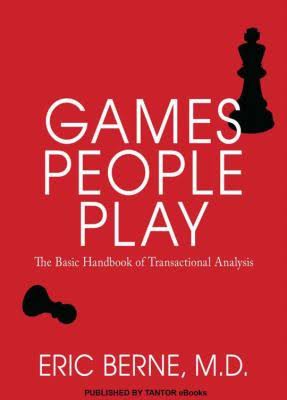
"Why Don't You ... Yes, But" is a mind game listed in Games People Play: The Psychology of Human Relationships by Eric Bernie, MD. It is a transactional interaction that is in effect an equivocation where one party begins a sentence with "Why don't you____ and the respondent answers "Yes, but....."

Waiting for genuine Autism acceptance is like waiting for Godot. If I shouted "Why don't you accept autism?" into the grand canyon of predominantly white, well-to-do autism parents whose voices dominate this conversation, the echoed response would instead be "Yes, but..."

Book cover for Games People Play the
Basic Handbook of Transactional Analysis,
showing two black chess pieces, a queen an
a pawn in black. The book is red with  the
title and author's name in white lettering.
 lettering. Image credit: Google books
A few months ago I saw a parent who commands quite a following among special needs parents launch into her latest effort to "cure or reduce" her adult son's autism. Her son speaks, but she has ensured he has very little say in the matter of "fixing"  his own state of being. 

Speaking for her son and about him without him, she declares that neurodiversity is a fine thing for other autistics but her son needs the autism "fixed."  I take this to mean, in translation, that how she really feels is that there have always been parts of her son's visible disability she cannot cope with, therefore she despises autism and wants the autism parts "fixed." Her plan in this instance involves resolving his "gut" issues. I read the entire online lament, and shook my head.

This is in part an indication of the failure of Steve Silberman efforts through his book NeuroTribes to actually positively change public perception of autism. The book was not just supposed to make a profit. It was meant to explain the history of autism as a disability, properly define the often misused term neurodiversity, define autism's place in an inclusive society, and highlight how acceptance of that disability opens the door to accommodations and supports that allow autistic people to navigate a more justly designed and therefore more inclusive society.

Because the book is in large part an expansion of his "Geek Syndrome" essay the history told and the characters in those histories are limited to what will enhance the historical narrative for his predominantly white, higher income, target audience. Despite its popularity, with very few exceptions, it failed to connect with that intended target audience beyond parents like the one I've described in the previous paragraph. 

These parents simply misconstrue the terms acceptance and neurodiversity without changing their view of autism as a disability. Upper middle class to wealthy parents continue the same medical model narrative of excluding their autistic loved ones from the neurodivergent label or at best, making a compartmentalized adhoc acceptance of neurodiversity as they redefine it. It is the "neurodiversity is great, but those autistics are..."  the "not like my child," trope's latest variant.

Unaware of their own ableism and fiercely defensive when called out about how ablelist and boundary crossing the broadcasting of a disabled offspring's health concerns or their opinions of how much they choose to accept their offspring are,  they actually believe they understand neurodivergence and acceptance when they clearly do not. There is no qualifier in acceptance of the entirety of a loved one's disability. 


Book cover of NeuroTribes red
and black lettering with the book title
and author's name in read an subtile
except the word Autism in black.
Image of a leafy plant with birds and
butterflies of various colors and varies
on or around it. Image credit Goodreads
Many parents believe that the blame for anxiety disorders should be placed at autism's door. In fact, anxiety develops in part in reaction to parental intolerance of stimming and other self-soothing behaviors whose purpose is to overcome a hostile environment. Stimming is short for self-stimulatory behavior. 

What I find saddest about these parents is that to them the solution is never found in first ensuring that they aren't triggering issues in their own children, everything that goes wrong must be autism. While is it fine to set goals and presume competence, gaslighting your autistic loved one into conforming to a parent's expectation of what would be the most acceptable version of their autistic child for their own lack of embarrassment and comfort levels isn't the point. 

The primary requirement for autism acceptance is not saying things like "I accept my child but I don't accept his autism." Acceptance means the totality of a disability is accepted. Then challenges that are actually the result of the disability can be looked at and solutions can be sought to address these challenges. If a parent said to their child who lost a leg in a car accident that they loved them but not their body with a missing leg, everyone around them would be horrified. But no one makes a sound when a mother laments that neurodiversity is a fine thing but now she needs to continue working on her son's gut problem, which may cure him.

when  I ask, do you accept that your child's neurodivergence is a disability? The answer should never be the equivocation game "Yes, But..."

Did Mr. Silberman's book have a positive impact on its target audience? Look around. Are there any sharp increases in parent allies against ableism understanding the key to lifetime improvements in the quality of life for their autistic offspring requires less time trying to cure their guts and more time fighting for their civil liberties and rights to access and accommodation in society? I'll help you out. No, there are not.

Meanwhile, this particular parent, cheered on by her fanbase and without her adult son's consent, continues her efforts to rid herself of her son's autism which she accepts but doesn't accept, but hey, at least she now uses the word neurodiversity when speaking of how much she hates it.

If that was worth the price of excluding nonwhite and non-cis histories from NeuroTribe's narrative of autism, I hope it was worth it.

References:
Games People Play Explained:
https://www.amazon.com/Games-People-Play-Transactional-Analysis/dp/0345410033
https://en.wikipedia.org/wiki/Games_People_Play_(book)

The Geek Syndrome Article
https://www.wired.com/2001/12/aspergers/

The Problem With NeuroTribes:
http://intersecteddisability.blogspot.com/2016/01/autistic-while-black-erasure-of-blacks.html
http://intersecteddisability.blogspot.com/2016/05/how-not-to-endorse-anthology.html


Tuesday, April 11, 2017

Nonverbal, Nonspeaking, Autistic Word Navigation

Mustafa Cevik. image of a large, biracial Hispanic presenting
male wearing a sky blue nd white striped
polo shirt sitting in a wheelchair drinking from a water
bottle. Posted with permission from the subject. ©Nuri Cevik
The day I met Lydia X.Z.  Brown, they told me about a gentleman named Michael Forbes Wilcox and the word nonspeaking. Per Mr. Wilcox, most autistic people were incorrectly defined as nonverbal when they were actually nonspeaking.

This is why so many early intervention programs entail depriving autistic children of AAC support while battering them with forcible speech interventions. I guess their logic is there is no apparent physical challenge to producing speech so whatever utterances can be produced should be forced out of the autistic child by any means necessary.

The result adds to the presumption of said autistic child's incompetence because the child may have limited verbal speech ability but much larger AAC supported speech ability.

Thanks to Lydia Brown, I mostly use the term nonspeaking when discussing my son, but his situation is a bit different than most of his autistic peers. My son was diagnosed with damage to an area of his brain related to speech. We were told therefore that he was clinically nonverbal and probably wouldn't be able to speak. At all.

Ever.

 Mu has spoken on occasion in more than one language since that diagnosis and even during the time he was being evaluated. We aren't certain technically how he is able to do it. When it happens I try to act casual. But because when he does speak it is usually related to responding affectionately to either his father his sister or me, I am inevitably overcome with emotion. Just after such a moment, I  quietly remove myself from the room so he doesn't misunderstand and burst into tears of joy.

His voice, as he has entered puberty, is deeper, richer, and more beautiful now.

We were outside yesterday and kids ran by screeching as they played. It disturbed him. It is only on these occasions that I realize how big and different he is from others his age who do use verbal speech freely.

It seems to me, other fourteen-year-olds, talk too much.

His rare affectionate utterances have greater worth to me than the shrieking profanities and loudly whispered ableist slurs of his teenage peers dressed in what they consider their best adolescent finery.

Yesterday I realized again quite clearly that Mustafa, nonspeaking, is a better man than all the howling herd of fourteen-year-olds stomping about trying to figure out who they are by hurling insults at my silent, disabled son.

I love him. As he is. If he never utters a word again. We will continue to stand together, with him leaning on me when he needs physical support, and face the angry ableist racist mob. He doesn't need to speak. Unlike fourteen-year-olds, I know the value of well-placed words in defense of my son's right to navigate the same spaces as they do.

Autism Month should exist to educate those people. It does not. It makes them pity or resent my son and neither he nor I abide that attitude either. They should be taught that words are capital and each moment they spew the wrong ones in misunderstanding, fear, and hatred they bankrupt their own souls. This doesn't diminish my son, no matter how different he may appear to them. Different is not less. It is simply different. Disability and race are the only areas in which difference is not considered rare and precious.

Meanwhile, back at our house, a single word uttered by my son at the right time has the power to bring his jaded old Afro-Latina mother to tears.

Word.


----------------------
Resources

Educate yourselves at Lydia X.Z. Brown's blog:
http://www.autistichoya.com/

More on The Language of Autism by Michael Forbes Wilcox:
http://www.mfw.us/blog/2017/02/27/the-language-of-autism-special-interest-as-a-stigmatizing-phrase/