Showing posts with label internalized ableism. Show all posts

Wednesday, January 15, 2020

Cognitive Dissonance and The "Aspergian" Question

"The genius of apartheid was convincing people who were the overwhelming majority to turn on each other. Apart hate is what it was. You separate people into groups and make them hate one another so you can run them all."
-Trevor Noah
Born A Crime

It is my opinion that the history of the term "Aspergian" is so rife with ableism and eugenicist ideology that nothing may redeem it. I say this knowing that had I been born in the late 1980s or 90s, this term, which is today conflated with the term Aspergers,  might have been added to my own "gifted" label.

My son is considered Black under the one-drop rule.
 He is a diagnosed nonverbal autistic.
Image of a Hispanic male presenting youth  with
curly dark brown hair and tan skin clean-shaven in
a wheelchair drinking a bottle of water Image
posted with permission of the subject.© Kerima Cevik 
In the fall of the past year, I was bombarded with a rage tweetstorm by individuals who felt I was threatening their identity by tweeting my views on the Aspie supremacist nature of the fabricated term 'Aspergian' and for that matter the eugenic past of Asperger himself ("He joined several organizations affiliated with the NSDAP (although not the Nazi party itself,) publicly legitimized race hygiene policies including forced sterilizations and, on several occasions, actively cooperated with the child 'euthanasia' program"). Eventually, I chose to stop trying to justify my position or explain it in any way because I realized that no matter what facts I had to back up my points, what I had to say would never be accepted.

So what I am writing here is for readers who truly want to understand my point of view on the topic of Aspie Supremacy, Aspie Segregationism, the Aspergia Island myth, the error of using the term Aspergian interchangeably with Aspergers and Aspie, and how the language of Aspergian promoters so closely resembles white nationalists post-election attempts to change their lexicon of terms to make white supremacy more acceptable to mainstream audiences that I began to push back against the use of the term Aspergian entirely.

I also need to remind people that this is my perspective, based on how things are right now in the United States, and how much damage and hatred is harming us all by building these disability hierarchies within already marginalized communities.

What made me so sure that explaining the link between eugenics, disability and racism, and how this informed the Asperger supremacist philosophies that gave rise to the Aspergia Island concept and later the conflation of the term for citizens of fictional Aspergia, i.e., Aspergians, would make no difference to those people who identify as Aspergians?  It has to do with how people hang onto desired identities even when presented with any factual evidence to the contrary. An excellent example of this rejection of any identity viewed as less acceptable to society is the story of Susie Guillory Phipps, and how an unknown fact can induce cognitive dissonance that results in serious emotional reactions in people.

Susie Guillory Phipps' Crisis of  Racial Identity

Susie Guillory Phipps and her husband Andy went to request her birth certificate to apply for a U.S. Passport needed to travel to Europe. But when Susie got her birth certificate "she was, as she put it, "flabbergasted and sickened" to learn "the state's Bureau of Vital Statistics had her down as ''colored.'''

''I'm not light,'' she said, pointing to her face. ''I'm white.''  But the State of Louisiana had a surprise for Susie. A genealogical record going back 222 years to a maternal ancestor, a black slave named Margarita. Margarita was the daughter of white planter John Gregoire Guillory and an unknown slave. So Susie's race was not determined by 222 years of white ancestors but by a 1970 Louisiana law that codified the "one-drop rule" meaning if a person had one thirty second percent "negro" blood that made them "colored".

The idea that she had a black ancestor, even in 1982, was such a shock to Susie Phipps that she upended her entire way of life to reject this truth. She believed she was suddenly not accepted in the most privileged caste of her state. She vehemently denied any ancestry that linked her to the caste of least privilege. The cognitive dissonance was too great. In her own words, "sickened" by the idea she could be "colored", Phipps spent over five years and $20,000 demanding in court Louisiana change her race on her birth certificate to "white." Before the one-drop rule applied to her, Susie probably never gave racial identity a thought. But once such a rule directly impacted her class and race privilege she reconciled a fact about her ancestry by rejecting it.

Informed by eugenics, white supremacy remains part of the structure of society in Louisiana and much of the United States. Even now. Mrs. Guillory Phipps's identity crisis and desperate efforts to get her suddenly 'lost' white privilege back demonstrate that individuals faced with a choice between any uncomfortable revelation that places their perceived identity into a lower status and a pleasant myth that allows higher societal privilege they will choose the myth every time. They will passionately defend the myth, and they will abhor the idea of being associated with anything they view as a less privileged or exclusive identity.

I began writing about the harm done at the intersections between racism, eugenics, and autism through the stories of individual autistic youth and children when my son was constantly harmed because of these biases against him. Within the autism community, there are parents, professionals, and adults who segregate and classify autistics by their ability to use verbal speech, their degree of disability, the degree to which their autistic loved ones can mask any outward sign of their disability. or their achievement potential. Some parents weaponize complex support needs nonspeaking autistics like my son to justify usurping the right to dominate discourse about autism resources and public policy, thereby controlling funding and decisions about my son's quality of life that should belong to him. Others use the Asperger's label as both a stick to beat their offspring into what they hope will be a path of being indistinguishable from their typical peers and a way to show superiority over parents of nonspeaking, complex support needs offspring. Then there are those folks whose entire identity hangs on carrying the Asperger's label in the way Susie Phipps needed to have the label "white" rather than "colored" to somehow prove her right to access all the privileges of being in what she considered the upper caste of an apartheid-like social system.

When the American Psychiatric Association updated its fifth edition of the Diagnostic and Statistical Manual of Mental Disorders (DSM-5) and renamed the diagnosis Autism Spectrum Disorder (ASD), dropping the sub-diagnoses (Autistic Disorder, Asperger Syndrome, Pervasive Developmental Disorder Not Otherwise Specified, Disintegrative Disorder), all hell broke loose.  Parents who wanted complete control of the autism conversation demanded a "severe autism" subcategory. Parents who wanted their children presented consistent with the "little professor" myth and wished to distance themselves from autistics with ID/DD labels wanted to keep their Aspergers labels. Others wanted more. They wanted to be another degree of distance from the rest of those with the ASD diagnosis. They rushed to embrace the fabricated label "Aspergian."

In 1999, Aspergia Island, an imaginary island state, was created by a group of people who wanted to design a culture in which their genetic differences were a mark of human evolution. They built an online site that tried to establish a full-blown virtual nation, including passports for members, a logo, and an origin myth. The myth of being diasporic refugees from the Aspergia utopia drew a following that filled chat rooms and threads with disturbing rhetoric. They flirted with eugenic based language, the idea that perhaps they, diasporic Aspergians, were the next phase of human evolution. They discussed their own intellectual advantages. While much modifying of the original messaging happened as more information on autism positivity and unity spread online, the underlying message of Aspergian superiority and the emotional need to build an identity of higher status based on the name Aspergian was passionately embraced by those who wished to separate themselves from other autism community members. 

In 2007, John Elder Robison published his memoir Look Me In The Eye. He identified himself as Aspergian, thus doing irreparable harm to the autism community by perpetuating what amounted to a North American rule of hierarchy-of-disability-based hyper/hypodescent to autistic identity. Late diagnosed at 39, Robison spent years dealing with internalized ableism, and this was unfortunately reflected in his writing. Robison's books became bestsellers and expanded the Aspie separatist culture globally. Other famous autistics, most notably Temple Grandin, was justifiably taken to task for making ableist statements against autistic youth with ID/DD labels and complex communication/support needs.  In her book Thinking In Pictures, she says

In an ideal world the scientist should find a method to prevent the most severe forms of autism but allow the milder forms to survive. After all, the really social people did not invent the first stone spear. It was probably invented by an Aspie who chipped away at rocks while the other people socialized around the campfire. Without autism traits we might still be living in caves.
 After 2007, the rift between families wanting to distance themselves from those who could not mask autistic traits and those who did not want funding and support given to autistic children and adults who could pass for typical intensified. The resentment of families whose loved ones required lifetime support and services and who could not mask ID/DD labels became toxic online. Wealthy parents wanting to be free of their complex support needs offspring began using their wealth and influence to lobby for institutionalization. They learned to present institutional settings as less toxic places by changing the labels used to describe them, but this continues to be the goal.

The Aspergers label is still used in other parts of the world, and it is an identity that those who own the label are so emotionally invested in that like Susie Guillory Phipps, any idea of replacing it with any label of less status causes such cognitive dissonance that people will react as she did and drop everything else to protect the risk they will lose their perceived identity. Those like me who believe that it is critical to understand that autism as a single label allows everyone to receive every right to needed services and health support throughout their lives will continue to be viewed as threats to this need for holding on to the identity of most privilege.

Parents of those who wish to distance themselves and their offspring from any hint of association with the more marginalized "autism" label continue to demand a return to the Asperger's label in the Diagnostic and Statistical Manual of Mental Disorders (DSM–5). I will continue to state that Aspergian is a harmful term, it should not be conflated with Aspergers or Aspie. I believe that at least here, in the United States, the DSM change that collects all subcategories into a single disability umbrella was the right thing to do.

My son is autistic. There was never any chance, even when the label existed here, that he would be diagnosed with Aspergers. He is one of the folks autistics like Temple Grandin consider collateral damage and that is not acceptable to me. Everyone who insists on demanding I accept the term Asperigian in this community should take a deep dive into the history of the term, why those who use it refuse to accept factual information about the toxicity of it and explore the internalized ableism inherent in perpetuating a term meant to make those like my son less in a hierarchy of disability to feed their own need for an identity of misperceived higher privilege.

One last note. Supporters of a magazine that uses the term "Aspergian" insist that Googling the term proves that the magazine's publisher has succeeded in redeeming it. I disagree with this because of the way Google searches work. What these people are viewing are search results based on their personal search histories and preferences, not what will result when anyone else does the same search.  "According to Google, personalized search gives them the ability to customize search results based on a user's previous 180 days of search history, which is linked to an anonymous cookie in your browser. ... By tracking search results Google attempts to provide the most useful and relevant content based on your search"

Resources and Further Reading
——--------------
https://www.nytimes.com/1982/09/30/us/suit-on-race-recalls-lines-drawn-under-slavery.html
United States v. Bhagat Singh Thind, 261 U.S. 204 (1923)
https://en.wikipedia.org/wiki/United_States_v._Bhagat_Singh_Thind


Wednesday, April 25, 2018

Autism Month Essays: Against The Presumption of Incompetence


Mu in a green hoodie in his favorite spot, debating whether or
not to visit the wild ducks in the pond. Posted as always with
the permission of the subject. © Kerima Cevik
When parenting both our children, my husband and I tried to make certain they knew exactly who they were and hoped they eventually understood that the labels they carried were things they could take ownership of and apply to help them navigate their lives more effectively. 
Our daughter has a clear idea of the entire scope of her multiracial and multicultural identity. Our multiracial, multicultural, nonspeaking autistic son is 15. I have tried my best to ensure he knows his heritage despite communication challenges. I have found other ways of showing him who he is; of indicating to him it is okay to be who he is and that we are proud that he is our son as he is. We want him to know we will be doing our best to support his efforts to live an autonomous life, and such a life must begin with an acceptance of his entire identity.
My son likes to watch Disney World travel infomercials on YouTube. One day he came into the office I share with him to show me a video. The video was a Disney Parks episode where parents were describing what the Disney experience was like with their daughter, who carried an ID/DD (Intellectual Disability/Developmental Disability) label. At the point where she described her daughter as having a developmental disability, my son stopped the video and put my hand on the child's image and then placed my hand on his head. I shook my head yes in response. I said "Yes, son. You are like her. She has a diagnosis of Down Syndrome. You are Autistic."  He hugged me and left the room. I stared after him, an emotional mess, stunned with surprise, shock, sadness, and relief, unknowingly shedding silent tears of pride. 

Knowing ourselves and understanding where we are similar and different from others is a life-altering affirmation of one's competence. My son arrived at this understanding and communicated his suspicions to me without uttering a word.Grasping the scope of one's disability is a giant step in self-advocacy.

 To some degree, everyone needs certain labels. They form the framework of how we begin to define ourselves. But many labels are not positive or even accurate ones, and sometimes they are forced upon us. In fact it may not be the label itself but how we ascribe meaning to it in everyday usage that may devastate. Some labels carry the baggage of bigotry. 

Many parents who impose the goal of becoming indistinguishable from their typical peers on their autistic children feel the idea of acknowledging that their child may carry an ID/DD label is an abhorrent barrier to normalizing them. Additionally, some schools abuse the power to label a child ID/DD on IEP documents because they want to segregate the child from typical peers when said child might do better with supports in an inclusive classroom. The results of either of these circumstances are some devastating potential outcomes to the autistic student that parents and professionals don't spend enough time considering when making arbitrary decisions for or against the use of the ID/DD label. 

I began thinking about how many autistic students were labeled ID/DD and how they came to terms with that label a great deal after my son came to me to question his own identity in gestural language. I was trying to catch up on my friends' status posts on Facebook when I read an entire thread that brought the entire question of the ID/DD label into sharp, painful focus. It was about a family being pressured by an IEP team to add an ID label to their child's disability designations. Several people who were academics, educators, activists and autistic advocates who carried the twice exceptional label were tagged to give their input on the advantages and disadvantages of accepting such a label. I was not one of those tagged.

My son carries the ID/DD label, not by choice but because that is his medical reality. If there is pressure on any family in a school setting to add this label, they need to understand that whatever they decide potentially changes the entire quality of their child's educational future, and this is not always a positive change. The aversion and abhorrence that people who should know better displayed when discussing accepting this label truly disturbed me.

 I'll try to explain why.

I came into this world with dark skin. I am no more able to hide or deny this identity than my son is able to hide or deny his ID label. Yes,  the ID label comes with a heavy burden to fight society's lifelong presumption of incompetence. There was a time when African American labels came with the presumption of incompetence as well as the false accusation that the amount of melanin in one's skin determined who was more intelligent. We dark-skinned people continue to fight these stereotypes. 
Being an African American woman carries lifelong challenges and injustices with it that made me more aware of ableism directed at my son. Despite the hardship, we now know that a clear grasp of a person's identity can give them self-respect that hiding it in shame cannot. The idea that because of these hardships, an identity is something that can be opted out of is wrong. What needed to be said in this thread that wasn't was does this child have a full professional diagnosis? Does that diagnosis include an ID label? If it does, then depriving them of the support they need by hiding this is like leaving a wheelchair user's chair at their departure airport. 
I thought it was our job to right the wrong of institutionalized presumptions of incompetence. That bit of ableism is the fundamental rock in the wall of segregation from every opportunity that keeps our loved ones from their rightful place in our society. History shows clearly that presuming anyone incompetent begins an othering of groups that slides into catastrophic abuses and oppression. There was an air of defeatism in this thread asking whether or not to allow the ID label on a child's educational record that brought me down. Our loved ones will always feel they are less than others if we simply accept the wrong-headed belief that giving a person an ID/DD label equals a lessening of their personhood.

I just don't know when we will get past the idea that if a person cannot speak or learn in the way the average person can, they are less than others in society. We tend to blame our student's disabilities for our societal failure to meet their educational needs when the truth is we have not changed the fundamentals of the way we educate our children since the industrial revolution. Why aren't we fighting to rethink and redesign learning to reach ID/DD students' needs and learning potentials? We simply passively accept things as they are. And each year, our offspring are given less support and less access to learning particularly when they are made to wear that label.

The largest issues I have about parental fear of the ID label and the presumption of incompetence is that if we do not fight the baggage forced on our loved ones with their neurological identity. How can we teach them allow them to carry this label with pride unless we can let our children know with sincerity that ID/DD labels are nothing to be ashamed of?

I wonder if this defeatist attitude contributes to depression and anxiety in our loved ones? I also worry  that denying knowledge about a critical aspect of a student's disability enables the potential devastation to the mental health of the student not aware of why they may have challenges in areas where their peers are succeeding, I wonder how much trying to opt out of ID/DD labels inadvertently slows progress creating educational methods that may maximize our students' potential because distaste for the ID/DD perpetuates our society's  presumption of incompetence. 

It is our responsibility to make our children matter by fully understanding what accepting the ID/DD label means. They can't accept themselves if we are afraid to say whoever they are, whatever their disability constellation entails, we accept them. Believe me, our offspring feel our shame and insincerity and internalize it.

We parents passionately demand better schools, better IEPs, and an end to the use of the r-word. I am thinking that we also need to take a hard look at our own attitudes and make an active effort to change them so our offspring can sense that shift organically and not internalize any subliminal ableism about the labels used to identify their neurology. 

Peace 


Sunday, April 2, 2017

Casey Neistat, Nike, Inspiration Porn, Assistive Technology and Autism

Mu in a green hoodie, in mid-stim. ©K. Cevik posted
with permission of the subject
I'm as flawed a human as anyone else, and on February 23rd of this year, I faceplanted right into a campaign to market Nike HyperAdapt shoes. Anyone half my age might have seen it, but me, highly emotional eternal researcher for any assistive technology that might improve the quality of Mu's life, was completely clueless and therefore made a fool of myself tweeting my issues and concerns with a giveaway campaign for a single pair of Nike's HyperAdapt shoes on social media that was meant to give a boost to, Nike HyperAdapt shoes, Casey Neistat, and the YouTube channel of a Christian, c5-c6 quadriplegic YouTube creator named Dustin.

Silly me, I thought this was a random act of kindness.

So let me give you all some backstory.

Remember when  Eddie Murphy did a satirical sketch on SNL called "White Like Me" , where he posed as an undercover white man for a day to see how the other half lived? One of the premises of the sketch was that "white people gave one another things for free." Casey Neistat, a YouTube personality, and influencer marketing millionaire is the consummate first person singular branding of the white man that makes Eddie Murphy's mockumentary true.

Casey Neistat is the persona of  the white dude who people give things to for free.

Mr. Neistat got a free upgrade to a $21,000 first class seat on Emirates airlines and his vlog episode about it went viral. He's been 'gifted' high-tech toys like drones to test (sometimes before they are released for public consumption) and as a result, he is able to stage the occasional giveaway of said gadgets. He has a legion of loyal subscribers to his YouTube channel following his every adventure.

I subscribed, wondering what all the hype was about. I can tell you, the man knows how to tell a story, and how to turn any product placement into an anti-ad story that just happened to fall into the greater story of his day to day life.

 Mr. Neistat also flexes his Internet influencer muscles by lending his massive following to some crowdfunding efforts. What he's learned is that he has tremendous power to reach people and get them to act for good and millions of people trust the Casey they see on his vlogs. These efforts when added to self-deprecatingly candid vlogs also humanize him enough to keep his audience from hating the things he gets 'for free', like the $18,000 a night hotel room upgrade he tweeted and vlogged about:


Because his brand is being that white dude who went from a high school dropout to being a millionaire by just working hard at being a dude and doing what he's always wanted to do he manages to exude the chill dude tooling around NYC on his boosted board who no one has a reason to hate.

 Mr. Neistat's latest philanthropical giveaway/ad for Nike/ad for YouTube caught me off guard. Here's his giveaway story:


 I foolishly tweeted away advice and concerns and basically only realized too late the intent here was audience share and inspiration porn, and neither Nike nor Neistat would care a whit about some parent of some nonwhite nonverbal non-target audience autistic teen nor her views on why objectifying disabled people or asking them or their family members to clamour for a single pair of free shoes was degrading to their dignity.  Meanwhile, a week later, the story of the wonderful HyperAdapt shoes just happily ending up in a good Christian visibly disabled fellow YouTuber's hands was serendipitous Hollywood film ending stuff:


The Neistat giveaway and triple marketing win for him generated headlines that read, "Casey Neistat Is Giving Away a Pair of Nike HyperAdapt Self-Lacing Sneakers." By generating excitement then giving the shoes away to a fellow YouTuber who fit the profile of looking disabled enough to "deserve" the shoes and be inspirational enough to post a great gratitude story video, the entire event gave unsolicited advertising points to Nike, improved Casey Neistat's brand, promoted a fellow YouTuber's brand, and offered up just the right dose of inspiration porn for all. The only foolish person in this little social media adventure was me.

 What was I thinking? I tried tweeting to Neistat.  He completely ignored me of course. Nike, Neistat, and YouTube had their moment of disability inspiration porn, and a deserving disabled white male got a great pair of high-tech shoes out of it that as he [Dustin] put it, will last a very long time because he's a wheelchair user.

They never saw the incongruity of $720 shoes that 90 percent of the people who need them could not afford to buy, maintain or use. Autistic teens like my son, who can't speak to lobby for free shoes would not be viewed by Neistat as disabled enough because he wanted someone physically disabled. Everyone needed to say, "ah, now that person is truly disabled. He deserved those $720 shoes." The visibly disabled person could not, however, have a developmental disability. That would be uncomfortable for this massive audience. So while I was tweeting away about dignity for autistic teens, poverty that made this assistive technology inaccessible to hundreds of autistic adults and young people, the terrible risks of owning $720 sneakers in the neighborhoods most disabled people have to live in, and the idea that even if by some miracle someone could afford these shoes they would most likely be stolen from them or sold to cover rent, food, or critical medications, Neistat and Nike continued blissfully ignoring me.

I should have seen the ignoring happening. But when you're tired from being the primary caregiving parent for your disabled son and you filter technology through the lens of how much actual help it could be for your offspring, you miss clues that you are the interloper in a smoothly run giveaway promotion.

 What I do next is a Hobson's choice, really. If I asked Neistat to go learn about Autism, he'd go off to Autism Speaks or TACA and come back with more inspiration porn, pushing medical model rhetoric. So I am here with lessons learned for all of you, knowing that Neistat and Nike will never read this or learn anything from it, but glad to know I may in writing this takeaway something beyond my own time-wasting tweets on disparities in affordable assistive technology.

1. I believe it is about time we begin really writing these companies and letting them know that most autistic children and adults can't benefit from their products if they can't afford to buy them. Footwear meant to be assistive tech must be affordable.

2. Somehow we must set the limits on objectifying our disabled loved ones. Much of this centers on the idea that many adults who become disabled later in life internalize ableism and have no issue with being objectified and used in this fashion. I am absolutely pro-disabled Youtube creators with their own channels. As long as they realize all wheelchair users are not a monolithic group, and individual experiences, while valuable, cannot be generalized to everyone. We need to be asking ourselves how to counter internalized ableism in people who aren't born disabled.

3. What is and isn't inspiration pornography? Where is the line drawn? Is all inspiration porn bad? I don't have the answers to those questions but need them.

4. We need better ways to let the public know what invisible disability is, and ways of demonstrating that developmental disability is as valid a label as physical disability without humiliating our loved ones. I would not have publicly debased my son by detailing private health information on a global public forum in exchange for free shoes, regardless of their cost.

5. I would like to see assistive technology work grow to a collaborative environment not based on pity politics, but based on the idea that easier ways of doing any task benefit all of a society, therefore, including disabled experts without using them for inspiration porn would be the best way  to engineer solutions that help them navigate the world.

Here is the big lesson for me, Kerima Cevik, autism parent. I need to realize when a headline like "Casey Neistat Is Giving Away a Pair of Nike HyperAdapt Self-Lacing Sneakers" is just a marketing ploy and not try to explain what real world problems autistic people of color and their families have to people who don't really care. The time I wasted trying to get through to companies and personalities who don't care what it means to navigate the world as nonverbal autistic person of color could have been better spent with my son.

Peace.

Friday, October 7, 2016

Meltdowns Over Meltdowns


Mu looking away from the lamp in the living room. Noticing this we removed the lamps.
Sometimes, all of us have meltdowns. Not slight upsets, or moments of rage. Full blown, life sucks meltdowns. If you don't carry an autism label and you don't harm yourself or others while having them, they remain private moments of vented frustration one may or may not be ashamed of. Hopefully, no thoughtless friend or family member will live broadcast your meltdown and we won't see it on Periscope or Snapchat.

Like steam escaping from a pressure cooker, once the meltdown is over, life goes back to being lived.

The problem with the concept of melting down and people like my son is the trifecta working against their right to show upset to any large or small degree. That would be the triple stigma of an autism label, not being able to speak about what is frustrating to such a degree that meltdown results, and being a large teen compared to their peers. Add to that my son being a person of color, and specters of possible meltdowns and all the potential imaginary damage that he might inflict during one sends people who are supposed to educate or help resolve his health issues into a fear-laden fantasy of endless catastrophic possibilities. Those possibilities drive critical decisions about everything from where he should be educated to what kind of quality of healthcare he gets and he suffers the consequences for this fear-based policy making in his exclusion from things that the ADA and IDEA are supposed to be there to ensure he is included in.

Like all humans, he loses patience and loses his temper.

He must be allowed to express that to some degree, as must we all.

It does not follow that every planning work about him should lead with how to restrain him, chemically or otherwise. This drive to drug him or place him in the care of men who resemble NFL defensive linemen "just in case" is one of our greatest challenges to counter and this makes his options as he grows older unjustly limited by what people imagine might happen should he lose his temper. We have refused several potential respite providers whose solution to our son's size was to assign someone to him large enough to "restrain him" if he should have a meltdown.

Contrary to popular belief, he's actually not a giant, walking, perpetual, meltdown.

I was saddened when even an activist who I respected, after a meeting, made a snarky comment about potential holes in the walls of any house our son might live in.
Really?

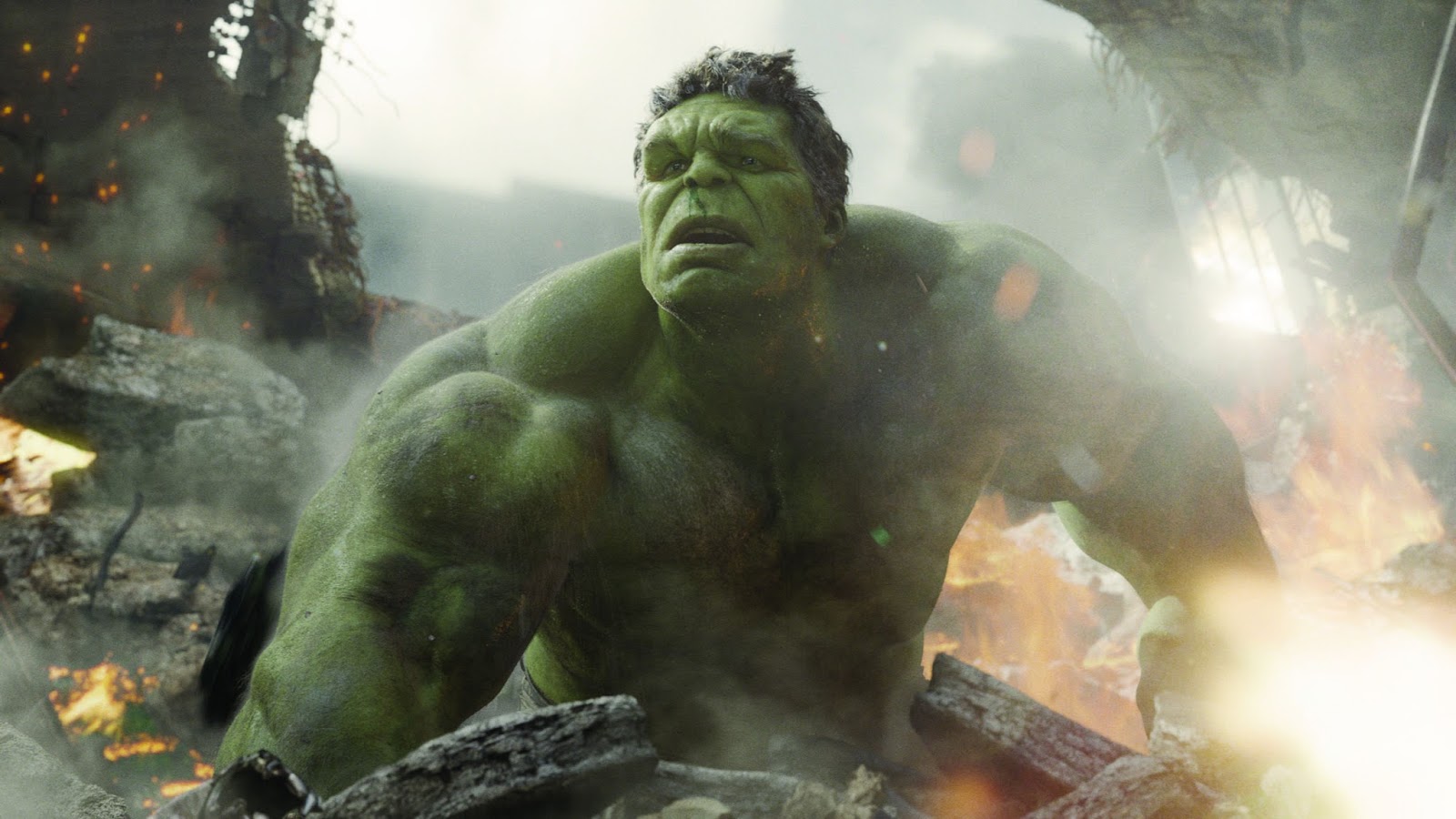
There were no holes to see in our house. So where did that remark come from? I guess it came from the presumption of his degree of disability naturally resulting in wall breaking. Not that damage to property doesn't or can't happen when someone neurodivergent has a meltdown. Sometimes autistic people get frustrated. It is a disability after all. And that activist should know. They were autistic too.  In short, most people, even those who should know better, look at our son and see this:
The Hulk Wallpaper, from The Avengers, Age of Ultron © Marvel Comics Group

Imagine what life would be like if your employers, your primary care physician, your dentist, your spouse always kept an adult size papoose handy "just in case" you lost your temper while at work, getting vaccine boosters, or coming in for teeth cleaning. Everyone on edge, expecting that eventually, you would turn green and rip your pants and when that happened, folk have to be ready to wrap you in a blanket or sit on you or call out the National Guard and thereby keep their walls hole-free.

This is what I am supposed to accept as the reality for our son.Yet they cannot understand why I would find such options inhumane and unacceptable. So let's go there. Let's discuss a moment when Mu just couldn't take it anymore.

We've had a hellish 48 hours recently. It began with a simple, irritant. A creature, either of four or two legs, set off a car alarm in the parking area right in front of our house. At an ungodly hour. When Mu was making a valiant effort to fall into an exhausted sleep. That was followed by too many emergency vehicles speeding to some traffic accident too close to this neighborhood, then dawn breaking and the HOA deciding that this would be a great day to mow every shared lawn space on this massive property. Mu was reaching the limits of his patience when a nearby neighbor, getting ready to leave for work, decided the entire neighborhood really needed to hear his taste in music.

Mu in StarTrek robe, with permission of the subject
 ©Kerima Cevik
What pushed Mu over the edge was in fact, me. I was walking into his room and took a step forward that sent pain searing through my hip so sharply I gasped and involuntary tears poured down my face. Horrified, he went into full meltdown, hitting himself. I quickly checked myself, made my expression as calm as I could in such pain, and repeatedly whispered, "it's not your fault, it is not your fault," until he looked at me and saw me smiling through my pain directly at him. He stopped immediately. A shy, hesitant smile began and I relaxed. I waited seated on the edge of his bed for the pain in my hip to crest and decrease. I suggested a shower might make him feel better. Running water and the StarTrek robe, a birthday gift from his big sister, sent further relief to him. "Let's get you snug in bed and try having you sleep again," I suggested.

When he was tucked in, his favorite music playing on his iPad, I leaned heavily on my cane and limped from his room. "Goodnight, son" I uttered. I moved two slow painful steps down the hall when I heard the words "I love you" waft from his room.

I am the most fortunate of parents.

He lets me know when he's angry at himself. And he lets me know he loves me. That is enough to let me know that this time, my educated guess about the trigger for many of his meltdowns is nearly spot on. That means I can truly work towards a resolution to future upsets by knowing why they happen.

No one is doing research on this. We are simply treating our loved ones like aggressive animals who need obedience school. That needs to change.

Someone I respect greatly told me that caring for a disabled person with intense support needs is a backbreaking, heartbreaking, thankless job. I agree it breaks down the body prematurely. People around you break you down mentally if you allow them to, and usually the ones thinking they are operating with the best of intentions do the worst damage. They demand to know what is wrong with your loved one, then immediately follow with things like "I'm so sorry." My favorite response is "excuse me why are you sorry?" "He's disabled, not dead."

While that may sometimes begin a needed conversation about ableism, the cumulative effect of it is like any form of gaslighting. It is something a parent must counter for their own mental health security. I won't go into having to fight against disparity in everything from health care service quality and delivery to educational supports. It wears down the spirit.

I have a son who demonstrates his gratitude for my care. Many parents don't ever hear that gratitude. They might see it in some fashion, a smile, and eye blink, a squeeze of a hand. But they never hear it. I know what this means emotionally. To know that your son wrongly believes when you suffer it is somehow because you're caring for his needs and being his support staff is a jolting revelation. I see his gratitude in the use of words he rarely feels the need to utter, in his displays of affection reserved for only three people in the entire world, in his attempts to increase his independence. His ultimate love letter, the performance art of his iron will to survive and live on after I'm gone is in his herculean effort to master small but critical life skills.

To understand that my son blames himself for my aging, for a life of harm visited upon me when I was very young because of my race, is heartbreaking. But armed with this understanding, I am able to reduce the dreaded meltdown episodes everyone else seems to fear to events so rare and so brief that when they do occur we are no more surprised than we would be if we had a bad day and just couldn't take anymore.

The criteria for what meltdowns are, why they happen, and exactly how to work with the autistic teen or adult towards a reduction in these events are never a focus of patient-centered research and they should be. Meltdowns are treated like the Gamma radiation that drives the Hulk, and our loved ones are discussed and managed as if any moment they will lift cars and burst through walls, and the National Guard must be called or the entire nation will be destroyed.

This is our story, not the story of another mother and her nonspeaking autistic son. I don't profess to have a "cure" or solution for these bouts of frustration either. I just hope that what Mu and I decided to write about meltdowns begins a better dialog than past articles like the Washington Post's "The Dark Side of Autism." We cannot act as if self-harm and harm to others is a pathological certainty; we need to  begin working towards a true understanding of what causes this state of desperate angst and fugue and thereby learn how to help our loved ones navigate it without chemical, behavioral or physical restraint. What we've done to date is a sort of traumatizing band-aid over the entire meltdown event. You don't force a band-aid on steam escaping a pressure cooker. You move to let steam safely escape. Our approach seems very wrong.

As for Mustafa and I, we are truly good. All the lies about testosterone as Gamma radiation igniting him into a raging teenaged Hulk were so much fertilizer. The truth of puberty and meltdowns? Well, he has acquired a great deal more facial hair. He may need to find gainful employment soon as he is eating us out of house and home. Also, he still doesn't clean his room.

In other words, he's acting like a typical almost 14-year-old.

Now if we could only get the rest of the world to calm down and not stereotype him, we might get some serious quality of life improvements and more stress-free community inclusion going forward.

In the meantime, he lives in a home where all human emotional moments are accepted, love is as abundant as understanding. and this seems to make those episodes rare indeed.

Peace.


Tuesday, November 10, 2015

Surviving Inclusion: Non Speaking Autistic Communication And Ableism

"Not only does God play dice, but... he sometimes throws them where they cannot be seen."
Stephen Hawking


Mustafa using sign language to tell his sister what he wants to buy ©K.Cevik
The quote above reminds me that everyone and everything have value, and our not being aware of what value a human being has cannot negate that worth.

I've been involved with other things for awhile. Things happening in the nonvirtual world, or 'meat space' motivated me to try and talk about some other things that have been on my mind about communication, parenting, and the presumption of competence.

A young autistic friend of mine, Emma Zurcher-Long, learned to type recently and now can communicate by typing independently. She is an excellent example that assistive technology assessments and pathways should be continually offered to autistic loved ones no matter what their age, regardless of whether or not prior attempts fail. The tendency of conventional wisdom driven autism nonprofits, service providers, and other stakeholders to constantly emphasize early intervention, then deem the autistic nonspeaking individual 'doomed' if they cannot meet certain criteria after such intervention  or by a certain age is incorrect . 

Regardless of age, the most important bar to community access, autonomy, self-advocacy, and proper care autistic nonspeaking people face is the lack of communication support. Schools don't prioritize this in IEPs. At a time when some schools are thwarting the Individuals with Disabilities Education Improvement Act (IDEIA) by using online IEP formats as templates to standardize goals by disability rather than creating truly individualized education plans for disabled students, we parents must be vigilant about ensuring that communication is the highest goal for our nonspeaking autistic students. 

 Annual assistive technology assessments should be required for nonspeaking autistic students until an AAC system is found that is a good match. In addition, overall student performance enrichment by intensive speech service support should continue until the individual student has mastered  AAC device-based communication. This means mastery sufficient to use it to communicate effectively with their teaching team in an inclusive classroom setting. Establishing a solid communication foundation between nonspeaking students and all teaching teams that will facilitate their educational lives both now and in the future is critical. This is rarely if ever done in the present special education classroom or in what passes for inclusive classrooms in too many public schools. It is the primary bar to the inclusion of nonspeaking students in the general education classroom. While we are all chasing the dream of the fully inclusive classroom as the natural socialization tool for disabled children, we are overlooking giving them the primary means of accessing that or any other environment that is their right.

The lack of comprehensive augmentative communication support throughout the autism education system allows abuse, neglect,  and the presumption of incompetence of nonspeaking students.

My nonspeaking friends and colleagues' honest revelations of the ups and downs in their life narratives are important because this valuable insight helps us understand that even if we happen to hit on an AAC support that allows our children to type or communicate independently and fluently tomorrow, that doesn't mean that our disabled loved ones will suddenly be 'indistinguishable from their peers', and that is a myth too many parents who manage to get their kids to type grab onto and it is the root of the ableism-based abuse that happens to nonspeaking autistics even after they acquire a means to communicate. 

The example of what happened to Carly Fleischmann after she began spontaneously typing is before us. She lost her ability to type and was forced to find other ways to build words, because neurodivergent Carly continued to be unacceptable to her parents, despite the fact that their ableism throughout her life played a serious part in the pain and self-loathing she now carries. Disability doesn't disappear because someone is able to communicate better or because technology offers greater community access. Those of us who parent and educate need to grasp that and accept that communication doesn't equal a 'cure' of disability. Nor does being able to type to communicate mean we have the right to demand our view of 'normalcy' from a divergent individual.

The critical nature of gaining, then mastering device-supported communication means that those autistic individuals may be better able to explain when they've erred and for us who are parents, that means the doors to facilitating and mentoring open wider. Gaining AAC support also means the chance for diagnosis of conditions like auditory processing disorders that require the person being tested be able to communicate what they hear during a test. So if you are carers of autistic people who have gained communication skills through AAC support, consider testing for conditions that may still be undiagnosed before placing increased demands on your loved ones they may not be able to process.

As people grow up and grow older, they will argue. Another holdover from both the angelic disabled child infantilization and the idealized child myth is the concept that somehow our disabled offspring don’t have a right to lose their tempers, behave badly, or fail in the same way nondisabled offspring do. We parents, educators, and carers need to stop putting that kind of expectation of compliant perfection on our disabled nonspeaking loved ones and students. 

Why then is compliance and correction writ so large in autism support and intervention? We need to educate the communities outside of ours that our children have a right to express frustration, sadness, disappointment, fear, and anger as long as they cause no harm to themselves and others. We have this same expectation of every young person in society, yet our expectations of our disabled young people are neither fair nor reasonable.

What we are not doing in the disability rights advocacy community is stressing that failures and behavioral missteps are how we humans learn.  We were never meant to be the behavioral prison guards of our own children. We were meant to parent them. Once we change that attitude, which is gaslighted into our brains by all those meant to provide service and support for our children, we will be at the doorstep of the breakthroughs we need to properly parent our own autistic children regardless of age, behavioral history, perceived degree of disability or any other bar to a parent simply being a parent to their children. 

 Some nonspeaking people may never be able to communicate as fluently as others. Some may be truly operating at a cognitive level that is infantile. We must accept everyone as they are, and not reject association with a nonspeaking adult that is not the magic autistic trope or the silent altruistic shaman who wiggles his nose and causes miracles. We have to accept neurodivergence in all expressions and at all levels.

Many people, including neurodivergent people, either refuse to presume that a person with global developmental challenges can live and achieve an autonomous quality of life as an adult with the proper supports or refuse to accept this expression of autism as being part of the greater autism community. Everyone who holds these attitudes needs to realize that they are impeding the uplifting of an entire community and being part of a caste system that does not truly benefit anyone. When you act based on function labels you not only isolate  your peers but you do the dirty work of ableist people whose goal is to divide this very large block of people into smaller, more manageable groups who can then be denied the supports and services they need.  Wake up and understand that my son is just as great a person as a savant, an autistic who uses verbal speech, or a famous autistic individual whose head is filled with the helium of false praise so common on social media.

An individual'sat degree of disability should never matter in the fight for human rights. Just as when a person who identifies as Black is Black whether they have vitiligo or not, a person who is Autistic is Autistic whether you are comfortable with their visible degree of disability or not. If people cannot tolerate being around teens like my son and his peers, then they need to take a good hard look at their own struggles with internalized ableism, rather than redefining autism to suit their inability to accept a group of people who share their neurology.

O. J. Brigance uses eye gaze technology to give the pivotal testimony against euthanasia legislation in Maryland.


The video above features O. J. Brigance using AAC supporting eye-gaze technology to give testimony against euthanasia legislation in Maryland.

One more very important thing about assistive technology for communication. If the chosen method of communication does not lead to the nonspeaking autistic user being able to live an autonomous life, then a better match must be found. Assistive technology only works if the end user is ultimately able to communicate whether parents or care providers are there or not. Note that both O.J. Brigance and Stephen Hawking have remained productive in the advanced stages of ALS because their AAC communication technology allows them to communicate autonomously with eye gaze technology. This method of communication support was well thought out when they were at a stage of greater mobility. When we choose assistive technology we must be forward-thinking by making decisions that can bring communication autonomy for an individual's lifetime and we must give our students the foundation to be able to shift from older systems to modern, more seamless ones requiring less outside support. As a community, we should be lobbying for funding to expand the use of the most advanced technology for our own children, fighting for their autonomy, rather than warring over causation. 

May all your parenting, teaching, peer mentoring, or self-advocating days be joyful ones. 


~~~~~~~~~~~~~
For my Son, Magnificent Mustafa N. Çevik and his outstanding father C.Nuri Çevik, Emma Zurcher-Long and Ariane Zurcher, Henry Frost and Lauri Swan Hunt

----------------------
References:
For more information about under the radar autistics who type independently with AAC devices:
On The Silenced Voice of Carly Fleischmann