Showing posts with label #DisabilityStories. Show all posts

Monday, December 23, 2019

AutisticWhileBlack: Seventeen

Image of a tall, multiracial Latinx presenting male with black cropped
hair, a thin mustache, wearing teal and blue striped polo shirt and
black slacks. He is holding an iPad AAC device in his hand. Image
posted with permission of the subject. Credit and Copyright Kerima
Cevik.
Our son is seventeen. He used to enter the month of December gravely ill every year, but we managed to overcome that for so long that this year when he became ill again, it was a shock. The shock reminded me that my nearly completely grown-up son, with his ancestors' looks and a mustache that is the envy of his teen peers, is still very much disabled.

My son was born in the nation's capital, during the worst snowstorm the DMV had seen in years. We had to try and reach the hospital in a taxi that volunteered to take us when the ambulance, trapped in the snow, could not go further. Everything about his life has been no less dramatic.

 We first met an idealistic nutritionist on the grueling December when he was given the gift of diagnoses. Grueling because the diagnoses were so grim they required we get repeated followup appointments at the Kennedy Krieger Institute to confirm the fears of the pediatric neurologist. Gift, because to define one's disabilities means to understand them. Some can never put a label, prognosis, or plan to theirs.

Our idealistic nutritionist was in her first month on the job, and as she read our son's chart and smiled at him and us, she gently asked if we could afford organic food for him. She was positive, encouraging. Kind. So it was a shock to believe that when we followed up with her after she became the head of her team and our son was not quite twelve, years of working with nonspeaking autistic youth had turned her into another person. She was rude, short, bitter. "I'm a department head, you need to follow up with someone else." "He's entering puberty. I suggest you get a lock for your refrigerator and hide the kitchen knives." The look of anger and horror on our faces was so apparent, and my husband's sharp angry retort was so loud in the suddenly silent room that she seemed to wake from a jaded dream. She immediately apologized. "Of course I didn't mean to imply your son was violent." Our son was right there. She said these things and he was looking right at her! Why did my husband have to remind her of that? What had happened to this woman after a decade of supposedly providing nutritional services for nonspeaking autistic children?

Our son is seventeen. We have neither considered nor had the need to bolt the refrigerator. Our knives are not locked away. His absolute favorite thing is baking, and he loves cooking and food culture in general. He has grown into a happy, loving young man. The nutritionist, like so many other professionals who were supposed to be there to help our son but came with attitudes that prejudiced the quality of care he received, were wrong.

He progressed when they said he could not. He overcame when they refused him the AAC equipment he needed to communicate and the supports he needed to succeed in a traditional classroom. They failed him. And after years of trying to fight for him, I felt like a failure each time I saw other nonspeaking autistic children gaining resources I never knew existed. Until I realized that what made him different was me. All those children, all of them, were not the children of Black women.

It was an awful moment when this all hit me. My son was having a dermatitis followup and his father was able to take time out from work to come with me to his pediatric clinic. The doctor who had seen him when my daughter and I brought him initially had been rude, dismissive, victim-blaming. When he saw my husband and son he seemed not to recognize me. He was polite, kind, caring. He rechecked his initial findings. He checked our son's bloodwork and gave us a private exam room while doing so. My daughter and I were livid by the end of the visit. It turns out he believed my husband was embassy personnel. When I was just a Black woman with Hispanic looking offspring, my disabled son was a waste of his time and training. That made me realize that my son pays the Black tax for racism directed at me the way bartenders paid the health cost for second-hand smoke.

We realized that we could not overcome disparities in professional services biased by systemic racism. Our son's additional burden of having to overcome the obstacles placed in his path by systemic ableism because he is not an autistic who has verbal speech and he also carries and ID/DD label was so unfair it nearly crushed me. But I am very lucky. I have Mu for a son.

Mustafa is an incredibly kind, loving, sweet son. So much so that I cannot remain depressed about our chances of surviving in a world where so much disparity and hatred is directed at us. He hugs us and engages us and plays endless sweet, harmless pranks on me. He seems to know when I feel defeated and always comes and sits awhile with me, trying to cheer me up. He is the most hopeful person I've known. It makes me keep going.

We worried about his weight because we were lectured endlessly about the problems he would have. He was born heavier than his premie peers. But he has, for the most part, learned to control his own eating. We were told he just was incapable of so much. All untrue. It makes me wonder how many families were literally shoved into clinically depressive states by well-intentioned professionals trying to be "realistic" about other people's disabled children.

What I wish for as we enter this new decade is for someone to look at my son and say he will be alright. Not that he'll survive, but that he will thrive. He deserves to thrive as much as any other nonspeaking autistic transitioning teen. Further, he deserves the chance to thrive as much as anyone his age. I haven't given up hope that I will live to see that happen.

Sunday, July 9, 2017

AutisticWhileBlack: Saving Mr. Reginald Cornelius Neli Latson

Image of a framed photo of handsome young African-American Autistic male in a white t-shirt and plaid shirt, smiling at
the camera. the photo is cradled in the hands of his mother. Photo of Neli Latson, credit Washington Post
Some Autism organizations have gained mileage, prestige, status, and accolades from the suffering of young Mr. Reginald Cornelius 'Neli' Latson. Although I silently witnessed a great many self-congratulatory pats on one another's backs in the aftermath of Governor Terry McAuliffe's conditional pardon,  I continue to remind myself each day that while everyone else has moved on to the next national headline, Neli Latson is in the mental health institutional equivalent of a prison, a particular institution with a long history of abuse without proper accountability when he should never have been placed in any prison at all.

We, the community who should be following up his case, who should be demanding a less restrictive environment and pushing for a plan of Trauma Informed Care, have benefitted from his tragedy, abandoned him to his fate, and moved on.

It is only a cruel twist of fate that Arnaldo Rios Soto, whose only misfortune was being the witness to the police shooting his trusted support staff member while that Black professional lay flat on the ground with his hands up, is also now housed in the same inappropriate facility in Florida. Are the only autistic lives that matter those that make the evening news?

If Neli was your son, would you forget him in some psychiatric hell hole after he suffered years of being restrained, pepper sprayed, shot with a Taser, bound in a restraint chair for hours, placed in solitary confinement, and criminalized all for having a mental health crisis during a catastrophic encounter with a police officer.?

The truth of the matter is particularly now, with an Attorney General more interested in reversing the previous administration's criminal justice efforts than taking any human rights violation cases to trial, any autistic child, teen or adult, can end up in Neli's situation, regardless of race. It may happen more frequently to nonwhite families, but these injustices will surely arrive at every home. Like Edgar Allen Poe's Red Death, this type of injustice eventually comes for all.

Do you wish to save Neli Latson? Imagine he's your son and make him matter! Ask Autism and disability organizations why they have not followed up on his case. Ask if Neli is being treated for the trauma induced by putting him in solitary confinement, an act that is considered a form a torture and causes permanent harm to especially the brains of children and teenagers. Demand that organizations follow up on all cases like Neli's and give members updates on whether Trauma Informed Care is part of a recovery plan for Neli, Arnaldo, and others like them. Lobby for Trauma Informed Care to be the standard of care in every institutional setting and group home in your state.

Our community organizations should be following up on every case like Neli's. If they aren't, how can they say they are advocating for our children?

What is Trauma Informed Care?
Per Kenneth Huckshorn and JaniceLebel, "Trauma informed care is grounded in and directed by a thorough understanding of the neurological, biological, psychological, and social effects of trauma and the prevalence of these experiences in persons who seek and receive mental health service."  I first heard of this from an activist friend and colleague, Savannah Nicole Logsdon-Breakstone, who blogs on MH, DD, ASD, and Disability Advocacy on Crack Mirror In Shalott. Savannah also referred me to her mother, who trained in Trauma Informed Care. TIC is something everyone in the Autism community should know about and champion. Here is a short introduction, quoting Alameda County's Trauma Specific Interventions page:

Trauma informed care is about creating a culture built on six core principles:
1. Trauma Understanding: through knowledge and understanding trauma and stress we can act compassionately and take well-informed steps towards wellness.
2. Safety & Security: increasing stability in our daily lives and having core physical and emotional safety needs met can minimize our stress reactions and allow us to focus our resources on wellness.
3. Cultural Humility & Responsiveness – when we are open to understanding cultural differences and respond to them sensitively, we make each other feel understood and wellness is enhanced.
4. Compassion & Dependability – when we experience compassionate and dependable relationships, we re-establish trusting connections with others that fosters mutual wellness.
5. Collaboration& Empowerment – when we are prepared for and given real opportunities to make choices for ourselves and our care, we feel empowered and can promote our own wellness.
6. Resilience & Recovery – when we focus on our strengths and clear steps we can take toward wellness, we are more likely to be resilient and recover.
Our community does not have Trauma informed care models specifically for trauma commonly suffered by autistic children and adults. No one has developed one specifically for autistics and the tragedy of this is the lack of said models result in institutional settings like the Judge Rotenberg Center further traumatizing autistic youth they are supposed to be helping.  The difference between having Trauma informed care systems and not having them, again from Alameda County's excellent page on this:


Systems without Trauma Sensitivity

Misuse or overuse displays of power – keys, security, etc.
Higher rates of staff turnover and low morale
Disempowering and devaluing consumers
Consumers are labeled and pathologized
Focused on what’s wrong with you

Systems with Trauma Informed Care

Recognition that coercive interventions cause trauma and re-traumatization
Awareness/training on re-traumatization and vicarious trauma
Value consumer voice in all aspects of care
All inclusive of survivor’s perspective and recognition of person as a whole
Focus on what has happened to you

The supposed goal of any mental institution is healing. If a place like the JRC and Neli's present placement in an AdvoServ facility are using methods that are effective, then those housed there would improve, and there would be a constant movement to less restrictive environments. This is not the case, and client abuse, high staff turnover, and patients housed for years with no improvement are the reality. So something is not working, and that means better, more humane, more inclusive methods of healing trauma must happen.

Please speak up and step up. Start emailing and calling organizations and reaching out to Neli's family. Don't forget him because the media has and he is now used as a symbolic object to show proof of success in advocacy.

I haven't.

Save Mr. Reginald Corneliaus Neli Latson, #AutisticWhileBlack.  #FreeNeli. Give him back what quality of life he has left.

He could be your son.

==================
Resources
The Story of Neli Latson:
https://www.washingtonpost.com/opinions/ruth-marcus-in-virginia-a-cruel-and-unusual-punishment-for-autism/2014/11/14/9d7f6108-6c3b-11e4-b053-65cea7903f2e_story.html?utm_term=.fdda40a8442e
http://intersecteddisability.blogspot.com/2014/11/making-neli-latson-matter-invisible.html
http://intersecteddisability.blogspot.com/2014/12/on-ruth-marcuss-latest-op-ed-on-neli.html
https://storify.com/kerima_cevik/freeneli-1
https://www.change.org/p/terry-mcauliffe-grant-a-pardon-to-reginald-cornelius-neli-latson

On the horrors of Solitary Confinement:
https://www.theatlantic.com/health/archive/2014/06/how-solitary-confinement-hurts-the-teenage-brain/373002/
http://serendip.brynmawr.edu/exchange/serendipupdate/lonely-madness-effects-solitary-confinement-and-social-isolation-mental-and-emotional
http://www.newyorker.com/magazine/2009/03/30/hellhole
https://psychcentral.com/blog/archives/2016/06/29/solitary-confinement-crushes-any-chance-of-true-recovery/
http://www.pbs.org/wgbh/frontline/article/what-does-solitary-confinement-do-to-your-mind/
http://repository.law.umich.edu/cgi/viewcontent.cgi?article=1035&context=mjlr

Unjust Incarceration and Solitary Confinement While Black:
On Trauma Informed Care:

Savannah Logsdon-Breakstone's Blog

On Abusive Institutional Methods - The Judge Rotenberg Center

Via Shain Neumeier, esq & AutisticHoya
S.Neumeier via ASAN:
S. Neumeier
S. Neumeier
For Your Own Good: Coercive Care In the Lives of Marginalized People
AutisticHoya
NBC News

On Abuses In AdvoServ Centers in Florida and Maryland

Monday, July 3, 2017

Why Don't You Accept Your Child's Autism? Yes, But....

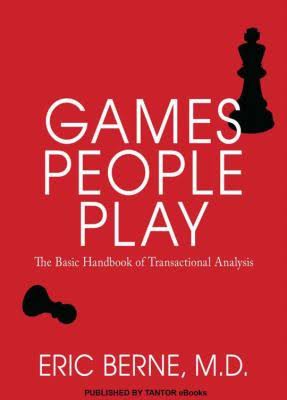
"Why Don't You ... Yes, But" is a mind game listed in Games People Play: The Psychology of Human Relationships by Eric Bernie, MD. It is a transactional interaction that is in effect an equivocation where one party begins a sentence with "Why don't you____ and the respondent answers "Yes, but....."

Waiting for genuine Autism acceptance is like waiting for Godot. If I shouted "Why don't you accept autism?" into the grand canyon of predominantly white, well-to-do autism parents whose voices dominate this conversation, the echoed response would instead be "Yes, but..."

Book cover for Games People Play the
Basic Handbook of Transactional Analysis,
showing two black chess pieces, a queen an
a pawn in black. The book is red with  the
title and author's name in white lettering.
 lettering. Image credit: Google books
A few months ago I saw a parent who commands quite a following among special needs parents launch into her latest effort to "cure or reduce" her adult son's autism. Her son speaks, but she has ensured he has very little say in the matter of "fixing"  his own state of being. 

Speaking for her son and about him without him, she declares that neurodiversity is a fine thing for other autistics but her son needs the autism "fixed."  I take this to mean, in translation, that how she really feels is that there have always been parts of her son's visible disability she cannot cope with, therefore she despises autism and wants the autism parts "fixed." Her plan in this instance involves resolving his "gut" issues. I read the entire online lament, and shook my head.

This is in part an indication of the failure of Steve Silberman efforts through his book NeuroTribes to actually positively change public perception of autism. The book was not just supposed to make a profit. It was meant to explain the history of autism as a disability, properly define the often misused term neurodiversity, define autism's place in an inclusive society, and highlight how acceptance of that disability opens the door to accommodations and supports that allow autistic people to navigate a more justly designed and therefore more inclusive society.

Because the book is in large part an expansion of his "Geek Syndrome" essay the history told and the characters in those histories are limited to what will enhance the historical narrative for his predominantly white, higher income, target audience. Despite its popularity, with very few exceptions, it failed to connect with that intended target audience beyond parents like the one I've described in the previous paragraph. 

These parents simply misconstrue the terms acceptance and neurodiversity without changing their view of autism as a disability. Upper middle class to wealthy parents continue the same medical model narrative of excluding their autistic loved ones from the neurodivergent label or at best, making a compartmentalized adhoc acceptance of neurodiversity as they redefine it. It is the "neurodiversity is great, but those autistics are..."  the "not like my child," trope's latest variant.

Unaware of their own ableism and fiercely defensive when called out about how ablelist and boundary crossing the broadcasting of a disabled offspring's health concerns or their opinions of how much they choose to accept their offspring are,  they actually believe they understand neurodivergence and acceptance when they clearly do not. There is no qualifier in acceptance of the entirety of a loved one's disability. 


Book cover of NeuroTribes red
and black lettering with the book title
and author's name in read an subtile
except the word Autism in black.
Image of a leafy plant with birds and
butterflies of various colors and varies
on or around it. Image credit Goodreads
Many parents believe that the blame for anxiety disorders should be placed at autism's door. In fact, anxiety develops in part in reaction to parental intolerance of stimming and other self-soothing behaviors whose purpose is to overcome a hostile environment. Stimming is short for self-stimulatory behavior. 

What I find saddest about these parents is that to them the solution is never found in first ensuring that they aren't triggering issues in their own children, everything that goes wrong must be autism. While is it fine to set goals and presume competence, gaslighting your autistic loved one into conforming to a parent's expectation of what would be the most acceptable version of their autistic child for their own lack of embarrassment and comfort levels isn't the point. 

The primary requirement for autism acceptance is not saying things like "I accept my child but I don't accept his autism." Acceptance means the totality of a disability is accepted. Then challenges that are actually the result of the disability can be looked at and solutions can be sought to address these challenges. If a parent said to their child who lost a leg in a car accident that they loved them but not their body with a missing leg, everyone around them would be horrified. But no one makes a sound when a mother laments that neurodiversity is a fine thing but now she needs to continue working on her son's gut problem, which may cure him.

when  I ask, do you accept that your child's neurodivergence is a disability? The answer should never be the equivocation game "Yes, But..."

Did Mr. Silberman's book have a positive impact on its target audience? Look around. Are there any sharp increases in parent allies against ableism understanding the key to lifetime improvements in the quality of life for their autistic offspring requires less time trying to cure their guts and more time fighting for their civil liberties and rights to access and accommodation in society? I'll help you out. No, there are not.

Meanwhile, this particular parent, cheered on by her fanbase and without her adult son's consent, continues her efforts to rid herself of her son's autism which she accepts but doesn't accept, but hey, at least she now uses the word neurodiversity when speaking of how much she hates it.

If that was worth the price of excluding nonwhite and non-cis histories from NeuroTribe's narrative of autism, I hope it was worth it.

References:
Games People Play Explained:
https://www.amazon.com/Games-People-Play-Transactional-Analysis/dp/0345410033
https://en.wikipedia.org/wiki/Games_People_Play_(book)

The Geek Syndrome Article
https://www.wired.com/2001/12/aspergers/

The Problem With NeuroTribes:
http://intersecteddisability.blogspot.com/2016/01/autistic-while-black-erasure-of-blacks.html
http://intersecteddisability.blogspot.com/2016/05/how-not-to-endorse-anthology.html


Tuesday, April 11, 2017

Nonverbal, Nonspeaking, Autistic Word Navigation

Mustafa Cevik. image of a large, biracial Hispanic presenting
male wearing a sky blue nd white striped
polo shirt sitting in a wheelchair drinking from a water
bottle. Posted with permission from the subject. ©Nuri Cevik
The day I met Lydia X.Z.  Brown, they told me about a gentleman named Michael Forbes Wilcox and the word nonspeaking. Per Mr. Wilcox, most autistic people were incorrectly defined as nonverbal when they were actually nonspeaking.

This is why so many early intervention programs entail depriving autistic children of AAC support while battering them with forcible speech interventions. I guess their logic is there is no apparent physical challenge to producing speech so whatever utterances can be produced should be forced out of the autistic child by any means necessary.

The result adds to the presumption of said autistic child's incompetence because the child may have limited verbal speech ability but much larger AAC supported speech ability.

Thanks to Lydia Brown, I mostly use the term nonspeaking when discussing my son, but his situation is a bit different than most of his autistic peers. My son was diagnosed with damage to an area of his brain related to speech. We were told therefore that he was clinically nonverbal and probably wouldn't be able to speak. At all.

Ever.

 Mu has spoken on occasion in more than one language since that diagnosis and even during the time he was being evaluated. We aren't certain technically how he is able to do it. When it happens I try to act casual. But because when he does speak it is usually related to responding affectionately to either his father his sister or me, I am inevitably overcome with emotion. Just after such a moment, I  quietly remove myself from the room so he doesn't misunderstand and burst into tears of joy.

His voice, as he has entered puberty, is deeper, richer, and more beautiful now.

We were outside yesterday and kids ran by screeching as they played. It disturbed him. It is only on these occasions that I realize how big and different he is from others his age who do use verbal speech freely.

It seems to me, other fourteen-year-olds, talk too much.

His rare affectionate utterances have greater worth to me than the shrieking profanities and loudly whispered ableist slurs of his teenage peers dressed in what they consider their best adolescent finery.

Yesterday I realized again quite clearly that Mustafa, nonspeaking, is a better man than all the howling herd of fourteen-year-olds stomping about trying to figure out who they are by hurling insults at my silent, disabled son.

I love him. As he is. If he never utters a word again. We will continue to stand together, with him leaning on me when he needs physical support, and face the angry ableist racist mob. He doesn't need to speak. Unlike fourteen-year-olds, I know the value of well-placed words in defense of my son's right to navigate the same spaces as they do.

Autism Month should exist to educate those people. It does not. It makes them pity or resent my son and neither he nor I abide that attitude either. They should be taught that words are capital and each moment they spew the wrong ones in misunderstanding, fear, and hatred they bankrupt their own souls. This doesn't diminish my son, no matter how different he may appear to them. Different is not less. It is simply different. Disability and race are the only areas in which difference is not considered rare and precious.

Meanwhile, back at our house, a single word uttered by my son at the right time has the power to bring his jaded old Afro-Latina mother to tears.

Word.


----------------------
Resources

Educate yourselves at Lydia X.Z. Brown's blog:
http://www.autistichoya.com/

More on The Language of Autism by Michael Forbes Wilcox:
http://www.mfw.us/blog/2017/02/27/the-language-of-autism-special-interest-as-a-stigmatizing-phrase/


Thursday, February 16, 2017

Autism Research Battle Fatigue

Mu with iPad AAC ©Kerima Çevik
It begins every February. Just after Valentine's Day, the build up of hype to Autism Month kicks off with the media blasting "breakthroughs" "new research" "new hope" for autism. We grit our teeth and manage to get through it, but the latest "breakthrough" got on my husband's last nerve. He was really angry and so was I because the pattern is an infinite loop that paves the highway to nowhere that helps our son.

It goes like this: Some minor thing is hyped in the press as if it is a medical miracle, followed by a small bit of news that changes nothing and does nothing to help our 14-year-old nonspeaking autistic son with his AAC needs, his education, his healthcare challenges or his community supports. Here's how the BIG AUTISM NEWS was headlined:

Study: Detecting Autism May Be Possible Earlier in Child's Life 

But early detection doesn't help diagnosed autistics over the age of four at all. The average lifespan of an autistic person is 16 years less than the lifespan of anyone else according to a Swedish study. Inevitably, research always focuses on birth and early intervention, then ignores the entire life that already diagnosed autistics have to live after those first four years.

Here is what the headline should have read:

Brain Scans Detect Signs of Autism in So called 'High-Risk Babies'(i.e., siblings of autistic children) Before 1st Birthday

Here is what this study, which must be replicated in order to base any sort of planning or policy on it, actually says in brief, plain language:
If a family has one autistic child and they have an infant, and that infant has a bigger brain, then that infant has an 80% chance of being autistic. Bigger brains can be checked for by MRI scans on sleeping infants.

That is it.

Whenever I hear about new research, I go to Scientific American or the peer-reviewed journal publishing the original research paper. This allows me to see what the research was actually about rather than have to wade my way through hype and skewing of research results for attention or ratings. Here's the article on the actual research paper:

https://www.scientificamerican.com/article/autism-starts-months-before-symptoms-appear-study-shows/

Wow. I love millions of dollars in research that states the genetically obvious.

But hey, early detection means early intervention and the chance for 'making' infant siblings of autistics indistinguishable from their peers, right? Because hiding in plain sight is 'good' and means fewer resources and higher demands on children who will still be autistic, but just look and behave as if they aren't. It seems that autism research isn't about supporting autistic people and their families, it is about making society comfortable by hiding those who are autistic among those who are not. Are we now entering the "Autism: Don't ask, don't tell" era?

Tell me, how does this help my son with the accommodations he needs? How does this research aid in his primary challenge, which is being nonverbal? How does this improve his sleep cycle disorder, immune system weakness, gastrointestinal issues? This is not an autism breakthrough. This is an autism research paper in which genetic predisposition for autism was likely and success was almost inevitable.

My husband and I are tired of being perpetually annoyed at the sole emphasis on this type of research and the media's hype of it because funding that should go to improving the lives of our son and his peers is instead being disproportionally poured into detection and DNA testing. Yeah. We actually get our son is autistic. So does he. Aren't all of you tired of this, too?

We don't want research into new and improved chemical restraint in the guise of powerful hypertrophic drugs. We don't want to fund the ambition to create an autism test that works like the Down syndrome test so parents can abort their autistic babies or "CRISPR" the "autism genomes" away. Nope. I don't care how soon they could have diagnosed my son as autistic but did not. What I care about is how to help him become as autonomous as possible and how to ensure he has a safer, more accessible world to live in. I care about him not dying before his time.

We watch million of dollars go into everything but what autistic people need. No needs assessment has been done on what research autistic people and their families need that might help them right now, and each time one of these research puff pieces comes out our exasperation escalates to the point where we are now in full autism research fatigue, and just don't want to hear it. Research claiming to be "for autism" should actually benefit our autistic loved ones, not focus solely on early intervention and early diagnosis. It is past time for autism research to aim for client-centered outcomes with the active inclusion of autistic people and their families beyond use as data sources and genetic material.

We will have two more months of announcements on research "breakthroughs" "new research" and "new hope" "for" autism, not autistic people,

Caveat Emptor, buyer beware autism families. When it comes to autism research rolled out from February to April's fundraising month for autism, ask yourselves how it benefits your autistic loved one. The truth is, we are the ones asked to participate in various events to raise funding for autism research. Think about where that money will go and make your voices heard for autism research that benefits and improves the quality of life for your autistic loved ones and increases their lifespan. Then speak out and do what is necessary to drive funding to that research.

-------------------------------------
References
On New Autism Research
Scientific American 
Autism Starts Months before Symptoms Appear, Study Shows
Flagging children early offers the possibility of more effective treatmenthttps://www.scientificamerican.com/article/autism-starts-months-before-symptoms-appear-study-shows/
NBC News
Study: Detecting Autism May Be Possible Earlier in Child's Life http://www.nbcnews.com/nightly-news/video/study-detecting-autism-may-be-possible-earlier-in-child-s-life-878228035632
On the Shortened Lifespan of Autistic People 
Independent
Why do many autistic people die before the age of 40? http://www.independent.co.uk/life-style/health-and-families/health-news/autism-why-do-many-autistic-people-die-before-the-age-of-40-a6937911.html
On CRISPR and Targeted Genome Editing
New England BioLabs
CRISPR/Cas9 and Targeted Genome Editing: A New Era in Molecular Biology
https://www.neb.com/tools-and-resources/feature-articles/crispr-cas9-and-targeted-genome-editing-a-new-era-in-molecular-biology

Friday, October 7, 2016

Meltdowns Over Meltdowns


Mu looking away from the lamp in the living room. Noticing this we removed the lamps.
Sometimes, all of us have meltdowns. Not slight upsets, or moments of rage. Full blown, life sucks meltdowns. If you don't carry an autism label and you don't harm yourself or others while having them, they remain private moments of vented frustration one may or may not be ashamed of. Hopefully, no thoughtless friend or family member will live broadcast your meltdown and we won't see it on Periscope or Snapchat.

Like steam escaping from a pressure cooker, once the meltdown is over, life goes back to being lived.

The problem with the concept of melting down and people like my son is the trifecta working against their right to show upset to any large or small degree. That would be the triple stigma of an autism label, not being able to speak about what is frustrating to such a degree that meltdown results, and being a large teen compared to their peers. Add to that my son being a person of color, and specters of possible meltdowns and all the potential imaginary damage that he might inflict during one sends people who are supposed to educate or help resolve his health issues into a fear-laden fantasy of endless catastrophic possibilities. Those possibilities drive critical decisions about everything from where he should be educated to what kind of quality of healthcare he gets and he suffers the consequences for this fear-based policy making in his exclusion from things that the ADA and IDEA are supposed to be there to ensure he is included in.

Like all humans, he loses patience and loses his temper.

He must be allowed to express that to some degree, as must we all.

It does not follow that every planning work about him should lead with how to restrain him, chemically or otherwise. This drive to drug him or place him in the care of men who resemble NFL defensive linemen "just in case" is one of our greatest challenges to counter and this makes his options as he grows older unjustly limited by what people imagine might happen should he lose his temper. We have refused several potential respite providers whose solution to our son's size was to assign someone to him large enough to "restrain him" if he should have a meltdown.

Contrary to popular belief, he's actually not a giant, walking, perpetual, meltdown.

I was saddened when even an activist who I respected, after a meeting, made a snarky comment about potential holes in the walls of any house our son might live in.
Really?

There were no holes to see in our house. So where did that remark come from? I guess it came from the presumption of his degree of disability naturally resulting in wall breaking. Not that damage to property doesn't or can't happen when someone neurodivergent has a meltdown. Sometimes autistic people get frustrated. It is a disability after all. And that activist should know. They were autistic too.  In short, most people, even those who should know better, look at our son and see this:
The Hulk Wallpaper, from The Avengers, Age of Ultron © Marvel Comics Group

Imagine what life would be like if your employers, your primary care physician, your dentist, your spouse always kept an adult size papoose handy "just in case" you lost your temper while at work, getting vaccine boosters, or coming in for teeth cleaning. Everyone on edge, expecting that eventually, you would turn green and rip your pants and when that happened, folk have to be ready to wrap you in a blanket or sit on you or call out the National Guard and thereby keep their walls hole-free.

This is what I am supposed to accept as the reality for our son.Yet they cannot understand why I would find such options inhumane and unacceptable. So let's go there. Let's discuss a moment when Mu just couldn't take it anymore.

We've had a hellish 48 hours recently. It began with a simple, irritant. A creature, either of four or two legs, set off a car alarm in the parking area right in front of our house. At an ungodly hour. When Mu was making a valiant effort to fall into an exhausted sleep. That was followed by too many emergency vehicles speeding to some traffic accident too close to this neighborhood, then dawn breaking and the HOA deciding that this would be a great day to mow every shared lawn space on this massive property. Mu was reaching the limits of his patience when a nearby neighbor, getting ready to leave for work, decided the entire neighborhood really needed to hear his taste in music.

Mu in StarTrek robe, with permission of the subject
 ©Kerima Cevik
What pushed Mu over the edge was in fact, me. I was walking into his room and took a step forward that sent pain searing through my hip so sharply I gasped and involuntary tears poured down my face. Horrified, he went into full meltdown, hitting himself. I quickly checked myself, made my expression as calm as I could in such pain, and repeatedly whispered, "it's not your fault, it is not your fault," until he looked at me and saw me smiling through my pain directly at him. He stopped immediately. A shy, hesitant smile began and I relaxed. I waited seated on the edge of his bed for the pain in my hip to crest and decrease. I suggested a shower might make him feel better. Running water and the StarTrek robe, a birthday gift from his big sister, sent further relief to him. "Let's get you snug in bed and try having you sleep again," I suggested.

When he was tucked in, his favorite music playing on his iPad, I leaned heavily on my cane and limped from his room. "Goodnight, son" I uttered. I moved two slow painful steps down the hall when I heard the words "I love you" waft from his room.

I am the most fortunate of parents.

He lets me know when he's angry at himself. And he lets me know he loves me. That is enough to let me know that this time, my educated guess about the trigger for many of his meltdowns is nearly spot on. That means I can truly work towards a resolution to future upsets by knowing why they happen.

No one is doing research on this. We are simply treating our loved ones like aggressive animals who need obedience school. That needs to change.

Someone I respect greatly told me that caring for a disabled person with intense support needs is a backbreaking, heartbreaking, thankless job. I agree it breaks down the body prematurely. People around you break you down mentally if you allow them to, and usually the ones thinking they are operating with the best of intentions do the worst damage. They demand to know what is wrong with your loved one, then immediately follow with things like "I'm so sorry." My favorite response is "excuse me why are you sorry?" "He's disabled, not dead."

While that may sometimes begin a needed conversation about ableism, the cumulative effect of it is like any form of gaslighting. It is something a parent must counter for their own mental health security. I won't go into having to fight against disparity in everything from health care service quality and delivery to educational supports. It wears down the spirit.

I have a son who demonstrates his gratitude for my care. Many parents don't ever hear that gratitude. They might see it in some fashion, a smile, and eye blink, a squeeze of a hand. But they never hear it. I know what this means emotionally. To know that your son wrongly believes when you suffer it is somehow because you're caring for his needs and being his support staff is a jolting revelation. I see his gratitude in the use of words he rarely feels the need to utter, in his displays of affection reserved for only three people in the entire world, in his attempts to increase his independence. His ultimate love letter, the performance art of his iron will to survive and live on after I'm gone is in his herculean effort to master small but critical life skills.

To understand that my son blames himself for my aging, for a life of harm visited upon me when I was very young because of my race, is heartbreaking. But armed with this understanding, I am able to reduce the dreaded meltdown episodes everyone else seems to fear to events so rare and so brief that when they do occur we are no more surprised than we would be if we had a bad day and just couldn't take anymore.

The criteria for what meltdowns are, why they happen, and exactly how to work with the autistic teen or adult towards a reduction in these events are never a focus of patient-centered research and they should be. Meltdowns are treated like the Gamma radiation that drives the Hulk, and our loved ones are discussed and managed as if any moment they will lift cars and burst through walls, and the National Guard must be called or the entire nation will be destroyed.

This is our story, not the story of another mother and her nonspeaking autistic son. I don't profess to have a "cure" or solution for these bouts of frustration either. I just hope that what Mu and I decided to write about meltdowns begins a better dialog than past articles like the Washington Post's "The Dark Side of Autism." We cannot act as if self-harm and harm to others is a pathological certainty; we need to  begin working towards a true understanding of what causes this state of desperate angst and fugue and thereby learn how to help our loved ones navigate it without chemical, behavioral or physical restraint. What we've done to date is a sort of traumatizing band-aid over the entire meltdown event. You don't force a band-aid on steam escaping a pressure cooker. You move to let steam safely escape. Our approach seems very wrong.

As for Mustafa and I, we are truly good. All the lies about testosterone as Gamma radiation igniting him into a raging teenaged Hulk were so much fertilizer. The truth of puberty and meltdowns? Well, he has acquired a great deal more facial hair. He may need to find gainful employment soon as he is eating us out of house and home. Also, he still doesn't clean his room.

In other words, he's acting like a typical almost 14-year-old.

Now if we could only get the rest of the world to calm down and not stereotype him, we might get some serious quality of life improvements and more stress-free community inclusion going forward.

In the meantime, he lives in a home where all human emotional moments are accepted, love is as abundant as understanding. and this seems to make those episodes rare indeed.

Peace.


Wednesday, August 24, 2016

Mustafa's Dilemma

Mustafa N. Çevik Garibaldi, reading on our deck ©Mrs. Kerima Çevik
Arnaldo Eliud Rios Soto, the 26-year-old autistic man sitting on the pavement with a toy truck in shock in a viral video could be our son. Arnaldo sat beside Charles Kinsey, his trusted aid, helpless while Kinsey was lying on his back with his hands up, shot, with Miami police surrounding both men 50 feet away.

Our son Mustafa has so many similarities to Arnaldo that several people who know our family and have seen Mustafa in person remarked on how much Arnaldo looked like an older version of our son. Like Arnaldo, Mustafa is labeled Hispanic in ethnicity, has an equally lengthy name and heritage, carries the same disability labels although my son carries additional labels to nonspeaking autism and the added stigma of reactions to his name, given in honor of Mustafa Kemal Ataturk and Mustafa's father's grandfather. My son's skin is a tan hue that when combined with his curly hair makes it clear he is not what is considered "white" particularly when he is beside me, his Black, Hispanic, Indigenous mother. Like Arnaldo, he loves toy trucks, cars, and construction vehicles. Like Arnaldo, if a series of sirens sounded around him, and men 50 feet away began to shout at him, he would sit where he was, and hold to one of the objects that never leaves his hand because they provide him sensory calm in a world of violent, changing sensory overloads. Mustafa is Arnaldo's peer. Arnaldo's traumatic event, is Mustafa's dilemma, a potentially disastrous event I have fought to find a way to avert since February 27, 2009, the day I was told my son disappeared from the most restricted public school environment.

That story still hurts, and I've already spoken of it in bits and pieces like the essay "Afterlife ." Suffice it to say that amber alerts weren't created for missing autistic children. And no amount of police training prevents police who want to believe they need to shoot your disabled son or daughter from taking aim and firing.  If the chew tube in your daughter's hand looks like a knife to them, police will shoot to kill first and apologize later even when equipped with tasers and training certificates in autism and disability awareness.

Mustafa's dilemma should not exist. His choices should not be to either never be active in his own community or become a target by wanting to participate in it. People ask, as more autistic males of color like Arnaldo Soto and Tario Anderson are traumatized and more Black autistic young men like Paul Childs die, what can be done. I have been researching the same question since I learned brothers Lance and Ronald Madison  were shot for sport on Danziger bridge while Lance was trying to walk Ronald safely out of New Orleans after Hurricane Katrina. Those police officers, who pleaded guilty and were convicted of killing Ronald Madison, had their convictions overturned and were later released.
Arnaldo Rios Soto ©Miami Herald

The answer to Mustafa's dilemma is not to retaliate against innocent police officers or paint all police as evil. Nor is it to erase these continuing catastrophic events in the name of preserving the public image of law enforcement while these deaths and traumatic events continue to escalate.  But the answer does lie in understanding that it is the solemn duty of law enforcement to lead the reform of a culture that does not hold racist, ableist, and corrupt officers accountable for the mounting deaths and injuries of those vulnerable citizens they engage while on or off duty. I keep waiting for them to step up and disavow coverups and punish those who do wrong. Being a police officer does not and should not equal an exemption from the rule of law. Police leadership in other places has shown that proper police culture builds community trust, reduces risks to both vulnerable citizens and law enforcement officers while decreasing crime. Yet disabled victims, in particular, continue to be blamed for their own deaths, and lack of compliance or erratic behavior are always put forth as the evidence justifying the executions. What Arnaldo witnessed, what we all learned witnessing Charles Kinsey's shooting is very basic to my position that law enforcement autism awareness training alone is failing:
  1. Complete compliance and appropriate behavior make no difference to outcomes. 
  2. Lack of community training and the resentment of witnessing neurodivergent people included in communities was directly responsible for Charles Kinsey's shooting and similar catastrophic encounters but is being ignored in the lessons learned of each of these deadly events, 
  3. The trigger that sets the stage for the catastrophes is inaccurate or deliberately false 911 calls using three code words: black, male, and weapon. All other parts of the call, words like suicidal, or 'toy' before 'gun,' don't matter. 
Why have organizational toolkits, rhetoric, photo ops with powerful lawmakers and law enforcement authorities, autism parents who are law enforcement officers training fellow police, and parents with autistic adult offspring rushing to don the "autism expert trainer" mantle failed to stem the tide of harm washing over disabled people of color?

A. Everyone has skewed the root cause of the problem. Because the problem is misdefined everyone addresses the wrong areas to solve it. Everyone wants to make the solution a need to train police. Catastrophic encounters with police are an outcome symptomatic of the problem, not the problem itself. What people and organizations are doing is very much like seeing people dying in car accidents because of a manufacturing problem that causes brake failure and blaming it on the car's driver. Elaborate solutions are found for improving driving ability, knowing drivers are not the root issue. Cameras record trip data, engines won't start without seat belts, but the problem is the faulty brakes on certain cars, and everyone wonders, as those selling flawed solutions profit by them, why people continue to die. Neurodivergent people cannot continue to be the drivers blamed for the damaged system that is causing their deaths and traumatizing them.

Danziger Bridge, where Ronald Madison and his brother were shot by
New Orleans Police during a shooting spree after Hurricane Katrina
©CNN
Policing is a community effort. Therefore, the primary route to defining the root cause of catastrophic encounters with law enforcement does not begin at what happens when a police officer meets a nonspeaking autistic person. It begins with asking questions like why, if everyone in Arnaldo's group home was known to the community, a citizen of that community would make a false report to 911 that would deploy armed police to an area where there was no gunman. It continues with why the caller isn't being charged with filing a false police report. Because the community knows the group home, and they know the route taken by group home clients and their care providers when walking. So when we look at each of these incidents, the root cause begins with why police were summoned in the first place, what information they were given, and whether the situation required police, guns, and violent endings.

While everyone is lining up to train police departments, no one is training communities to understand and accept neurodivergent community members. Policing is community dependent. Yet no one builds any community to support and include vulnerable community members. Oh everyone has something to say about this, but most never address this because again, we defined the wrong problem, and we are continuing to train police while our people continue to die and become traumatized.

Life qualitatively improves for everyone when communities act to truly include and support neurodivergent people .   The city of Matsudo, near Tokyo, has built a dementia inclusive community and saved dozens of lives and police resources in the process. Their approach is a potential global model for rebooting communities who must learn to include neurodivergent citizens as  the rights to autonomy and community living become as commonplace as they are just.

B. Correctly define the root problem, then make workable multidisciplinary solutions at the community and legislative levels. Having now accurately defined catastrophic encounters with police as the end result of the problem and not the problem itself, let's try to state the actual problem clearly. The problem is that communities are uneducated and unaware of how to deal with neurodivergent members exercising their right to active inclusion. Uneducated and unaware communities mean public entities like schools and public access areas as well as those public servants charged with administrating and maintaining them. Structural ableism then intersects with structural racism (and in our son's case, structural Islamophobia) and the toxic result is Mustafa's dilemma. I've stated multidisciplinary solutions in prior articles and interviews. Those proposals include suggested programs to help build peer-run respite centers for those with a psychiatric disability to recover from moments of crises and receive training in interdependence and supports to help them navigate their community. Or hold training sessions for small businesses and community public servants that help make public spaces safe for autistic people to interact with the public with acceptance and understanding.

C. Don't erase disabled AAC using, activists of color from being the voices of their own experience. There is an appropriation of neurodivergent voices in advocacy that is just heartbreaking. It is one of the residual tragedies of these events is that those who speak out about them with experience, cultural knowledge, and authority are erased while those who have privilege but no true grasp of what it means to live with Mustafa's dilemma set themselves up as experts and are bolstered, sometimes even provided with grants, to authoritatively discuss issues of racism or ableism without discussing the convergence of racism, ableism, and things like Islamophobia, Transphobia, or structural intolerance of psychiatric disability they cannot begin to understand quite simply because they are not POC who are disabled, AAC users, and survivors of such police encounters. So people who are like my son continue to die while others appropriate the voices of activists who can represent him because they are ASL users, nonspeaking, AAC using disabled adult activists who understand intersectionality and the impact on community barriers to inclusion.

Mustafa's dilemma, with its critical high-risk factor of nonverbal communication not being acknowledged by law enforcement officers engaging nonspeaking people, is not addressed sufficiently by disability rights activists who have verbal speech privilege. Its most recent disastrous result was the death of Daniel Harris, an unarmed Deaf community member shot by a police officer while trying to sign to him during a traffic stop.

I consider this an escalation, happening because the deaths of POC by police in general, and nonspeaking disabled Black people, in particular, were allowed to continue without accountability and with misguided calls for law enforcement training rather than reform of a militarized police culture  even in instances where videos clearly show excessive use of deadly force against unarmed people who were subdued, compliant, restrained, or otherwise unable to inflict harm.

D. Create annual, cross-disability, online actions to demand transformative change . I have never seen an annual event that flash-blogs awareness and calls to reform action about the deaths and harm of non-white autistic adults and children in catastrophic encounters with law enforcement. Why is that? I can tell you, dear readers, that one reason is squarely based upon who is dominating the autism conversation in our country. Affluent, white, parents who can keep their own divergent offspring from harm don't see this as an issue until a victim is white or affluent. Excessive use of force against disabled people cannot only matter when the victims are white. Activist across racial, ethnic, and socioeconomic divides should be shouting about injustice as loudly for disabled nonwhite people as we do for white disabled victims. Only this persistent spotlighting by an entire community makes an issue important enough to force lifesaving nationwide legislative change.

We need a noninstitutional,  community-based infrastructure that can respond to disability and mental health related crises without doing harm to the clients needing supports. This is one answer that arises from the accurately defined problem. Change must be multidisciplinary to dismantle structural ableism and racism.

 Multidisciplinary change combines community partners at both the grassroots and federal levels who do not normally collaborate to find real solutions to the properly defined problem and lobby together for funding to support those solutions. Things like having our most radical Black Disabled activists be part of task forces with their state and local police chiefs, disabled disability and mental health activists, and families to reduce violence against autistic and other intersected neurodivergent people of color.

When I say 'radical disabled activists of color,' I don't mean privileged by way of beginning in poverty and leaving it through education or success - I mean people who are still trying to navigate disability in inaccessible poverty ridden, over-policed communities, are known and respected in those communities for their grassroots activism, and continue to know first hand what Mustafa's dilemma looks like because they actually live it on a daily basis.

We individual activists can also start the inclusive community conversation with our own towns and city councils, our own local governments. What national organizations should be doing is presenting this case rather than rushing to stand in line at the police training queue. The less police have to respond to inaccurate 911 calls about neurodivergent people, the less chance of catastrophic encounters. It isn't really their job, you see, to manage disabled people in crisis. It is the responsibility of our entire community to embrace our people. The sooner we cease allowing community ignorance and ableism to keep our loved ones from living as everyone has the right to in this society, the sooner everyone can be part of bringing Mustafa's dilemma to an end.


-------------------------------------
References:
Dementia Inclusive Communities in Japan Part of National Plan
http://www.opb.org/news/article/npr-japan-offers-dementia-awareness-courses-to-city-workers/
The Death of Daniel Harris
http://thefreethoughtproject.com/cop-shoots-kills-unarmed-deaf-mute-man/
The Tasering and Arrest of Tario Anderson
http://www.wyff4.com/news/greenville-family-file-complaint-after-autistic-adult-son-is-shocked-with-taser-arrested/30415354
http://intersecteddisability.blogspot.com/2015/01/catastrophic-encounters-with-police.html
On the Shooting Death of Paul Childs
http://www.csmonitor.com/2003/0714/p01s02-ussc.html
On The Shooting of Autistic Ronald Madison and others on the Danziger Bridge
http://www.cnn.com/2016/04/20/us/new-orleans-danziger-bridge-plea-deal/
The Shooting of Charles Kinsey in front of nonspeaking autistic client Arnaldo Rios Soto
https://www.youtube.com/watch?v=iT7HcbEo9WM

Saturday, April 2, 2016

Autism Month Essays: Who Cares What Causes Autism?

Mustafa N. Cevik asleep at a public library @Kerima Cevik
I have this rather unusual skill set, a result of a fairly odd life. One skill was learned when I was a freshman in college. One of my professors was a research psychologist. After I got top marks in his Psychology 100 course, he appealed to my university to allow me to take a 400 level psych course with a lab. His goal was to get me motivated to change my major to research psychology. During that second semester of college, I learned how to read and analyze research papers. This professor was a speed reader, a talent he tried to encourage in us. He could blaze his way through the latest issue of Scientific American and tell you what was woo and what was not in less than a half hour. Bear in mind this was before the time of the Internet and instant global access to research papers across all disciplines.

I never pursued research psychology. I thought my ability to review research papers a rather superfluous skill until my son was diagnosed a multiply disabled nonspeaking autistic. My husband was working at Johns Hopkins then, and when Kennedy Krieger failed to provide enough answers I began to dig into the research with a passionate determination to find answers. My old psych. professor would have been proud. Though I'm no speed reader, I separated the woo from the valid stuff pretty well. And my was there a lot of woo. 

This reading of research papers led me to seek evidence-based sites on autism. Along with that need, I wanted to find sites that presented a humane approach to autism.  I began to read blogs like Left Brain Right BrainThe Joy of Autism, the original Autism Diva, who was an academic (someone else appropriated the name and is using it now sadly), Kristina Chew's posts on Care 2 and what is now We Go With Him (her son Charles was so much like my son), and all that lead me to a now-archived site called neurodiversity.com

Mustafa at age 5, in his wheels, waiting for the school bus @Kerima Cevik
I had tried to plow my way through sites like Age of Autism. They were so depressive that I could not read more than a few paragraphs before deciding all that was just not good for our family. The general theme at the time seemed to be a centralized location for parents to vent about how awful life with their autistic children was, that vaccines were the cause of it all, graphic descriptions of  their children's private health-related crises and episodes, and how brave they all  were for bearing up under the strain. 

I think my abhorrence  for AoA was exacerbated because I'd had a horrible encounter with an autism service dog provider who was all for our family coming up to Northern Virginia to match our son with a good dog and train them to work together until she learned his name was Mustafa. From that moment on it was one insult after another in a torrent of Islamophobic ignorance until fed up, I told her a five-year-old United States citizen who was both nonspeaking and multiply disabled was not a terrorist and hung up on her.  In frustration, I wondered if I could train a rescue dog on my own. Had anyone trained an autism service dog on their own? Finally, I came across an article by someone named Jim Sinclair, an autistic educator who explained how to train a service dog on one's own. That is how I found Sinclair's essays  "Why I Dislike Person First Language," and  "Don't Mourn For Us." I learned that the latter essay had been read at a conference in Canada.
Mustafa at age 9, representing The Baltimore Ravens ©K.Cevik

While I tried to decide whether we could even afford to maintain a service dog, and how I would have the time to train a dog and meet our son's intense support needs, we, like many families of color, learned that when your loved one is nonspeaking and disabled, those with power over them in schools can harm with impunity and without consequences unless said abuse is caught on camera. 

Sometime in 2008, I heard this young autistic college student say "who cares what causes autism?"  during an interview and I felt slapped. What the hell did he mean, who cares? I think it was during an interview on Good Morning America. I was so annoyed then that to this day I can't recall for certain. I read one of several other interviews with him to my husband, a habit of news reading we both do to help one another keep up with things while attending our son. 

Seriously, what did he mean who cares? Cheeky young upstart! But my husband said at least he wasn't acting like autism was the bane of existence and our son would be some useless sack of potatoes we were going to carry on our backs the rest of our lives. At least someone was saying something that wasn't negative. Of course, we were certain he had no clue about our day to day lives as parents of multiply disabled autistic children. Let him fight the IEP teams and the bigots, the Islamophobia and the school bullies and take the kick to my stomach my little son inadvertently landed when the mall overwhelmed him and I was fighting to get him out of there and into a calmer place as quickly as possible. 

So whenever we ran across this guy in the media going on about autistic voices, I was skeptical but did try actually listening to what he said. "Nothing about us without us?" Well, I agreed with that part. But he could speak, read write, eloquently.  Our son could not. But that sentence just kept popping into my mind :

Who cares what causes autism?

Later we heard the cheeky upstart was nominated to be the first openly autistic member of the National Council on Disabilities.  Apparently this young man was attending college in Maryland all this time. I'd never met him. What we thought was "good for him." But we didn't see how that would help our son. They were very unlike, weren't they? We thought meh. Different diagnoses. This Mr. Ne'eman had a dx of Asperger's Syndrome.  He wouldn't care about our son enough to drive the policy changes he really needed. Nope, we were still alone against the world, our son and us. And that damned statement popped up again  like a song that lingers in one's head. 

Who cares what causes autism?

See the truth was research on autism all this time was aimed not at understanding why our son was unable to use verbal speech, or why he had a sleep cycle disorder, or a very weak immune system, or chronic intractable skin rashes and IBS that no one seemed to be able to determine the cause of. The research didn't find more accurate ways to measure intelligence in nonverbal individuals. There was no effort to develop an auditory processing assessment scale for nonverbal autistic children and adults. There was no way of testing our son for facial agnosia but therapists were demanding he look them in the eye.

 The research was all aimed at finding a genetic marker to autism that could allow a test to be administered that would effectively obliterate future generations of autistic children before they were born by letting parents know they were carrying an autistic child and giving them the option to terminate the pregnancy. That along with research toward drugs that reduced overt behaviors that might mark an individual as autistic was where the money was going. No research was being done that would improve our son's quality of life. A great deal of effort was being made to generate drugs that might provide degrees of chemical restraint and compliance for autistic children with behavioral challenges. Obscene quantities of research funding were being used to determine whether there was a link between vaccines and autism. The injustice of that angered me. I found myself thinking :

Who cares what causes autism?

Through a series of events, I ended up meeting the cheeky young upstart. The day we met in person there was no doubt he was autistic. As he walked away from me with a gait very similar to my son's, I realized this clearly. I next saw him at an event attended by other autistic adults. When autistic adults are together in a great group, they relax. When they relax, their concern for one another, their mutual understanding of one another's challenges and support needs, that empathy that is uniquely autistic, is apparent. No one needs to present themselves as someone they are not in those moments, and I became aware that I was given a great gift that most autism parents should be given. Maybe some of you believe that you've seen a gathering of many autistic people. Not like this. This was a gathering completely controlled by autistic adults who understood everyone's diverse support needs and worked to accommodate them. They were patient  with one another in a way that parents and professionals are not. So I kept thinking :

Who cares what causes autism?

Most gatherings of autistic young adults and adults are run and controlled by parents, service providers, and organizations who wish to provide spaces for autistic youth to practice normalcy and social skills. So even events billed as recreational are actually treated as passive therapy and "passing" opportunities. Parents judge other people's offspring during these events by how distinguishable they are from their peers. The more blatantly divergent a child is, the more "help" they are still thought to be in need of and the pity and condescension are felt by those young people. Trust me. Some parents even thoughtlessly shame other parents by demanding function labels to see who is more 'severe,' whose children may not have won the chess tournament, or whose offspring are unable to stop stimming.  That is not the kind of autistic gathering I mean.

This event was so very not that.
Flyer for the event at Georgetown U. reads"Autistic
Empowerment: The Civil Rights Model ©Lydia Brown

Autistics shared coping strategies, new technologies, and problem solved for one another before and after the event. I was part of a panel of speakers and one of the speakers, Hope Block, was a nonspeaking autistic, like my son, and typed to communicate. I had the honor of having Ms. Block seated to my left and Ari Ne'eman, the cheeky upstart, to my right. When Lydia Brown asked if I would like to participate in an event they were organizing I had no clear idea that was going to happen. When it was all over, I turned to my left and thanked Hope for being there representing my son. She locked eyes with me and hugged me. I was overwhelmed. There was so much caring during that panel. This is a single example of one of the many reasons I get so frustrated with people declaring autistics lack empathy. Empathy requires this care and concern something that was front and center throughout that evening. 

Who cares what causes autism?

Eventually, there came a day that Ari Ne'eman met my son. It wasn't a good day for my son. At all. But Ari did something that day very few people had in my son's entire life. He introduced himself as he would to anyone my son's age. He shook our son's hand. 
Mustafa Cevik, large and in charge, in his wheelchair at
his big sister's graduation, age 12. @C.Nuri Cevik

Most people who meet our son are intimidated by the combination of his nonwhite identity, his visible neurodivergence, and his size. Our son is a body language reader. He senses their fear and in response believes there is something to fear and therefore becomes shy, then nervous, then agitated. Ignorant people, upon meeting him, have had the nerve to ask how I can be homeschooling and managing our son without help. They never realize the obvious; he isn't hard to manage at home. And this implies that our son is actually not as others perceive him when they see him for an instant in time, or when his incredible patience has worn thin. He is more than what he appears. I don't believe a single author of  recent histories on autism could manage to engage Mustafa long enough for a handshake much less communication. He doesn't like being touched unless he initiates the handshake. He is at times painfully shy and always unsure when first meeting someone. He has learned the hard way that people can't be trusted. Yet he shook Ari's hand. Only two other people managed a response from our son that day and one of those two was a petite autistic woman.

Who cares what causes autism?

Sometime after all these events, I realized that the types of research papers I was reading changed. The trips I was taking to Annapolis had a different purpose. I am not certain of the moment when the cause of our son's autism ceased to matter to me. I don't know when top priority became making sure that our son had the same rights in our society that everyone else did. I wanted my son to get the education he deserved. I can't recall when I said to myself that I didn't want any more teachers educating him who had so little regard for him that they'd say "oh who cares if he missed a trip to the pumpkin patch, they don't remember anything anyway." as his preschool teacher did. When was the instant I said my son deserved better than that? I think it came when I knew my son remembered every single place he'd ever been and ever single thing he'd ever done. I knew this from his reactions when we were on our way to those places. He knew where to go, even when I, who have a terrible sense of direction, did not. 

At some critical moment, I left the blame game behind. I just couldn't accept the myths being put before me about how I should view autism and therefore how I should think about my son.
I couldn't mourn for his loss when he was right there with us. No one took him from us, no one kidnapped him. He's a really cool dude that so many people are uncomfortable with because he can't hide his neurology. No one takes the time to try and get to know or understand him. That was the reality I lifted out of the woo of all the autism rhetoric of the past to reach this moment. Our son was here, lived, was and is loved, deserved to be respected.

Who cares what causes autism?

Can you understand what Ari Ne'eman meant in that interview? I don't care what caused our son to be born divergent. I care about helping him by ensuring he has the best quality of life he can achieve. I want to help him be as autonomous as possible. I don't believe the myth that my son's life is forfeit and several levels of hell await him should I die any more than I would for my grown daughter who does not carry his disability labels. We went from hopelessness and people screaming "mourn him" and "cure him" at us to understanding that once all that wasted energy was freed, we could focus on truly helping our son. 

Who cares what causes autism?   

I don't. It's an incredibly joyful and liberating place to be. Join me.

Resources:
Searching for autism blogs: 


Jim Sinclair's Don't Mourn for Us

Concurrent topics in the autism conversation:
Identity First Language:
Jim Sinclair
Lydia Brown at Autistic Hoya's posts are on Identity first are also excellent: 
Prosopagnosia/Facial Agnosia
Unstrange Mind's Sparrow Rose Jones'  excellent post on Non24

Back in the day, on Ari Ne'eman: