Cartoon image of the author's son at age five in hospital.
Posted with permission of the subject
Credit Kerima Cevik
I have always loved my nonspeaking autistic son, without preconditions or reservations. No pandemic will change my will to fight for his survival. Regardless of the public health crisis, my nonspeaking autistic son has a civil right to receive medical support without the threat of any denial of access to life-sustaining healthcare. The casual way political figures and media pundits are dismissing high-risk citizens as inevitable fatalities of this pandemic is terrifying. Remember that a seventeen-year-old who had no apparent high-risk medical history died from COVID-19 related symptoms after being denied care because he was uninsured. This incident alone should have us questioning a healthcare system that puts getting paid over saving lives. So why has no one been talking about what will happen if nonspeaking autistic patients test positive for this virus?
They aren't. My son and the thousands of children and adults like him have the right to survive this pandemic too. And since disabilities that include verbal communication challenges hinder his ability to advocate for his own life should he become infected with the virus, it is my job as his parent to be there with him.
I realize the magnitude and consequences of what I am asking. I do not even know, as the number of patients rises if my son would receive treatment. His right and my right to it is being debated as I type this. But if God forbid he contract this novel coronavirus and become so ill that he needs hospitalization I cannot allow him to fight for his life without one of us by his side to make certain he is not discarded because he's disabled. I have had a good life. I am willing to pay the cost to be with him, even if that cost is my own life.
I am disappointed and angry at the lack of any visible response to these public displays of ableism. With the exception of ASAN, Self Advocates in Leadership (SAIL), Disability Rights Washington (DRW), The Arc of the United States (The Arc), the Center for Public Representation, and the Bazelon Center for Mental Health Law, no major autism-related organization has acted to defend the right of our loved ones to treatment. I saw immediate and loud protests from parents about public school response to autistic student's IEP requirements being inadequate. I saw parents having meltdowns about not having access to respite care, therapists, and support staff. I have not seen one word from parents who have managed to get their education-related complaints in major newspapers and on television about their autistic children's right to access COVID-19 testing, treatment, and their right to survive. That lack of interest actually scares me.
There must be other parents and primary care providers asking what will happen to their children if they contract the virus? Has no one else asked why no parent-driven autism organization is coming forward with emergency planning advice for how a single father or mother will manage if they get infected? Does no one lose sleep over the nightmare scenario of watching them wheel patients to isolation wards, and those patients never seeing their loved ones again?
I have been asking myself things like what should our community be doing to focus attention on the equal right of autistic people to access testing and health care for the duration of the pandemic? What will the greater disability justice community be doing to find ways of opening spaces for our loved ones to access health support for conditions requiring health support unrelated to COVID-19?
We needed to get COVID-19 related scripts for health advocacy on AAC devices in February. Why didn't autism organizations reach out to speech app software developers and SLPs about this? We need to discuss countering the idea of hospitals considering blanket do not resuscitate orders. Can our organizations join to create homemade masks for primary care, respite, and other staff supporting our offspring? Why has no organization created a video that shows our kids step by step how to wear masks, explain social distances, and explain not touching a hand to face in a manner that is age-appropriate? There is so much that we can do within our community to reduce stress and increase hope but this needs to be organized and executed jointly. I know everyone is in shock but no one seems to care enough to do this for our community when so many others have come together to act on behalf of other high-risk populations. And what I have seen in Op-Eds this year is the usual causation arguments, sales pitches for fundraising, writing about our children as if they were overgrown violent infants who tend to stray, and lamentation of parents instead of needed crisis information and support.
I love my son. I want to be more hopeful about my son's chances to weather this pandemic and survive. That can only happen if our community comes together in greater numbers to champion our autistic loved ones right to survive it. Their survival is much more critical at this moment than just about everything else happening right now. Shouldn't autism organizations be putting that first?
The Autism Society is part of an Autism Safety Coalition that Includes The Arc, Autism Speaks, TACA, The Color of Autism Foundation and other nonprofits that are currently lobbying their members to support a bill through both houses of Congress called S. 2614/H.R. 4919 they have renamed Kevin/Avonte's Law.
I oppose these expansions to the Alzheimer's protection bill because I see it as building a foundation to monitor and criminalize autistic children of color without physical incarceration. It is too much like pushing the culture of the ankle restraints and GPS tracking initiatives that is the latest morphing of the mass incarceration system, and our nonprofits are lobbying for the funding to support and promote it in the name of gaining police training funding for their organizations to aid in "protection from wandering." I have a strong distaste for the label "eloper".
This is terrifying.
There is a movie, a critically acclaimed and panned U.S. box office flop, called "Boxing Helena," about a surgeon who is obsessed with his neighbor, sees her hit by a car, kidnaps her, and amputates her legs and later her arms in an attempt to keep her "safely" under his control. In the Autism Wars for safety, parents and organizations, eliminating autistic input while marinating in fear that autistic loved ones or autistic charges in the care of organizations might wander off and come to harm, are behaving very much like Dr. Nick Cavanaugh, have obsessively taken action to sever privacy, agency, and self-advocacy from autistic children and adults in the name of ensuring safety. Training, that term that means very little in the scheme of things because it discounts those humans actually doing the wandering but generates income that could be used more effectively elsewhere (meaning respite and community accessibility and enrichment support services that might engage neurodivergent people with wanderlust) is now deemed to be the answer. Training and of course processing our children like any other person entering the criminal justice system. Parents have started databases kept by police of their children with their biographical information and DNA. Organizations are using the death of Avonte Oquendo to push legislation through to train, to give funding to law enforcement for training, with the goal of reducing "wandering behavior" and keeping their autistic loved ones "safe."
Boxing wanderlust.
Let's look at two cases of wandering and analyze the wide scope of an ill-defined legislative action and where my concerns lie.
1. The Case of Nadia Bloom
Nadia Bloom, an 11-year-old who for some reason news organizations put the Aspergers label on rather than stating she was autistic, watched her father and sister leave for a camping trip to the Everglades with her sister's Brownie troop. She was excluded from such a trip. Carrying a book called "Lanie" about an adventurous girl who loves the outdoors, Nadia sets off into the alligator-ridden swamp and gets lost. A frantic search for her ensues. Four days later she is found by a neighbor who attended her parent's church, covered in mosquito bites but otherwise alright. Nadia later stated she got caught up in the wildlife and lost track of landmarks and time.
2. The Case of Jacob Allen
Jacob Allen was an 18-year-old nonspeaking autistic student whose brother took him for regular wilderness hikes to calm him from an otherwise very restrictive school life. Jacob also regularly camped and hiked with his family. He knew the woods and he had basic survival skills despite being nonspeaking, and despite being labeled a disabled person with a "mental age of a 3 or 4 year old." Per local West Virginia newspapers:
"Mr. Allen, of Morgantown, wandered away from his parents during a Sunday afternoon hike in the Dolly Sods Wilderness Area. "
Per CBS news: "After four cold days and four nearly freezing nights, searchers spotted the 18-year-old sleeping under a thicket of laurel in the Dolly Sods Wilderness Area, part of the Monongahela National Forest."
"It made sort of like an umbrella, but underneath it was bare and open," State Police 1st Sgt. Jim Wise said. "It made some type of shelter."
"Though Allen was less than a mile from the spot where searchers had found his hat Monday, the brush kept his location hidden until Thursday afternoon. Wise believes it also may have kept the teen, who is nonverbal, from wandering toward 20- to 30-foot cliffs."
"He rolled over after I called his name and he didn't have much in the way of reaction, but he recognized me. I could tell," said Jeremy Reneau, 25, the first to spot Allen. "
Throughout this ordeal, Jacob Allen's brother expressed incredible faith in him. He kept repeating that Jacob knew the woods and knew how to survive in them. No one listened. After Jacob was found, the story became one of an excuse to justify tracking devices. What happened next was Jacob, who survived 4 days in freezing temperatures by knowing what to do, was fitted with an ankle bracelet. Here is a photo of the device being installed on Jacob Allen:
Here is a photograph of an ankle monitor, tether or ankle bracelet used to monitor criminal offenders when under house arrest or on parole:
Corrections officer installing ankle bracelet on inmate
The devices are the same and serve the same purpose. So Mr. Allen is under permanent house arrest and monitoring for the crime of walking too far ahead and becoming disoriented and lost.
No one wonders why he "elopes." This is their solution.
Spoiler alert: Boxing Helena was in the end a perverse dream of a surgeon about his neighbor. Acting to restrict any individual without understanding why he feels the need to wander and without his consent is inhumane.
Our nonprofits are all okay with doing this to any autistic child or adult unable to give consent. And we are all okay with that?
I remember being young. Going where I was not supposed to go to test my boundaries and test my limits at the behest of friends who didn't have much better sense than I did. I've also lost myself on forest trails but have been fortunate enough to have the basic knowledge to find my way out again. My mother lost my sister and I when I was a toddler during the press of a crowd at JFK. When she found us no one suggested she shackle us together to keep better tabs on us.
The term Wanderlust was created to define the human need to wander and explore. Entire peoples based lifestyles on nomadic life and some continue to do so today. So wandering is an instinct in us. I think wandering isn't the issue but how to ensure safety of those who do and how to understand this need is the issue and we are not addressing that. The zeal to embrace a cycle of police centered training and monitoring and restricting movements of our people as a solution among autism organizations with disregard for the consent of those who will be forced to endure it all is not only ableism in legislative advocacy, it is ethically and morally bankrupt as a solution to protecting children and nonspeaking autistic adults if they do not or cannot proactively consent to such measures.
Now let's talk about how effective these tracking devices are:
For autistic children: Missing autistic girl, 10, found dead after her wrist tracking device failed to send a signal http://bit.ly/jtSvXM
Any action that places disabled individuals under surveillance without their consent and restricts their movements is a violation of their human rights and tantamount to incarceration. Police have been trained, this did not stop an officer in Florida from aiming for nonspeaking autistic citizen Arnaldo Rios Soto and shooting his support aide. Clearly acquiring even more funding to train them is not going to solve that problem either.
Funding these types of measures are not a solution. Boxing wanderlust will destroy those people we are trying to protect to supposed solve the wandering issue. Funding that could be used for more humane protections and patient centered research into the nature of wandering being used to do this is variant of shackling is wrong.
I am against these measures without the consent of those they purport to be for, and to my knowledge no one autistic has been asked to consult or discuss the impact on autistic individuals of Avonte's Law. It is an abomination to me that the name of an African American autistic teen be placed on a bill to fund shackling autistic youth and nonspeaking adults.
The apocalypse came early. Our son was only 5 when the first bomb exploded in his life. It wasn’t his diagnosis day when we stood in shock while he played with toys in a pediatric neurologist’s office at one of the best medical centers in the world. It wasn’t the labels they nailed to his person in an attempt to crucify him with the neurodivergence that made him forever distinguishable from his peers. The first day of the end of the world as he and all of us who love him knew it was when he came home from his early learning placement with a wound on his face and no note of explanation as to how it got there. That was the day we began the war of attrition for his safety and right to an education. But in the background, with a sound so soft that we could not quite hear it, a clock ticked away the minutes until what we called our life exploded, and life after the apocalypse began.
Tic…Tic…Tic
Incident after incident, the unexplained injuries, the insults, the racial slurs, the unwillingness to try to educate him because by their own account he was too disabled for it to matter.
All my worst fears welled up and spilled into my sleep, flooding it with the nightmares of threats and gunfire, and a cross burning on my uncle’s lawn. The legacy of the one drop rule reared its hateful head, and structural racism came to claim my poor son, attacking him in his place of learning where he should have been safe because the ghost of his Black ancestors lived in his mother’s skin and in his face and eyes. Harm came like the four horsemen and I fought back as only a mother who knows the sound of the whip, the pounding hooves of disaster and stench of hate against her child can…
Tic…Tic…Tic
We pulled him out of school. We consulted lawyers and learned they were more concerned with profiting off our son’s misfortunes than helping make things right. We hired educational consultants and learned they were more interested in good relations with the school district than fighting for the services and accommodations they admitted they knew our nonspeaking Autistic/Black/Indigenous/ American/Turkish/Italian/Hispanic son needed to achieve the dream of a “free and appropriate” education. Our frustration when he came home starving each day and we couldn’t prove why built on itself until May 19th, the horrific day at an IEP meeting when they brought my lovely 5-year-old to the room and he hugged me and kept signing “food” and his cruel, disgusting teacher blithely said “um, we didn’t feed him lunch. He’s probably hungry. I’ll get some food for him.” It was 3 pm and I wanted to lunge across the meeting table and break my ages old vow of nonviolence and slap that monster WHY DID YOU NOT FEED MY SON WHEN WE PAY FOR LUNCHES IN ADVANCE AND BROUGHT EXTRA FOOD?!? The shock of the matter of fact public revelation in the middle of a recorded IEP meeting robbed me of speech.
Tic…Tic…Tic…
New school, more harm, more lies, classrooms segregated by race, seclusion, more veiled threats, and one day, that awful phone call from another principal her voice breaking “we’ve lost your son. We don’t know when he went missing. We don’t know how long he’s been missing. We don't know how he could have exited the building.”
Tic…Tic…Tic…
Disinterested local police, district school administrators more interested in managing the risk of a potential lawsuit and we are the only ones shouting OH MY GOD WHERE IS OUR SON? His father begins running from his office, running from the other side of Maryland towards the place where they lost our son while I scream silently over and over because he loves cars and buses and the ebb and flow of traffic and it is a cold February day and one of them says he has no shoes and no coat and I collapse in a chair but I can't hear myself because my daughter is shaking me and screaming "what's wrong what's wrong!?!" Calling the whole world because NO ONE IS HELPING and there is a pond behind the school and he can’t swim
Tic…Tic…Tic…
Found? Some stranger, a man, brings him, wet, scared, and asks “is this his school?” The principal stutters over the phone, “Someone found him. He’s okay; he’s with the school nurse.” I look at his big sister and say the words and we rush, running to get him. The principal stands as if waiting for a physical blow from me. I look down at her, not hearing or caring what she's saying and almost whisper, “give me my son.” My husband is howling at the superintendent of schools and howling at the train that seems to not be moving fast enough and howling with the fear that irreparable harm may have been done to his youngest child and only son. Meanwhile his sister and I grab our boy, my oldest child cradling her baby brother like porcelain, nearly carrying him out the school doors although he is over half her weight and so tall his head nearly reached her shoulders and we RUN out of that hell hole and now we sit at his doctor’s office, where all the staff heard and the doctor who should have closed shop an hour ago is waiting to do that awful exam for signs of rape and we wait, wait, wait while the doctor calms him and wait, not breathing and when he smiles at us with tears standing in his eyes and whispers “he’s okay, he’s okay” his sister and I hug one another and cry and cry until he becomes worried and begins to fuss. We hug him and dress him and place him in his special needs stroller and wheel him out and someone from the staff mumbles, “we have your insurance but today’s visit is free” and it is only then that we see that the staff is standing, tears falling silently from faces that once wore the indifferent and uncomfortable expressions of those who can’t tolerate disabled children but must serve them because they mean a paycheck.
Tic…Tic…Tic… Tic……Boom went our lives.
Because one thing some school districts know how to do is cover up and retaliate. Public school is no longer safe; in fact, it never was. I look at the Montessori work we did on school breaks, do a consult with a Montessori teacher and then comes the gathering of equipment and the paperwork filing and the swearing under my breath that they would not put our son in danger again. How do I take this on? How do I educate him? I am overwhelmed. The room spins. Boom!
Our daughter changes her college plans. She stays in Maryland. She changes her major. She helps me teach her brother, becoming his paraprofessional and his respite care provider when she learns of exhaustion in me so acute I collapse. My husband works for two for a very long time. He brings home his paycheck and moonlights to bring in mine. I meet my son, without barriers, without being told how to treat him, without anyone telling me I can’t handle him or he can’t learn or retain what is taught him for the first time since his diagnosis.
He is stubborn. So stubborn I laugh in frustration. So charming I am undone. So loud with the use of body language his presence fills a room, yet so quiet that I can hear our breaths in the silence of the day’s tasks. He and I begin our quiet, bright dance of give-and-take. I was meant to teach him, but he patiently teaches me, to tolerate, to listen with my eyes as well as my ears, to see the places, things, textures that overwhelm him, to read and prep and comfort and let him go and grow.
Afterlife is silent.
Beyond the blasted landscape of disappointment and destroyed trust, a green sprout of optimism fights its way out. Hope after harm. He slowly begins to smile again. Year one after the apocalypse and the screaming when anyone male enters a room stops. Year three is the beginning of food security. He begins to really believe he won’t go hungry even if he misbehaves. Year four and he’s laughing on FaceTime as his father uses his lunch break to see his son each day.
Afterlife is safe.
It is warmed with our happiness and peace of mind. It is filled with the few sounds our son makes. Laughter, sometimes nervous giggles, the sound of his running jumping and hooting, the silent gestures that comprise our arguments when he refuses to do his schoolwork. Year five sees a new growth. We spend the year teaching him to not be afraid of the dark. No matter what we sit together and hold fast to one another. Never secluded again. He learns to laugh at the night and look at the moon as his friend.
Afterlife cannot be forever.
He will have to return to the outside world and the cruel, racist, ableist, creatures that live in it. The greater world is his birthright and mine. He must survive the world beyond the sweetness of afterlife. Year five we try to ease him back but schools hold grudges and his is the first of a landslide of cases that nearly ruin a principal’s career. So off we go, to another county, to begin again.
Afterlife is greener now.
Tiny verdant sprouts of hope for his future are growing into a lush green meadow of rye, ripening to gold, waiting for harvest. The understanding in this new location is as deep as the ignorance was in the other. Trust is building a path towards our son. Are the bricks leading back to inclusion? We just don’t know.
The apocalypse is not quite, but almost, forgotten.
Afterlife is beautiful.
But beautiful Autistic boys grow up and need to become strong men. Time for mother and father to keep opening the path to the greater world.
Life is calling.
-----------------------------------
For my beloved husband and children in loving gratitude
With thanks to Selene DePackh, because who we are is not the pain we endure, but those beautiful things we create in spite of it.
ADA Americans with Disabilities Act 25 1990-2015 Official Black Logo
I just read "How autistic adults banded together to start a movement", Sandhya Somashekhar's Washington Post article on the neurodiversity movement. While I was reading it, I realized that the Washington Post tried to produce an article that wouldn't anger those who dominate the autism conversation while giving a nod to the autistic civil rights movement without presenting it for what it is meant to be, a legitimate arm of the greater disability civil rights movement. On the 25th anniversary of the Americans with Disabilities Act, that is inexcusably sad.
I am an extremely demanding woman. I have to be. I'm fighting for my son's right to personhood and his right to live his life qualitatively better than what is dictated by those who profess to know what autism is and what he needs without making him and those like him part of that conversation. A half-measure is not enough.
It is as if some major media outlets have a formula for dealing with the disability rights movement in the autistic community and this article is an excellent example of that disturbing formula. These are the ingredients in the recipe for dismissing and derailing autistic civil rights as a movement:
Recipe for Erasure By Implementing Structural Ableism:
Skew the term Neurodiversity so its meaning is conflated with a social group and hobby for quirky geeks. Make certain to stretch that veneer tightly over the group you wish and entrap them in the misrepresented term. Present the entire history of disability rights movement in the autistic community as beginning with the foundation of The Autistic Self Advocacy Network (ASAN) thus erasing every activist who is an adult over the age of 30 and polarizing the autism rights community not involved with ASAN. Bake that at 400 degrees. Divide and conquer Dismiss disabled disability rights activists as "quirky, nerdy, weird, highly functioning mavericks" this reduces the threat that they may be more intelligent than is wanted. Dismiss major accomplishments by focusing on small ones like changing verbiage to satisfy those darned "neurodiversity" people
add a pinch of clinically depressed crusader parent who hates her life and anthropomorphizes and demonizes autism to feed a heavy digital exhibitionism habit (see my previous article on other crusading people) Be sure to erase nonspeaking autistic people by the exclusion of their voices! Including them would dismantle the pinch of crusader parent's argument that "real autism" doesn't speak and therefore isn't any good to society. Don't forget to also add a pinch of the word Autism Speaks - branding Autism Speaks as the enemy of Neurodiversity is critical so it appears legitimate by comparison Do not discuss autistic culture even when it is clearly presented because that would be acknowledging such a thing exists exclude any person who is not white from the conversation because we all know that only white people are autistic? Only what white members of the community say matters?
Result? A beautifully derailing, non-article that presents autistic adults who are doing autistic pride and presenting themselves publicly at great personal risk as fringe disabled people who need tolerance but are misguided.
Some Good In the Mix
The good parts of this article? It was great to see autistic activist Alanna Whitney there. New faces to the public are a good thing, and she was eloquent in her presentation despite the article's attempts to present her as quirkily and as oddly as they could. The term NeuroQueer appeared in a Washington Post article, a very big milestone for the movement and I hope they saw that despite the attempt to present it as a fringe group to a fringe group. Steve Silberman was quoted and his book "NeuroTribes: The Legacy of Autism and the Future of Neurodiversity" was mentioned. Now back to what truly concerned me or just was very, very odd.
John Elder Robison As The Neurodiversity Authority
I am still trying to wrap my head around John Elder Robison being cited as a topic expert on neurodiversity. I could fill pages with the activists who have worked from the time before I was born, and I'm 54, for the human rights and civil rights of autistic people, and who will never be recognized for their contributions. Mr. Robison is a recent convert and was made a neurodiversity scholar in residence at the College of William and Mary in Williamsburg, Va. after Asian American Autistic Activist Lydia Brown was invited to William and Mary to explain what neurodiversity was and its importance in disability rights. Mr. Robison is a quick study and has learned a great deal. But the sad fact is that his fame allowed him to simply step from his prior role of years at Autism Speaks to this new role. In the process many activists, who did not become activists to be famous, who are not white, who are not cisgender, are silenced. Mr. Robison can't speak for them. Only they can speak for themselves. If NeuroQueer was going to be mentioned, then an activist who was NeuroQueer should have been quoted. If neurodiversity was going to be addressed, the first thing any scholar on neurodiversity should have done was correct the misconception that neurodiversity is solely an autism-related term and refers only to the autism rights movement. Neurodiversity must be properly defined. This conflating is harming the progress of a greater movement for civil rights.
Conflating The term Neurodiversity's history with ASAN
The term 'neurodiversity' pre-dates the foundation of ASAN. It is a term that refers to a larger group of people than autistic people. The movement for autistic civil rights and personhood began prior to the existence of the internet. But deliberately conflating the term neurodiversity with ASAN divides the community and that is the goal.
Presenting Clinically Depressed Parents as Autism Activists
The Washington Post sees no harm in using Ms. Stagliano, an extremely unhappy mother of three autistic young women with intense support needs, as a polarizing figure to up their hits on both this article and the one she wrote before about Autism Awareness Month, which they clearly feel they can squeeze a few more hits from. I am always horrified at what Ms. Stagliano is willing to allow to be published about her own daughters to further her crusade to make everyone believe that her experience of autism is the only one that matters. Her huge platform and too loud voice have done such great harm. Yet she is continually given the opportunity to shout her message of doom and woe to all who will hear.
In this case, the Post again mentions her role in meeting her daughters' personal care needs from her previous article that may again violate their rights under HIPAA. Please see my article on Digital Exhibitionism in the Internet age here, explaining why these types of disclosures are concerning and inhumane. Depressed parents of autistic adults who have not kept up with new assistive technology, medical services that can increase autonomy by reducing or eliminating certain types of personal care needs for disabled adults are out there. Ms. Stagliano's religious beliefs may not allow certain medical supports for her daughters. Given Ms. Stagliano's lack of concern for their privacy and since according to her own rhetoric, they are not able to give consent, I cannot speak to that much more except to say that if she got some treatment for her depression and sought out organizations like the Autism Women's Network, she might learn that her daughters can live autonomous lives after her passing regardless of their degree of disability and despite her misconception that because their needs are intense, she is the most important person in their lives.
She spends so much time writing about how awful her life is that I am assuming she has more respite than she is presenting to others. There is no way one can spend as much time online and involved in all the activities she is involved in with 3 disabled young adults to care for unless she has these supports. Most of the families I advocate for just don't have the time to demonize autism to this degree because they have no respite and are too busy caring for their loved ones and fighting for their futures to crusade for a cure of their parental unhappiness by creating an autism boogeyman and making it a medical monster that continues to frighten parents into not vaccinating their children.
I am always concerned when I see the amount of time Ms. Stagliano spends on this topic. With three young disabled women to care for, sleep deprivation must be a real concern. That lack of sleep interferes with executive function and over time can lead to disaster. There are other parents who get sufficient rest, have proven track records of legislative and community advocacy that have improved the lives of autistic adults, children, and families, who might be better alternatives to present as parent activists. Simple rule. If a parent hates their life, they aren't really going to be the best resource for discussing how to be a life coach. It is responsible journalism to find resources who are experts on their topic through training and education as well as simply giving birth to a disabled child, balanced in their views, and logical in their presentation of facts. The Washington Post knows about the recent outbreak of the measles and other preventable childhood diseases. Yet they present a mother as an autism authority who leads a large community in crusading against autism with the idea that vaccines cause autism and autistic people are vaccine injured.
Opportunities Lost In Translation
So there is Steve Silberman with a 400+ page book on the history of the neurodiversity movement and no brief timeline of history prior to ASAN is mentioned or illustrated in this article. Why not? Why was the story of Alanna Whitney and a chapter of ASAN turned into a stereotypical view of autistic adults in the movement being quirky, using verbal speech, presenting as 'highly functioning' people? Human rights should never be presented as a social science experiment that became a nonprofit.
Someone should have been allowed to say that Autistic people are fighting for their existence and acceptance as equal members of society. The autism rights movement is part of the greater disability rights movement.
Then there is the statement in the article:
"Neurodiversity advocates, by contrast, consider people with autism a minority group, albeit one with extra challenges that might need accommodating. They compare themselves to the gay rights movement and to the protesters trying to improve police treatment of African Americans."
Wow. Dear Ms. Somashekhar: The movement that predated and gave rise to the gay rights movement was called the Civil Rights movement. You might want to google that. All those protesters you're mentioning, they are this generation's civil rights activists. What you took away from the #BlackLivesMatter movement, which is a small fraction of a decades-long struggle for Black civil rights equality is "the protesters trying to improve police treatment of African Americans?" Over 600 deaths and you dismiss a human rights crisis in half a sentence? This is about the lack of accountability. This is about no one giving a damn when our people are shot by those who are supposed to keep us safe. This is about video footage of horrific crimes against Black people witnessed globally and the World seeing that justice in America doesn't exist for people who aren't white and wealthy. Now this has escalated to targeting predominantly Black churches and the innocent worshipers in them and you present all that as a 'profiling while black' thing? My what a social change reporter you are.
Statements like "They compare themselves to" imply that disabled people have no legitimacy to declare their own personhood. I grasp that by definition journalism must present things in as unbiased a fashion as possible. But damn. All disabled people have the same rights as everyone else. The twenty-fifth anniversary of the Americans with Disabilities Act has clearly blown past the Washington Post and left no understanding that disabled people have been succeeding in fighting for their right to take an active, central, and inclusive role in society for more than 100 years. This isn't a hobby for quirky people. This is civil rightsmovement. Until a major paper can give it that respect, we will not succeed in educating against ableism.
We need to stop allowing Neurodiversity to be displayed as the thorn in the side of Autism Speaks
This dichotomy really is giving Autism Speaks free advertising and also allowing people to bring it into conversations where it does not belong. We need to correct the definition of neurodiversity. We need to establish clearly what the autistic disability rights movement is and explain that disabled people across communities are fighting for survival and personhood in a society that others them. That is the job. Everything else confuses and confounds the conversation. This isn't about Autism Speaks. It is about Autistic activism.
Okay, I need to stop. My nonwhite, nonspeaking, intensely disabled and awfully wonderful tween son is hugging me and telling me it is his time now.
What follows now is an adaptation of a Facebook note entitled "The Year In Hope", the last of the series I posted on my now unpublished personal activist's page, because I think it says more of what I wanted to say here and I have too much to say. This will be my Part II of a Three part post featuring Leah Kelley's Magic Card People Map, a great accessibility tool that she writes about in "Gathering at TASH and The Magic People Map." Those who have expressed an interest in having cards for themselves can ask Leah about them at http://30daysofautism.wordpress.com .
Before the debacle of Facebook's year recapping app forcing users to remember traumatic events of 2014, Facebook had their app for grabbing photos and recapping the timeline year active again. 2014 was a year I don't really wish to recap. The cost in lives of disabled children and the human rights
Ariane Zurcher, writer, speaker, artist,
activist, mother and ally of Emma
Zurcher-Long. Ariane embodies the
community building autism parent by
tackling tough topics and giving the podium
to her daughter to speak out about
nonspeaking autism and representation
losses are just too high to celebrate. I will be on hiatus from activism for at least part of this year. So I'm continuing the
people map of some of those dedicated folk I think should be recognized for selflessly standing up for what is right, and the stalwart parent allies who stand with them.
There is something very important that I am asking of everyone of you. whether your activism is all online or you are community organizing, marching in protests, or standing in congressional offices and trying to make things right, please don't think about political expediency, tactical advantage, career opportunity, or personal gain . Think about what you are fighting for.
There are turning points in activism where people must choose between their own ascension, the message they are meant to convey in order to drive change to those they advocate for or represent, and political expediency. Sometimes the internet results in a dichotomous environment where these moments of moral truth are not just sharper and more immediate. They are painfully public. Stand for the truth. Be brave. Even if you stand alone.
Adriana is a living example that highly
ethical, highly qualified care givers
can be allies against ableism in the truest sense.
With Adriana's dedicated support, Amy Sequenzia
is able to balance a busy life of activism with
self care and engaging our community
fully.
Without deconstruction of falsehood, change is not possible. Without criticism (even of those who
may be somewhat beneficial to causes but are flawed in a way that damages in the long run) there is no moving forward. If we are afraid to call people and organizations out when they display shortcomings that have the long term potential to harm progress towards justice and equality inclusive of all, then what we live in is no longer a democracy and we are all lost.
My hope at the beginning of 2014 was that we all became braver people. We need that embodiment of true courage. For those of us who are parents, I hoped we might demonstrate by example that the true meaning of parenting is finding our own way to accept allowing our children to grow up and age with the supports and accommodations needed to live autonomous lives. What I have seen is a year in which too many systems online and offline exist that perpetuate the gaslighting of parental attitudes about what disability is and what the struggles of parenting are. So many negative groups online have influenced the attitudes of parents and care providers that crimes against our children have increased and a victim's disability is always used after horrible crimes to justify them. Hundreds of social media groups, web sites and blogs, present such horrifically negative views of what parenting and caring for neurodivergent loved ones means. Readers who are already sleepless, clinically depressed and seeking solace instead find large populations of similarly clinically depressed parents escalating despondency. The danger in such groups is they foster behavioral and emotional contagion.
Need an example of emotional contagion? Remember that 2014 was the year of the disclosure for the infamous Facebook newsfeed psychology experiment? The researcher manipulated the newsfeeds of about 1 million users in an attempt to manipulate the emotional contagion of users and drive happiness or melancholy. People have a tendency to converge emotionally. The worst example of this is the fixation of Jillian McCabe, the mother threw her beautiful son London McCabe off an Oregon bridge, with that infamous scene in the horrible Autism Speaks movie "Autism Every Day". She wrote that she really identified with "Alison Tepper Singer who contemplated driving off a bridge with her autistic daughter Judie Singer."
My hope is that whether I am an activist or not, our community takes on the critical task of deconstructing the emotional contagion of these negative content generating organizations and groups.We should be teaching everyone to recognize the signs of clinical parental depression, emergent dangerous thoughts, unstable emotional states due to chronic sleep deprivation. We need to spot the red flags apparent in certain parent support groups and keep them from instigating harmful behavior towards disabled people. I pray everyone understands this and if groups are anyone's forte, they begin a wider grassroots building of groups that make it clear that our present views on disability in general and autism in particular are being imposed upon us and what we need to do is begin with understanding how this ableism permeates our lives so we can first keep our mental health and then help attack the true causes of challenges to parenting neurodivergent children: special education systems that aren't working, disparities in what should be a multidisciplinary one-stop care models for meeting the
Emily Titon is an autistic activist for disability
rights, human rights, and social justice. Emily
sits on the boards of several disability rights
organizations and can just as easily be found
community organizing for transformative change
Her work on the exposure of the JRC is a typical
example of excellence in activism.
lifelong medical, dental and vision needs of disabled community members, and research and technology investments in adaptive supports and accommodations that will allow universal design to fulfill its true purpose: to be inherently inclusive of accommodation by design for disabled people, the world's largest and most underserved minority.
We need to think about how each organization that claims to advocate for our children is actually doing so. How far will they go to help our children? Do they have significant leadership representation of people like our children, regardless of degree of apparent disability? Because only those people, intersected, of our children's races, religions, ethnicities, gender identities, and sexual orientations will understand what life is like for them now and be motivated to drive change for them. Unless you have lived as an autistic adult, how can you possibly know the gaps in adaptive communities, education, health care policies, or the research needed to significantly improve the quality of life of autistic children when they become adults and age? So we do need to give the podium to those who represent our children and allow them to tell us what those critical obstacles are. Before it is too late.
The case of Reginald Cornelius Latson is a crucible for representation beyond the disability nonprofit industrial complex. How have organizations who claim to be diverse disability rights advocacy organizations responded to four years of harm done to Neli?
Lei Wiley-Mysdke is the founding curator
of the Ed Wiley Autism Acceptance Lending Library
A community building effort to educate and
empower both the autism community and the
general public on neurodivergence
Remember that Neli was able to move freely and without supervision in his community before this catastrophic encounter with police. This should have every organization and activist thinking that whatever went wrong, it was not wrong with a young man who had no prior criminal history, no record of aggression in school, and a diagnosis of Asperger's given much later than other children, even those of color. So with that understanding, we must think of what was done to him that triggered crises and permanently damanged his mental well being rather than simply anthropomorphizing autism itself. Are organizations informing their members that the DOJ had already brought suit against the State of Virginia for their treatment of prisoners like Neli? How are your favorite organizations responding here? Did you only hear of the Latson case recently or not at all? That should tell you how they will treat your son or daughter should they fall afoul of the criminal justice system. Know who you are supporting before your fundraise, buy hair dye and run that 5k.
Back to that hope that people speak the truth without fear. Fear silences. Look at what is happening
Beth Ryan is a parent activist and example
of a transformative community organizer for
good with healing efforts such as the online
support group Parenting Autistic Children
With Love And Acceptance,
right now. A woman is shot, two police officers are shot, and this tragedy is being leveraged into a way of forcibly silencing
calls for police reform and judicial review of a whole host of incidents in which deadly force was misused and injustice was done. The wrongness of that is nauseating. Redress, transparency, and accountability are what make a democracy. Any attempt to smother criticism of public servants by the public who hire them is a red flag that all is not right. My hope is that when a truth needs to be told we don't do what is done in special needs circles too much: that is we don't think of only our children's political advantages and abandon the chance to move forward as a community. One voice, regardless of how many connections it has and its individual fame, is small and ultimately dependent on those who follow it. Fame is a fickle mate. Aim to gather community and make it strong. If everyone in our community sees the emperor of ableism points at that narcissistic wrong and shouts "The emperor has no clothes!" even those who survive by kissing the emperor's arse can no longer deny the truth of its wrongness exposed. So don't hesitate. Make our world better. When you see a wrong say so. Don't do the math to calculate an advantage for yourselves.
Remember the KONY 2012 guy Jason Russell? He did what many autism advocates end up doing. He allowed the brief media spotlight and sudden intense popularity to make him more important than the cause he championed. That led to disaster. Sadly it was never about him. It was about the invisible children. And he went from making a difference to making everyone forget about what he was fighting for. Don't be that
Dr. Anderson-Grace is an autistic academic,
educator, activist, and board member on disability
rights organization. One of the founders of NeuroQueer,
she represents a movement that commands representation
and unity in intersected populations within our
community such that even her brief involvement
in community results in transformative change.
person.
We are fighting for the human rights and civil rights of our loved ones. We are fighting for their equal representation in the society we live in. We are not looking for a segregated life on the fringes of society. We want our children to be respected as they are and given the tools they need to live in the society we live in. The minute we forget what our purpose is we are lost. I've seen it too much this year. Don't let the next victim be you.
My last hope and wish is that everyone work to build a new autism community. This can be done so simply and online. Know the numbers for all your local help agencies. When someone says they are hungry, have no shelter, need to an ear, give them crisis hotlines and food banks and shelter addresses and true help. Resources in the internet age are so easy to find but so few who are in need know about them. This is what I've always meant about pay it forward activism. If you help someone, tell them to remember and help another family or person. Whatever is in a person's ability to accomplish to help other members of our community, that person should try and accomplish it. It would make such a great difference in the lives of autistic children and adults. This is the antidote for the hundreds of groups out there on the web where parents trigger themselves with repeated stories of how they are suffering with their kids and how hopeless and without a future things are until someone decides it is okay to murder their own disabled children. The only genuine antidote is a truly united, diverse, inclusive community. I feel I have failed my part of the task to light a spark to build an online version of it. Maybe all of you can succeed where I have not. But you must begin with community concern beyond personal concern. Make sure your children and family are well. Balance your time so your mental health is in great shape. Then reach out and join with others to help make things better.
Peace
This is the end of Part II. The final section, Part III is next. Mentions links etc. Leah Kelley's Magic People Map Card info can be found above by mousing over Gathering at TASH and the Magic People Map. Inquiries about acquiring cards for your event can be obtained by commenting on her blog 30 Days of Autism: http://30daysofautism.wordpress.com/
The Autism Parenting Positivity Group Parenting Autistic Children with Love and Acceptance can be found here: https://www.facebook.com/ParentingAutisticChildrenWithLoveAcceptance?fref=nf Ariane Zurcher and Emma Zurcher-Long's joint blog, and ongoing chronicle of autism positivity in parenting and autistic self advocacy for autistic tweens and teens who use AAC to communicate can be found here:http://emmashopebook.com/
Dr. Ibby Anderson -Grace's blog Tiny Grace Notes - Ask an Autistic, for parents with questions for autistic adults who are also professionals, academics, and topic experts can be found here: http://tinygracenotes.blogspot.com/ The Letters to Autistic Kids Project, founded by Dr. Ibby Grace and Leah Kelley, can be found here: http://toautistickids.blogspot.com/ Lei Wiley-Mysdke is the curating founder of Ed Wiley Autism Acceptance Lending Library, for information: https://www.facebook.com/EdWileyAutismAcceptance?pnref=lhc
Questions for autistic activist Amy Sequenzia and Adriana about building long term friendships with mutual respect between disabled activists and care providers, supported typing, and balancing the livea of active disabled people with complex health management can be addressed to Amy Sequenzia and Adriana through Amy's website: http://nonspeakingautisticspeaking.blogspot.com/
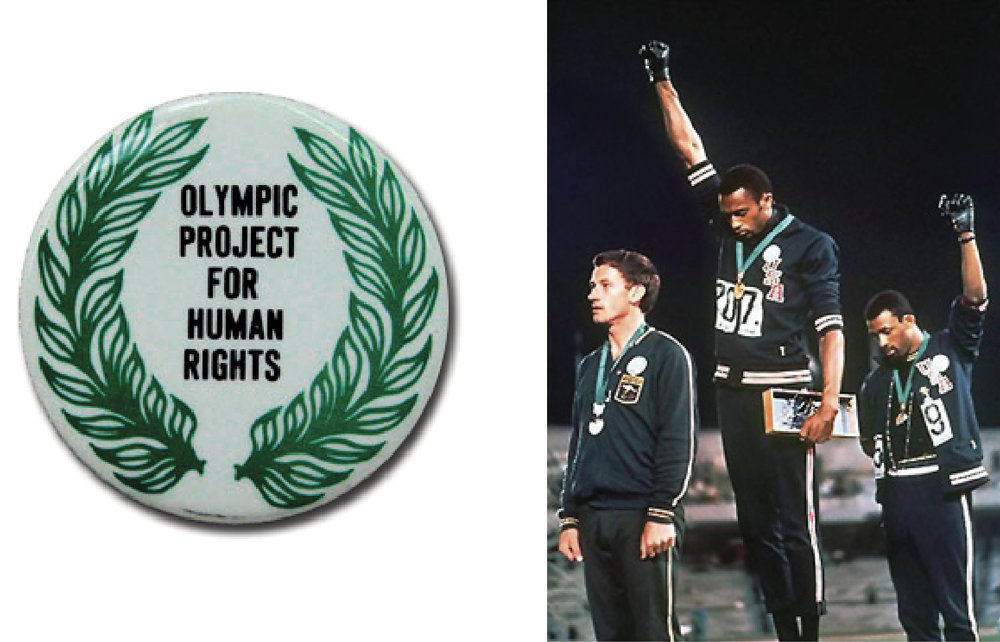
On October 17, 1968, when I was 7 years old, the world watched the gold, silver, and bronze medalists in the 200 meters receive their medals and saw gold medalist Tommie Smith and bronze medalist John Carlos raise gloved fists in a silent act of protest against the continuing racial discrimination in the United States. Silver medalist Peter Norman joined them in wearing the Olympic Project For Human Rights (OPHR) badge and stood in solidarity with them as they protested, despite being white. This protest, done to replace an unsuccessful attempt at a complete boycott of the 1968 Olympics by Black athletes, cost all three athletes their medals and their careers. It changed the course of their lives.
Peter Norman went home to Australia to jeers and was never allowed to represent his nation in his sport again. He spent the rest of his life urging other athletes to protest human rights violations in countries hosting the games. Peter Norman was what an ally to a civil rights cause is supposed to be.
Probably the saddest thing for someone of my age, race, and background is to grow up in the times I did, see people like Peter Norman stand with Tommie Smith and John Carlos, then live to compare the way people appropriate, then misrepresent what an ally is today.
I have witnessed the incredible courage of people who didn't have to stand by oppressed and marginalized groups and did so at a tremendous cost. What I see now is a far cry from that.
In the autism community, the word ally is sometimes seen as a feather in one's cap. The word is appropriated by people wanting to have a higher status and influence. They want the label, the photo ops, the awards, and accolades of being an ally. They don't want to put forth the effort or great risk in the name of a cause they believe in. They wear the label, like any other adornment, and show it off to others. They may be kind to those involved in the struggle but kindness is an affectation of patronage rather than heartfelt kindness born of a friendship between equals. Having grasped the label, they don't care at all that their function is to support disabled activists in achieving human rights for themselves and future generations. The label is an item off their checklist to fame.
Calling a person an ally is a gift of trust bestowed by activists in any cause to those who truly understand their struggle and stand with them. In disability rights activism, that means amplifying the voices of disabled people and presuming they are competent to lead autonomous lives in mainstream communities. The presumption of competence is not just lip service. It must be apparent in an ally's actions and the way they live their lives with and around disabled people. Being an ally is not a label we get to hang on ourselves. It isn't something we earn after a certain time hanging out with disabled people. It isn't something we get for being good parents to our disabled children. We can't buy it by bestowing money on prominent disabled people. That makes us donors, philanthropists. It does not make us allies.
It takes belief in the cause of another, and unselfish, consistent demonstrations of support based on the belief in the idea that nothing about disabled people should happen without them. For the rest of our lives. We must be willing to step up and pay the cost necessary to stand with our disabled colleagues and our disabled loved ones. This is the only effort that will result in the recognition of our children as equals in society.
That is what I want. I want my son to be accepted, accommodated, supported in our community and every community. This is not a hobby or the honing of a personal brand. It isn't achieved by Instagram-selfies with well known activists or having tea with your federal lawmakers. Those who never toot their own horns, ask "what more can I do", and follow the lead of their disabled colleagues are allies. Those who don't have the time for the constant updates of their accomplishments on social media because they are backing disabled activists impress me. Can you be invited to speak at any event and arrive, introduce yourself, and give the podium to a disabled activist to speak instead? That is an ally. If people don't know what your name is but your deeds stand out in the successes of your disabled colleagues, you are an ally. Anyone else can be called many things. They can be called benefactors, grantors, donors, friends, online activist parents, bloggers. They can't be called allies.
Maybe at some point, an autistic activist might label you an ally. That is an honor. But it doesn't make you less privileged than neurodivergent people. Some people who hear that ally label think it means they can then treat disabled people any way they wish. Presumption of competence never means disregard for disability and the accommodations and supports needed to provide equality for a disabled activist to succeed in speaking out. The term "know your privilege" is thrown around too much on the internet. But the position of being a true ally makes that phrase very important. You don't get to silence disabled voices because you are an ally. You don't get to speak for neurodivergent people because you've been labeled an ally by anyone. That isn't the way it works. Getting that label means that even if you don't agree with what a neurodivergent person is saying or how they are delivering that message you must fight for their right to be heard. You must also ensure that you are not discriminating against them or your own loved ones. This meaning you must extend supports and accommodation and use your privilege to let those voices be heard. That was the culture of activism I grew up in.
Where has it gone? I don't see it very much now. I feel as if I'm waiting for Godot.
I have watched this inappropriate behavior. I am truly sad. What I see particularly in the autism community is people conflating being an ally with having power and privilege based on high status within the community. I see them immediately using that privilege to abuse the very disabled people they are supposed to be standing by. The damage that has been done by those who saw being an ally as a medal to be won or a way of gaining insider information to deconstruct disability rights efforts is significant. In a time when people see themselves as brands and carefully Instagram every moment of their own lives, this tendency towards ally label appropriation and misuse is growing. I do not know of any way to counter this avarice for influence and attention. Such a thing may not be possible. But I feel obligated to speak up about it in the hope that once a thing is seen, it can be countered.
The most critical thing a person must know about being an ally is that allies are meant to be the supporting cast. Allies don't dictate, command, take the lead, drive the bus. Allies support. They do what Peter Norman did at the 1968 Olympics and for the rest of his life. Peter Norman did not follow with press conferences and selfies and discuss how those two men were able to protest because he was there or somehow crucial to them doing so. He wanted to support them. He did. He never considered making it about him. This is too rare in allies within the disability rights community. We conflate our status as parents with being allies and tend to want to boss and talk down to disabled activists. This is wrong. It is ableist. It defeats efforts. It tires me to see this happening.
I wrote and spoke about the topic of allies against ableism as part of a panel organized by Lydia X.Z. Brown you can read about here. My initial solution to assisting people who want to understand what allies are and be better allies against ableism was to recommend Dr. John Raible's Checklist for Allies Against Racism. This checklist can be used to see if you are truly an ally against ableism by downloading it, modifying it, and testing yourselves. Replace the word racism with ableism, races with abilities, and the phrase "people of color" with "neurodivergent people". Work on yourselves rather than presuming anything about being an ally. Then truly live as an ally. Do no harm. We are meant to be in the background of our disabled activist colleagues and loved ones and have their backs in this war for their human rights. We must use our privilege to help them reach the goal of justice beyond equality.
If you read all of the above and feel you have done harm, repair it as best you can and don't do it again. Begin again the right way.
Lastly, remember that this is a fragile movement, and egos are a true threat to success. I don't wish to be this disappointed in people anymore. A half-century is a long time to watch people go from Peter Norman to Greek mythology's Narcissus.
I am tired of the fascination many in our country have with the perpetrators of murder and attempted murder. This fascination is disturbing and when the victim is disabled, habitually serves to completely erase them from the story of their own lives. The effort victims who survive make to recover should not be ignored because they are disabled.
I am therefore offering an alternative to the opportunistic behavior of attention seeking blogger parents wishing to twist the attempted murder of Isabelle Stapleton into some sort of sick platform to complain about their lives and vicariously publicize threats to harm their own disabled children.
I am writing to counter that blogging traffic, although I doubt it will catch on. I do not feel it is right to promote the name of an attempted murderer, no matter how upset I am that autism mothers who support this woman are generalizing and presenting their personal poisonous opinions as if all autism parents share them. I am also doing this to counter Phil Mcgraw using a tragedy to drive his show ratings up by othering the disabled victim and giving a confessed premeditated murderer a platform to justify her actions.
Here are my letters to Isabelle and her father Matt. I have no idea if this will fit under a flashblog hashtag. This is best I can do.
Dear Mr. Stapleton, First of all let me express my deepest sympathy for the tragedy your family has weathered and wish the best for you and your children. I was amazed and happy to see Isabelle’s progress in a youtube video that you were kind enough to post publicly. Thank you for that glimpse into Isabelle we were not really allowed to see before this catastrophe took place. I know it is not my business, but in light of recent spates of autism mom blogging in support of your ex wife and her recent appearance on the Dr. Phil Show, I would like to ask a favor. I would like to ask that you consider securing legal representation for your daughter Isabelle and having that law firm or attorney sue to insure your ex wife does not continue to benefit from your daughter’s name, her attempted murder of Issy, Isabelle’s autism label, or any past care providing or contact with your daughter. I believe any attempt at publishing or making further television appearances, blogging, or making any media contact must be included in such a suit. I am asking because I am also called an autism mom, and I am offended by each and every mother who is presenting your ex-wife as the standard bearer for autism moms in general. I have no desire to be seen as someone who views my son’s autism as your ex-wife viewed her daughter’s autism. I do not give any other autism mom permission to make sweeping generalizations about me or my son. My son is medically classified as nonverbal. Like Isabelle, he has overcome great challenges and survived. He may need help all his life but it is my honor and privilege to be one of those who provides that help. He is not perfect. He has difficult moments. But he is always my autistic son, and I am proud of the way he deals with his difficult days and his good ones. Your ex wife doesn’t have a right to continue having a platform to defame my son and your daughter by generalizing private experiences into public thoughts. She lost that right when she chose to try and kill Isabelle. Many autistic children are being bullied to the point of torture because of these statements, made thoughtlessly and selfishly by mothers unhappy with their situations and this needs to stop before more innocent children are harmed. Maybe you’ll read this and consider my request. You have taken over a family as a single parent and while I don’t agree with your support of Autism Speaks, I see you are doing all you can to help all your children move past this and make Isabelle certain that she is a wanted part of your family. I realize that litigation will bring up painful memories. But I also believe many attorneys would be willing to help pro bono. Lastly I hope you do not make the mistake your ex wife did and anthropomorphize autism into the catchall evil neurological whipping post because that makes your daughter an object of hate. None of us want to see Isabelle victimized again. Sincerely Kerima Çevik Mother of the Great and Powerful Mustafa, age 11, Autistic
Dear Isabelle, I have wanted to write you for a very long time. I wanted to tell you how sorry I was to read about all the awful things that happened to you. Your mother should not have done the things she did to you. She was wrong. Nothing that happened to you was your fault. Please believe that. I have a son in your neurotribe. He is autistic and he is learning to type to communicate. He’s eleven years old right now. When he was four, we were told he was autistic. That day a great many negative things were said about our son. We were told we should be afraid of him, especially when he got older. Guess what? He’s now officially taller than I am. He is strong. I know because when I fell one day he grabbed my arm and caught me! But he is nothing like anyone said he would be. His dad and I are so glad we didn’t listen to them. We searched until we found a whole world of autistic adults. They helped us understand our son by telling us about their own lives and mistakes made to them so that we would not make the same mistakes with him. I am writing to tell you that I have a gift for you. I know you are fifteen now. When you and your family are ready, my gift to you is a open invitation to publish anything you want to write on my blog. The intellectual property rights to whatever you write will remain with you. I want you to know how important you are to autistic people. I also want you to know that parents exist who believe in their autistic children, as your father and family believe in you. We are here when you need our support. Just feel better, and take care of yourself. You have an army of friends here in internet land. We love you and want to support you speaking out in your own voice about anything you want and being heard. Best wishes, Kerima
A very long time ago, a mathematics teacher, Captain Üsküplü Mustafa Efendi gave his best pupil, a boy named Mustafa, the additional name Kemal, a name with a depth of meaning that I will simplify and say means maturity. This Mustafa went on to be given the name Ataturk, meaning "father of the Turks". When our son was born, we named him Mustafa. We did not know then he was neurodivergent. We felt, if he could carry the name well, and became the young man we hoped he would be, we would add the name, Kemal. Because maturity is not born. It is earned.
I have said before that my son Mustafa is a heroic figure. Born in a day and age when having a name like Mustafa makes you the target of instant enmity, he orchestrates his life in rich, ripe, silences, punctuated by occasional gifts of a word sprinkled like salt and pepper over good soup. His hands flap as he conducts the symphony of the day that he has selected on his computer and he stands to do so. He is free to be himself at home, and because he is imposed upon so much outside our home, certain spaces, like his bedroom, are his to control except of course for cleaning them, which is a joint effort.
The most heroic scenes in Mustafa's life do not take place in public. They aren't filmed and uploaded for viral video potential. No, those episodes happen quietly, at unexpected moments. This is the month when you'll hear the worst things about my son and his peers. He is, after all, the most apparently autistic young man. He cannot hide his neurology. So I wanted to share one of those moments because something good needs to be said about my boy right now before the landslide of negativity and fear buries us.
I have been ill, and combined with fatigue, it has made it rough to go through my scheduled days with Mustafa. He senses this and has begun doing small things to compensate for the slowness in my movements and the times when I must sit and wait. I had reached a moment when pain shot through me and I sat down with the shock of it. Then Mustafa did something surprising. He sat next to me a put his arm around my shoulders. He sat with me until the pain passed. He pushed me sideways indicating I should lay down. When his father, concerned at the sudden quiet found us Mustafa had covered me with a blanket, returned to his room, and was sitting back down at his computer, continuing to go about his business as if I was with him. He would occasionally stand by my bedroom door, checking on me. He did not request any assistance from his father. It stunned me. His father assumed I had wrapped myself in the blankets and fallen asleep. I had not. Mustafa simply did for me what I do for him. He realized I needed to rest. He took care of his mother.
In his life, with its professional presumption of incompetence, these moments are heroic because they fly in the face of assessments that insist data driven observation knows who he is and what he is capable of feeling and doing. His range of knowledge, capacity for empathy, or what he might do if allowed to make his own decisions to the degree he can are all glimmering in these moments of greatness. Mustafa is eleven. What he did for me is beyond the scope of what many eleven-year-old boys today would stop to assess and do.
A few years ago I spoke to my husband about the idea that should Mustafa master communication we might add the name Kemal to his name. I don't think we need to do that now. He has matured without the name. Mustafa kemale ermek yolunda. Meaning Mustafa is on the road to maturity. Happy Autism Acceptance Month my son. Thank you for taking care of me.
The Christmas truce was a series of widespread, unofficial ceasefires that took place along the Western Front around Christmas 1914, during World War I. Through the week leading up to Christmas, parties of German and British soldiers began to exchange seasonal greetings and songs between their trenches; on occasion, the tension was reduced to the point that individuals would walk across to talk to their opposite numbers bearing gifts. On Christmas Eve and Christmas Day, many soldiers from both sides – as well as, to a lesser degree, from French units – independently ventured into "no man's land", where they mingled, exchanging food and souvenirs. As well as joint burial ceremonies, several meetings ended in carol-singing. Troops from both sides were also friendly enough to play games of football with one another.[1]
- Wikipedia
I met James Gallini, Esquire, at the intersection of disability and injustice, during a moment of truce in the Autism Wars. The truce occurred without fanfare, appropriately in December, just as the holiday hustle and rush began. James was standing across the virtual crossroad, firmly and passionately fighting for justice for his client, Emily Holcomb. He stood and fought, as his wife very aptly put it, like Gandalf staring down the Balrog on the Bridge of Khazad-dûm and shouting “You Shall Not Pass!” at the horrible injustice brandishing evil at his nonspeaking autistic client. I have written about Emily’s nightmare indirectly through a discussion of her mother Jenny Holcomb here. James finds discussions on his career accomplishments boring and dismissive of his clients. But he is not aware that the desperate crisis of Emily Holcomb was the instigating factor in the Christmas truce of the Autism Wars. It began a series of episodic ceasefires during which our entire community put aside differences and came down on injustice by the hundreds in anger and shock, campaigning united against autistic people being harmed at school and denied care in hospitals. As a result, I met a valued colleague and accepted him, as he was, never asking whether he espoused the medical or social justice model of disability, simply accepting that in that moment, we sought the same thing, to keep autistic people safe from deadly harm and wrongful imprisonment.
Very much like those men in the trenches, I crossed the invisible line to no man’s land and began discussing matters of people I advocated for and asking James for referrals when these families needed legal help and were in other States. Each time, he did his best to help me find resources, when others were just too self-important to bother. Therefore, I was able to see him as a colleague and friend.
James Gallini’s passion for special education law comes from his love of his family. I am fortunate enough to see that in a slew of photographs, the look of love and pride on his face as he stands with his family for a holiday photo, hugging his sons before they leave for church in their Sunday best, or a quick photo of James endeavoring to teach his beautiful autistic daughter the finer points of bowling. He didn’t have to tell me he loves his family. Each photo made that apparent. One day I read that James and Jenifer decided to compromise on their daughter’s wish for Christmas in July. They compromised, and made Christmas happen in her bedroom complete with blow up Santa and that did it for me. She was happy, they were happy. I was happy. I knew in my heart that these parents loved and more importantly listened to their autistic daughter. They acknowledged her input. They loved her. In a world where the sleepless depressed parents fan the flames of their discontent by gathering in groups to drown in misery and blame it on autism, the refreshing nature of this family warmed my heart almost as much as Jenny Holcomb did doing the requisite redecorating of her daughter’s room to make it as grown up as Emily is becoming. Just as any mother would do for a teenaged daughter. No infantilizing.
And so, I have come to realize that I must navigate the no mans land more often and look at people for who they are and what they do rather than accept my preconceived opinion of what they may stand for ideologically. Just see how they actually behave and speak about their autistic loved ones. Love can’t be hidden. Passion for justice is apparent. And James Gallini has both. If only more special education attorneys were more concerned about their clients and less concerned with establishing a relationship with the school district, the educational life of our children would be perfect.
Please welcome the very brave James Gallini, Esq., his lovely wife Jenifer, and their four wonderful children, into our autism advocacy community. There were always here. If you hear a cease-fire moment in the Autism Wars, walk to the middle of the intersection of disability and injustice. They will be standing on the side of justice, and you will all see them as I do.
Much love
This is the third segment in a series on people who need to be recognized for the work they continue to do for the betterment of the autism community.