Showing posts with label allies against ableism. Show all posts

Monday, July 3, 2017

Why Don't You Accept Your Child's Autism? Yes, But....

"Why Don't You ... Yes, But" is a mind game listed in Games People Play: The Psychology of Human Relationships by Eric Bernie, MD. It is a transactional interaction that is in effect an equivocation where one party begins a sentence with "Why don't you____ and the respondent answers "Yes, but....."

Waiting for genuine Autism acceptance is like waiting for Godot. If I shouted "Why don't you accept autism?" into the grand canyon of predominantly white, well-to-do autism parents whose voices dominate this conversation, the echoed response would instead be "Yes, but..."
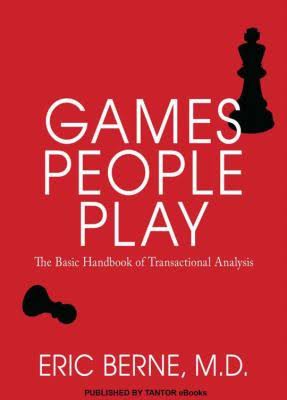
Book cover for Games People Play the
Basic Handbook of Transactional Analysis,
showing two black chess pieces, a queen an
a pawn in black. The book is red with  the
title and author's name in white lettering.
 lettering. Image credit: Google books
A few months ago I saw a parent who commands quite a following among special needs parents launch into her latest effort to "cure or reduce" her adult son's autism. Her son speaks, but she has ensured he has very little say in the matter of "fixing"  his own state of being. 

Speaking for her son and about him without him, she declares that neurodiversity is a fine thing for other autistics but her son needs the autism "fixed."  I take this to mean, in translation, that how she really feels is that there have always been parts of her son's visible disability she cannot cope with, therefore she despises autism and wants the autism parts "fixed." Her plan in this instance involves resolving his "gut" issues. I read the entire online lament, and shook my head.

This is in part an indication of the failure of Steve Silberman efforts through his book NeuroTribes to actually positively change public perception of autism. The book was not just supposed to make a profit. It was meant to explain the history of autism as a disability, properly define the often misused term neurodiversity, define autism's place in an inclusive society, and highlight how acceptance of that disability opens the door to accommodations and supports that allow autistic people to navigate a more justly designed and therefore more inclusive society.

Because the book is in large part an expansion of his "Geek Syndrome" essay the history told and the characters in those histories are limited to what will enhance the historical narrative for his predominantly white, higher income, target audience. Despite its popularity, with very few exceptions, it failed to connect with that intended target audience beyond parents like the one I've described in the previous paragraph. 

These parents simply misconstrue the terms acceptance and neurodiversity without changing their view of autism as a disability. Upper middle class to wealthy parents continue the same medical model narrative of excluding their autistic loved ones from the neurodivergent label or at best, making a compartmentalized adhoc acceptance of neurodiversity as they redefine it. It is the "neurodiversity is great, but those autistics are..."  the "not like my child," trope's latest variant.

Unaware of their own ableism and fiercely defensive when called out about how ablelist and boundary crossing the broadcasting of a disabled offspring's health concerns or their opinions of how much they choose to accept their offspring are,  they actually believe they understand neurodivergence and acceptance when they clearly do not. There is no qualifier in acceptance of the entirety of a loved one's disability. 


Book cover of NeuroTribes red
and black lettering with the book title
and author's name in read an subtile
except the word Autism in black.
Image of a leafy plant with birds and
butterflies of various colors and varies
on or around it. Image credit Goodreads
Many parents believe that the blame for anxiety disorders should be placed at autism's door. In fact, anxiety develops in part in reaction to parental intolerance of stimming and other self-soothing behaviors whose purpose is to overcome a hostile environment. Stimming is short for self-stimulatory behavior. 

What I find saddest about these parents is that to them the solution is never found in first ensuring that they aren't triggering issues in their own children, everything that goes wrong must be autism. While is it fine to set goals and presume competence, gaslighting your autistic loved one into conforming to a parent's expectation of what would be the most acceptable version of their autistic child for their own lack of embarrassment and comfort levels isn't the point. 

The primary requirement for autism acceptance is not saying things like "I accept my child but I don't accept his autism." Acceptance means the totality of a disability is accepted. Then challenges that are actually the result of the disability can be looked at and solutions can be sought to address these challenges. If a parent said to their child who lost a leg in a car accident that they loved them but not their body with a missing leg, everyone around them would be horrified. But no one makes a sound when a mother laments that neurodiversity is a fine thing but now she needs to continue working on her son's gut problem, which may cure him.

when  I ask, do you accept that your child's neurodivergence is a disability? The answer should never be the equivocation game "Yes, But..."

Did Mr. Silberman's book have a positive impact on its target audience? Look around. Are there any sharp increases in parent allies against ableism understanding the key to lifetime improvements in the quality of life for their autistic offspring requires less time trying to cure their guts and more time fighting for their civil liberties and rights to access and accommodation in society? I'll help you out. No, there are not.

Meanwhile, this particular parent, cheered on by her fanbase and without her adult son's consent, continues her efforts to rid herself of her son's autism which she accepts but doesn't accept, but hey, at least she now uses the word neurodiversity when speaking of how much she hates it.

If that was worth the price of excluding nonwhite and non-cis histories from NeuroTribe's narrative of autism, I hope it was worth it.

References:
Games People Play Explained:
https://www.amazon.com/Games-People-Play-Transactional-Analysis/dp/0345410033
https://en.wikipedia.org/wiki/Games_People_Play_(book)

The Geek Syndrome Article
https://www.wired.com/2001/12/aspergers/

The Problem With NeuroTribes:
http://intersecteddisability.blogspot.com/2016/01/autistic-while-black-erasure-of-blacks.html
http://intersecteddisability.blogspot.com/2016/05/how-not-to-endorse-anthology.html


Friday, January 15, 2016

On Parent Activism And the Autism Wars

"A Chinese bamboo book, open to display the binding and contents. This copy of The Art of War (on the cover, "孫子兵法") by Sun Tzu is part of a collection at the University of California, Riverside. The cover also reads "乾隆御書", meaning it was either commissioned or transcribed by the Qianlong Emperor."  Wikipedia photo credit vlasta2, bluefootedbooby on flickr.com - http://flickr.com/photos/bluefootedbooby/370458424/


Victorious warriors win first and then go to war, while defeated warriors go to war first and then seek to win. 
Sun Tzu, The Art Of War


Happy New Year.

It took a long while for me to decide what to post first this year. So many topics matter and so much is happening simultaneously.  I thought I might start off 2016 discussing an aspect of the journey involved with the idea of working to be an ally to autistic people and what that should mean.

What happens to some of us who are parent advocates is a kind of euphoria at being thought of by activists as an ally. And that can lead to a grave mistake in thinking. Because many parent allies view themselves as mediators in the autism wars between the medical model community parents and professionals, autism parents in general, and autistic adults, pro-disability rights and human rights stakeholders and activists. By definition, allies are not self-appointed and this understanding expands to include self-designations as bridges between parents and autistic adults in our community. Such bridges or potential mediators already exist. If we are to be parent allies, we should understand that those roles are not ours.

Autism is unique because, in previous generations, it has gone undiagnosed or misdiagnosed for the lifetimes of many people. This is particularly true for autistic women. And while this is not true for my son and his peers, for many autistics autism expresses as an invisible disability. So what exists in our community are a very large population of parents who discover when their children are diagnosed that they are also autistic. We also have quite capable autistic parents diagnosed as children who marry and have children. Those autistic parents are the mediators and bridges in our community. They are in fact the only population of stakeholders in our community who completely understand what it means to be autistic and what it means to parent autistic children.

Meaning that no matter how beloved an ally a parent is unless that parent is both autistic and a parent they are not equipped to bridge the gaps between groups of stakeholders in the autism community. Period. While a parent may also express neurodivergence, it does not necessarily make them autistic. So while their voices are invaluable and necessary to the autism conversation, autistic parents are the group that sits firmly on both sides of the autism wars for personhood, inclusion, accommodation, and representation.

The role of those of us who are parents who do not carry the autism label is to reach out to autistic parents, amplify their voices, and ask how we can assist them in their roles as the voices in two stakeholder roles. In doing so, we must understand that our voices have privilege, and amplification of marginalized voices does not diminish our say or sway in the community.


Saturday, November 8, 2014

Waiting For Allies Against Ableism


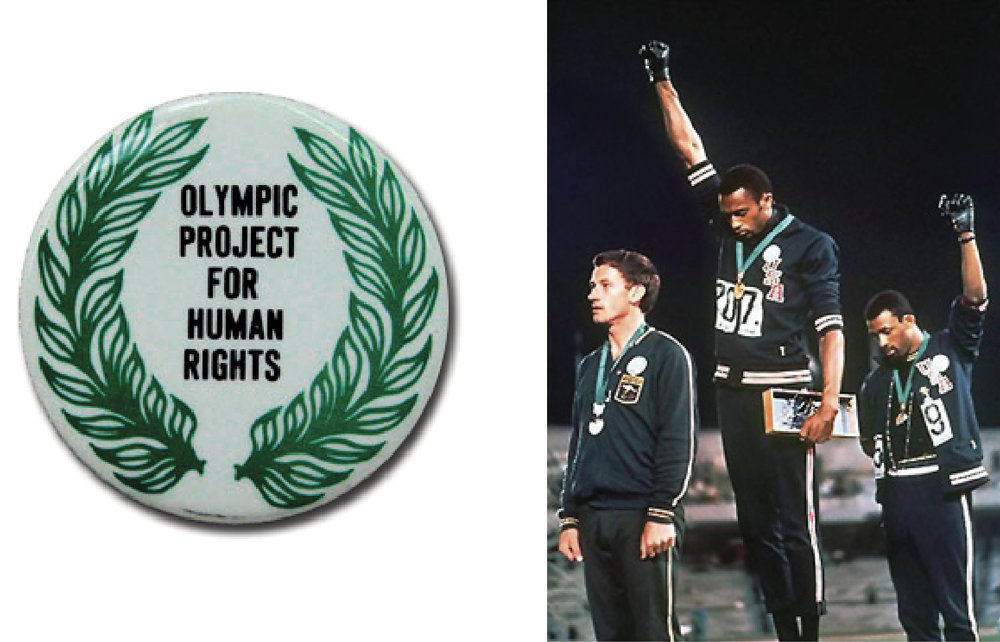
LEFT: The Olympic Project for Human Rights badge, worn by activist athletes in the 1968 Olympic Games. RIGHT Peter Norman, Tommie Smith and John Carlos on Olympic medal stand, with Carlos and Smith raising Black power fists.
O
n October 17, 1968,  when I was 7 years old, the world watched the gold, silver, and bronze medalists in the 200 meters receive their medals and saw gold medalist Tommie Smith and bronze medalist John Carlos raise gloved fists in a silent act of protest against the continuing racial discrimination in the United States. Silver medalist Peter Norman joined them in wearing the Olympic Project For Human Rights (OPHR) badge and stood in solidarity with them as they protested, despite being white.  This protest, done to replace an unsuccessful attempt at a complete boycott of the 1968 Olympics by Black athletes, cost all three athletes their medals and their careers. It changed the course of their lives.

Peter Norman went home to Australia to jeers and was never allowed to represent his nation in his sport again. He spent the rest of his life urging other athletes to protest human rights violations in countries hosting the games. Peter Norman was what an ally to a civil rights cause is supposed to be.

Probably the saddest thing for someone of my age, race, and background is to grow up in the times I did, see people like Peter Norman stand with Tommie Smith and John Carlos, then live to compare the way people appropriate, then misrepresent what an ally is today.

I have witnessed the incredible courage of people who didn't have to stand by oppressed and marginalized groups and did so at a tremendous cost. What I see now is a far cry from that.

In the autism community, the word ally is sometimes seen as a feather in one's cap. The word is appropriated by people wanting to have a higher status and influence. They want the label, the photo ops, the awards, and accolades of being an ally. They don't want to put forth the effort or great risk in the name of a cause they believe in. They wear the label, like any other adornment, and show it off to others. They may be kind to those involved in the struggle but kindness is an affectation of patronage rather than heartfelt kindness born of a friendship between equals. Having grasped the label, they don't care at all that their function is to support disabled activists in achieving human rights for themselves and future generations. The label is an item off their checklist to fame.

 Calling a person an ally is a gift of trust bestowed by activists in any cause to those who truly understand their struggle and stand with them. In disability rights activism, that means amplifying the voices of disabled people and presuming they are competent to lead autonomous lives in mainstream communities. The presumption of competence is not just lip service. It must be apparent in an ally's actions and the way they live their lives with and around disabled people. Being an ally is not a label we get to hang on ourselves. It isn't something we earn after a certain time hanging out with disabled people. It isn't something we get for being good parents to our disabled children. We can't buy it by bestowing money on prominent disabled people. That makes us donors,  philanthropists. It does not make us allies.

It takes belief in the cause of another, and unselfish, consistent demonstrations of support based on the belief in the idea that nothing about disabled people should happen without them. For the rest of our lives. We must be willing to step up and pay the cost necessary to stand with our disabled colleagues and our disabled loved ones. This is the only effort that will result in the recognition of our children as equals in society.

That is what I want. I want my son to be accepted, accommodated, supported in our community and every community. This is not a hobby or the honing of a personal brand. It isn't achieved by Instagram-selfies with well known activists or having tea with your federal lawmakers. Those who never toot their own horns, ask "what more can I do", and follow the lead of their disabled colleagues are allies.  Those who don't have the time for the constant updates of their accomplishments on social media because they are backing disabled activists impress me. Can you be invited to speak at any event and arrive, introduce yourself, and give the podium to a disabled activist to speak instead? That is an ally. If people don't know what your name is but your deeds stand out in the successes of your disabled colleagues, you are an ally. Anyone else can be called many things. They can be called benefactors, grantors, donors, friends, online activist parents, bloggers. They can't be called allies.

Maybe at some point, an autistic activist might label you an ally. That is an honor. But it doesn't make you less privileged than neurodivergent people.  Some people who hear that ally label think it means they can then treat disabled people any way they wish. Presumption of competence never means disregard for disability and the accommodations and supports needed to provide equality for a disabled activist to succeed in speaking out. The term "know your privilege" is thrown around too much on the internet. But the position of being a true ally makes that phrase very important. You don't get to silence disabled voices because you are an ally. You don't get to speak for neurodivergent people because you've been labeled an ally by anyone. That isn't the way it works. Getting that label means that even if you don't agree with what a neurodivergent person is saying or how they are delivering that message you must fight for their right to be heard. You must also ensure that you are not discriminating against them or your own loved ones. This meaning you must extend supports and accommodation and use your privilege to let those voices be heard. That was the culture of activism I grew up in.

Where has it gone? I don't see it very much now. I feel as if I'm waiting for Godot.

I have watched this inappropriate behavior. I am truly sad. What I see particularly in the autism community is people conflating being an ally with having power and privilege based on high status within the community. I see them immediately using that privilege to abuse the very disabled people they are supposed to be standing by. The damage that has been done by those who saw being an ally as a medal to be won or a way of gaining insider information to deconstruct disability rights efforts is significant. In a time when people see themselves as brands and carefully Instagram every moment of their own lives, this tendency towards ally label appropriation and misuse is growing. I do not know of any way to counter this avarice for influence and attention. Such a thing may not be possible. But I feel obligated to speak up about it in the hope that once a thing is seen, it can be countered.

The most critical thing a person must know about being an ally is that allies are meant to be the supporting cast. Allies don't dictate, command, take the lead, drive the bus. Allies support. They do what Peter Norman did at the 1968 Olympics and for the rest of his life. Peter Norman did not follow with press conferences and selfies and discuss how those two men were able to protest because he was there or somehow crucial to them doing so. He wanted to support them. He did. He never considered making it about him. This is too rare in allies within the disability rights community. We conflate our status as parents with being allies and tend to want to boss and talk down to disabled activists.  This is wrong. It is ableist. It defeats efforts. It tires me to see this happening.

I wrote and spoke about the topic of allies against ableism as part of a panel organized by Lydia X.Z. Brown you can read  about here. My initial solution to assisting people who want to understand what allies are and be better allies against ableism was to recommend Dr. John Raible's Checklist for Allies Against Racism. This checklist can be used to see if you are truly an ally against ableism by downloading it, modifying it, and testing yourselves.  Replace the word racism with ableism, races with abilities, and the phrase "people of color" with "neurodivergent people". Work on yourselves rather than presuming anything about being an ally. Then truly live as an ally. Do no harm. We are meant to be in the background of our disabled activist colleagues and loved ones and have their backs in this war for their human rights. We must use our privilege to help them reach the goal of justice beyond equality.

If you read all of the above and feel you have done harm, repair it as best you can and don't do it again. Begin again the right way.

Lastly, remember that this is a fragile movement, and egos are a true threat to success. I don't wish to be this disappointed in people anymore. A half-century is a long time to watch people go from Peter Norman to Greek mythology's Narcissus.

Peace