Showing posts with label Inclusion. Show all posts

Sunday, May 21, 2017

Hobson's Choice, Nonverbal Autism, Technology, And The Myth Of No Future

A Hobson's choice is a free choice in which only one thing is offered. Because a person may refuse to accept what is offered, the two options are taking it or taking nothing. In other words, one may "take it or leave it." Wikipedia
Mu in a plum colored t-shirt, at age six on climbing bars at  the playground ©Kerima Çevik
There is a rhetorical question that representatives of institutions and service providers continually ask parents of autistic people. My husband and I first heard it at an IEP meeting when our son was four. It is a two-part question. 1. What kind of a future do you see for your son? 2. What will you do with him when he's 21?

This line of inquiry is meant to build up faux hope as we parents are supposed to be mourning for our autistic offspring as Edgar Allan Poe mourned for his lost Lenore. Then they lay out their Hobson's choices. "Does your son like trucks?" They asked, not really caring. "He likes watching construction vehicles in action," I answered, wondering where this was going. "Well, maybe we can train him to be a garbage collector." At another meeting, I answered the rhetorical question with, "He loves to sky watch by looking from his picture window on days of inclement weather." Their response was "then he'd make a great janitor." His father and I stared at one another in shock, wondering what one thing had to do with another. At one point I tried to discuss his strengths. "He likes lining up particular things. When he was a baby I used to give him plastic juice bottles filled with water dyed in rainbow colors and he'd line them up to look exactly like sunlight refracted through a prism. It amazed us." Their answer? "Oh, he's a trainable [insert r-word] that's great." "He can be taught to collect shopping carts and maybe even stock shelves."

 Because he's a nonspeaking autistic. Nonspeaking, to them, always equaled nonthinking. They don't actually listen to what you are saying. They don't actually see your children's worth when observing them. Their one-two punches, the rhetorical questions followed by their Hobson's choices are part of a myth that nonspeaking autistic people have no future. Their personal bias morphs into the professional opinion that they can't conceive of living without verbal speech, or navigating life with a combination of no verbal speech and intellectual disability so it is not possible.

Very recently I was asked the "what do you see your son doing in five years" derivative rhetorical question. I had to bite my tongue. I wanted to answer "I see my son continuingly chemically altering his RNA to adapt to changes in his environment, the way cephalopods do." Or "I see my son as the first nonspeaking President of the United States." I really considered just giving one of those two answers and watching that interviewer's face as they tried to process what I had just answered.

I'm tired of the entire "your son has no future so here are your Hobson's choices that you need to pay for" circular rhetorical question thing. To counter it,  I thought I'd discuss my real view of the possibilities for a community based, minimally invasive, autonomous life for my son after he grows up and as he ages in a series of posts beginning with this one.


Mu at age 5 signs what he wants to drink and what groceries he wants to buy
while his sister puts them in the cart. He keeps himself on
her arm to keep himself oriented © Kerima Çevik
From our parental perspective, we see that since our son's diagnosis, technology has directly and repeatedly improved the quality of his life and therefore our lives as well. This means future planning choices being presented as his only options right now won't be valid when he's 21 and therefore should keep changing even as I type this article. What bothers me is that the historical structures built to advocate for autistic stakeholders are heartbreakingly slow to keep pace with the technology that changes how we are all living.  That means those offering choices in future planning for nonspeaking autistics fail at the job of providing modern solutions in assistive technology, accommodations, and supports meant to truly include nonspeaking autistic people in communities of the future. Structural ableism and a hierarchy of disability bias against nonspeaking autistic clients are firmly sitting in the way of achievable solutions.

Particularly in autism services, solutions that allow nonspeaking autistic children and adults to leap forward don't come from established channels, they come from completely new directions. Before the iPhone and Proloquo2go AAC, a Dynavox or similar AAC device was not affordable for nonspeaking autistics of color without a source of funding such as Medicaid. Most schools, therefore, rejected the urgent need for students like my son to be taught to use AAC devices and generally offered only minimal speech supports, despite the clear fact that ability to communicate is the primary challenge of a nonspeaking autistic pupil. Apple's mass production of iPods and iPads began the first steps to communication rights for nonspeaking autistics in particular. That is a transformative change in one major aspect of autistic assistive tech that no one in the service provision or professional service industries saw coming.

Education pathways for nonspeaking autistic students are stagnant because school administrations don't accept that nonspeaking autistic students have learning potential. We have the technology and the infrastructure, as shown by Khan Academy, Open Courseware and things like audio book services, as well as other free or low-cost quality online education models, to offer nonspeaking students lifelong learning possibilities to challenge and stimulate their minds wherever they live if they are given online access and the effort is made to adapt the learning to provide accessibility. This education enrichment, with goals to prep for everything from a literacy certificate to GED certificates, and even certifications in things that interest them in post-secondary education, are never offered as goals for nonspeaking autistics trapped in an education system that does not allow them to graduate at 21 with a high school diploma. No option to keep learning exists in the Hobson's choice of future planning.

Financial pathways do not plan for future banking technologies or how our offspring can be prepared to manage funds. It is simply assumed that we have no choice but to put our children's financial future  in trust, in the hands of attorneys and hope those attorneys don't turn out to be like disbarred lawyer Julie Kronhaus, who embezzled $1.5 million dollars from multiple clients' trust funds, including a disabled young woman whose family had won a settlement and put the money in trust for her care. Trusts are the only choices given us. We are simply supposed to accept that this is the only solution available to transitioning nonspeaking autistic adults. Yet we are nearing the end of the age of paper money, and as financial institutions rush to get the technology necessary to produce legal tender similar to Bitcoin, and Amazon is changing the way we shop such that a cash register is no longer necessary and food deserts can be overcome with an internet connection, disability service organizations and service providers continue forcibly pushing future financial solutions that increase risk of theft or fraud.

Community housing pathways always seem to default to group home placement after the passing of parent care providers and this means that autistic adults who may have never been in a group home situation in their lives are suddenly removed from their own homes and placed in institutional settings when technology makes such an action expensive and completely unnecessary.  No one considered changing laws so that estates inherited by nonspeaking autistic adult offspring can be future planned and adjusted for direct to service in-home care that is minimally invasive and keeps the disabled adult seamlessly in the family home that they know how to navigate and are accustomed to. No one has considered developing smart home technology to assist in keeping orphaned autistic adults in their homes for the remainder of their lives. No one thinks of high-tech micro-housing as a safe and affordable community living option for nonspeaking autistic adults. That would take work, foresight, caring about their clients. Unfortunately, independent parent driven community living models are basically private institutions, complete with prison guard-like security staff and the traditional highly invasive staffing for care, like this example from North Texas.

I do not support traditional group home or full on institutional housing models being independently built by an increasing number of affluent groups of parents. I am saying we autism parents are acting against the basic principles inherent in the Olmstead Decision with these horrific housing options when what we should be working on are options like minimally invasive, community integrated solutions for our grown children. Just because we are building it doesn't mean it is any different from any other mental institution, even if parents with the best intentions create it.

We need to rethink future planning for our transitioning autistic people. We need to start thinking about what senior care looks like for aging autistic people who have the human right to continue to live in the communities they've spent their lives in after those who were their lifetime care providers pass away. And I'm sorry, that is not throwing them in custom built groups homes or private mental institutions with guards and staff.

 In 2010, the first MedCottage, a smart home for senior care as an alternative to nursing homes, was rolled out and marketed.


These pods are far from perfect, but they demonstrate that when we are considering solutions for transitioning autistic offspring or aging autistic siblings who might require intensive supports, we need to push boundaries beyond the Hobson's choices offered us and fight for Olmstead decision compliant adaptive housing options like these pods that keep our loved ones in our families and in our communities as is their human right. We need to leverage existing technology and develop assistive technology solutions that expand future planning options for autistic people. This begins with expanding our thinking about what our autistic loved ones can do, how they can live included in society rather than isolated, guarded, and invasively managed distantly from it. Begin with pushing back against the tide of gaslighting professionals and service providers forcing Hobson's choices of no-future so institutionalize myth on us.

Here is where I see my son in the future:
My son, like any young adult, will be able to own a car, because driverless cars will be in mass production and one will be adapted to his needs, to take him directly to and from his daytime appointments to home based on his schedule. Emergency locations will be there for him to choose from a touchscreen device should he feel unwell when entering the vehicle. 
My son will have a job in something he's interested in, even pushing shopping carts, not because someone decided that is all he's good enough to do, but because he is motivated, interested, and has the will to do that work.
My son will be housed in a minimally invasive, smart living space that he will be able to live in and manage as autonomously as possible. The bathroom will be self-cleaning. The floors will be cushioned to prevent broken bones in case of a fall, and they will be maintained by cleaning bots. He will be able to prepare prepackaged healthy meals in a microwave that will sense what kind of food is in it and cook said food without the need for pushing additional settings. The microwave will not open until the hot food cannot burn him. He will also have a smart refrigerator that knows when groceries are needed. A plan will be in place to ensure at home supports are provided as he transitions so that in the event that one or both of us, his parents, pass away, he will be able to remain in that home without interruption and he will already have what support staff is needed in place to care for him. He will not need to have cash around nor will any staff have access to payment systems or funding. Grocery, household goods, clothing, will be sent as they are needed through buying habit bots determining when such things are in need of replacement and will be paid for without money changing hands. The house will be powered off the grid and therefore bills will not be an issue. A non-gasoline backup generator will come online in the event of an emergency. The pod will be able to withstand high winds and be equipped with a sprinkler system in case of fire. Outside meals will be purchased from an interactive touchscreen device not requiring verbal input and paid for prior to leaving so food can be either eaten at the location, picked up and brought home, or delivered without money changing hands. Purchases for entertainment venues and social events will be handled the same way. 
Each day he will be able to log on to an education program and retain knowledge as well as be challenged with new learning goals and coursework. This will continue at his pace for the rest of his life. 

No disabled person should live in poverty simply because they have transitioned to adulthood.

This is the future for all disabled adults as it is meant to be.
Make that future happen, don't fight for less.

Resources
=================
On the Right to Community Integration for People with Disabilities 
https://dredf.org/news/publications/disability-rights-law-and-policy/the-right-to-community-integration-for-people-with-disabilities-under-united-states-and-international-law/

The Embezzling Trust Fund Attorney Who Raided a Disabled Young Woman'sTrust Fund
http://www.orlandosentinel.com/news/breaking-news/os-julie-kronhaus-attorney-embezzle-kids-20160129-story.html

Parent built isolated, guarded, institutional mass housing project for high support need autistic adults with medical staff onsite 
https://www.dallasnews.com/business/business/2017/01/04/build-future-son-dallas-couple-plans-12-million-community-young-adults-autism

Google's Driverless Car Test Drive
Self-Driving Car Test: Steve Mahan
https://youtu.be/cdgQpa1pUUE
A First Drive
https://youtu.be/CqSDWoAhvLU

About MedCottages 
In the News
https://youtu.be/5RnY5CSwO9E
Website
https://smallhousebliss.com/2015/11/28/n2care-medcottage/
MedCottage Classic Plans on Sale for $29
https://store9854291.ecwid.com/

Ford's Driverless Cars
http://www.slate.com/blogs/future_tense/2016/08/16/ford_says_it_will_mass_produce_a_driverless_car_by_2021.html

The First Smart Refrigerator
http://www.samsung.com/us/home-appliances/refrigerators/?cid=ppc-

Saturday, November 8, 2014

Waiting For Allies Against Ableism


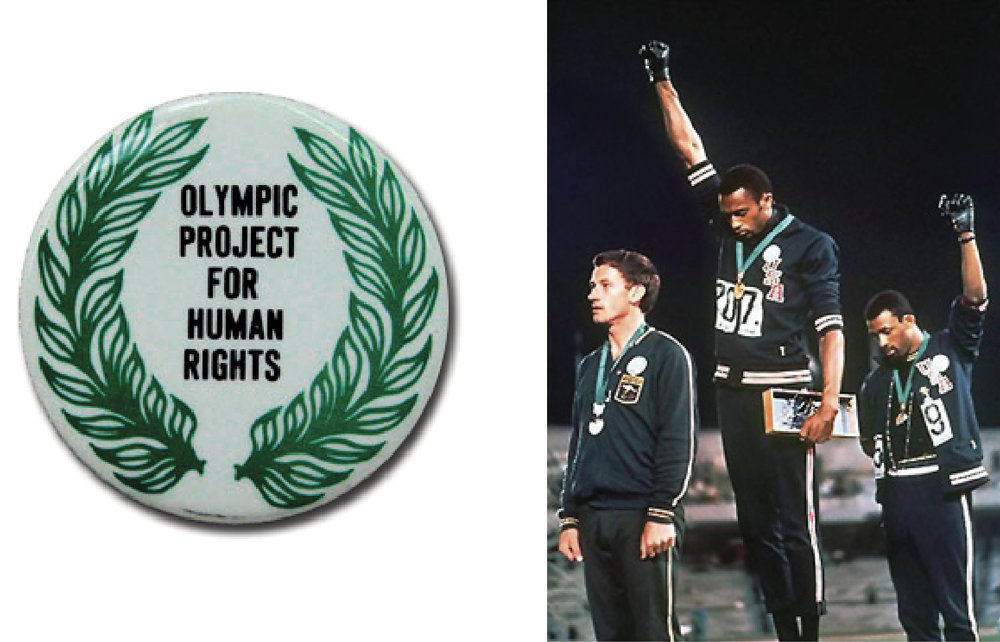
LEFT: The Olympic Project for Human Rights badge, worn by activist athletes in the 1968 Olympic Games. RIGHT Peter Norman, Tommie Smith and John Carlos on Olympic medal stand, with Carlos and Smith raising Black power fists.
O
n October 17, 1968,  when I was 7 years old, the world watched the gold, silver, and bronze medalists in the 200 meters receive their medals and saw gold medalist Tommie Smith and bronze medalist John Carlos raise gloved fists in a silent act of protest against the continuing racial discrimination in the United States. Silver medalist Peter Norman joined them in wearing the Olympic Project For Human Rights (OPHR) badge and stood in solidarity with them as they protested, despite being white.  This protest, done to replace an unsuccessful attempt at a complete boycott of the 1968 Olympics by Black athletes, cost all three athletes their medals and their careers. It changed the course of their lives.

Peter Norman went home to Australia to jeers and was never allowed to represent his nation in his sport again. He spent the rest of his life urging other athletes to protest human rights violations in countries hosting the games. Peter Norman was what an ally to a civil rights cause is supposed to be.

Probably the saddest thing for someone of my age, race, and background is to grow up in the times I did, see people like Peter Norman stand with Tommie Smith and John Carlos, then live to compare the way people appropriate, then misrepresent what an ally is today.

I have witnessed the incredible courage of people who didn't have to stand by oppressed and marginalized groups and did so at a tremendous cost. What I see now is a far cry from that.

In the autism community, the word ally is sometimes seen as a feather in one's cap. The word is appropriated by people wanting to have a higher status and influence. They want the label, the photo ops, the awards, and accolades of being an ally. They don't want to put forth the effort or great risk in the name of a cause they believe in. They wear the label, like any other adornment, and show it off to others. They may be kind to those involved in the struggle but kindness is an affectation of patronage rather than heartfelt kindness born of a friendship between equals. Having grasped the label, they don't care at all that their function is to support disabled activists in achieving human rights for themselves and future generations. The label is an item off their checklist to fame.

 Calling a person an ally is a gift of trust bestowed by activists in any cause to those who truly understand their struggle and stand with them. In disability rights activism, that means amplifying the voices of disabled people and presuming they are competent to lead autonomous lives in mainstream communities. The presumption of competence is not just lip service. It must be apparent in an ally's actions and the way they live their lives with and around disabled people. Being an ally is not a label we get to hang on ourselves. It isn't something we earn after a certain time hanging out with disabled people. It isn't something we get for being good parents to our disabled children. We can't buy it by bestowing money on prominent disabled people. That makes us donors,  philanthropists. It does not make us allies.

It takes belief in the cause of another, and unselfish, consistent demonstrations of support based on the belief in the idea that nothing about disabled people should happen without them. For the rest of our lives. We must be willing to step up and pay the cost necessary to stand with our disabled colleagues and our disabled loved ones. This is the only effort that will result in the recognition of our children as equals in society.

That is what I want. I want my son to be accepted, accommodated, supported in our community and every community. This is not a hobby or the honing of a personal brand. It isn't achieved by Instagram-selfies with well known activists or having tea with your federal lawmakers. Those who never toot their own horns, ask "what more can I do", and follow the lead of their disabled colleagues are allies.  Those who don't have the time for the constant updates of their accomplishments on social media because they are backing disabled activists impress me. Can you be invited to speak at any event and arrive, introduce yourself, and give the podium to a disabled activist to speak instead? That is an ally. If people don't know what your name is but your deeds stand out in the successes of your disabled colleagues, you are an ally. Anyone else can be called many things. They can be called benefactors, grantors, donors, friends, online activist parents, bloggers. They can't be called allies.

Maybe at some point, an autistic activist might label you an ally. That is an honor. But it doesn't make you less privileged than neurodivergent people.  Some people who hear that ally label think it means they can then treat disabled people any way they wish. Presumption of competence never means disregard for disability and the accommodations and supports needed to provide equality for a disabled activist to succeed in speaking out. The term "know your privilege" is thrown around too much on the internet. But the position of being a true ally makes that phrase very important. You don't get to silence disabled voices because you are an ally. You don't get to speak for neurodivergent people because you've been labeled an ally by anyone. That isn't the way it works. Getting that label means that even if you don't agree with what a neurodivergent person is saying or how they are delivering that message you must fight for their right to be heard. You must also ensure that you are not discriminating against them or your own loved ones. This meaning you must extend supports and accommodation and use your privilege to let those voices be heard. That was the culture of activism I grew up in.

Where has it gone? I don't see it very much now. I feel as if I'm waiting for Godot.

I have watched this inappropriate behavior. I am truly sad. What I see particularly in the autism community is people conflating being an ally with having power and privilege based on high status within the community. I see them immediately using that privilege to abuse the very disabled people they are supposed to be standing by. The damage that has been done by those who saw being an ally as a medal to be won or a way of gaining insider information to deconstruct disability rights efforts is significant. In a time when people see themselves as brands and carefully Instagram every moment of their own lives, this tendency towards ally label appropriation and misuse is growing. I do not know of any way to counter this avarice for influence and attention. Such a thing may not be possible. But I feel obligated to speak up about it in the hope that once a thing is seen, it can be countered.

The most critical thing a person must know about being an ally is that allies are meant to be the supporting cast. Allies don't dictate, command, take the lead, drive the bus. Allies support. They do what Peter Norman did at the 1968 Olympics and for the rest of his life. Peter Norman did not follow with press conferences and selfies and discuss how those two men were able to protest because he was there or somehow crucial to them doing so. He wanted to support them. He did. He never considered making it about him. This is too rare in allies within the disability rights community. We conflate our status as parents with being allies and tend to want to boss and talk down to disabled activists.  This is wrong. It is ableist. It defeats efforts. It tires me to see this happening.

I wrote and spoke about the topic of allies against ableism as part of a panel organized by Lydia X.Z. Brown you can read  about here. My initial solution to assisting people who want to understand what allies are and be better allies against ableism was to recommend Dr. John Raible's Checklist for Allies Against Racism. This checklist can be used to see if you are truly an ally against ableism by downloading it, modifying it, and testing yourselves.  Replace the word racism with ableism, races with abilities, and the phrase "people of color" with "neurodivergent people". Work on yourselves rather than presuming anything about being an ally. Then truly live as an ally. Do no harm. We are meant to be in the background of our disabled activist colleagues and loved ones and have their backs in this war for their human rights. We must use our privilege to help them reach the goal of justice beyond equality.

If you read all of the above and feel you have done harm, repair it as best you can and don't do it again. Begin again the right way.

Lastly, remember that this is a fragile movement, and egos are a true threat to success. I don't wish to be this disappointed in people anymore. A half-century is a long time to watch people go from Peter Norman to Greek mythology's Narcissus.

Peace

Sunday, October 19, 2014

On Boundaries, Privacy, Activism and Family (My Son is Not An Activist)

"When an man lies, he murders a part of the world" 
                                                                       - Merlin
                                                                                                  from the Movie Excalibur

Something negative has been floating around awhile now. A festering, pustulant bit of gossip that finally spewed out into the open during an advocacy related phone conversation I was having last month. I'd heard hints about it, but it had never been said to my face. The person on the phone decided to blurt it out."...since you are shut in, you know a recluse...I mean you only want to meet on the phone." Out it oozed all over the Verizon fiber optic cables. The person continued speaking but I was stuck in that moment.

Don't presume to call me a shut in because I think my son is a higher priority than your personal convenience or organizational agenda. That nasty little attempt at needling me into reacting to prove I was not whatever negative adjective was being ascribed to me shut down any further volunteer efforts from me for that individual. But it also highlighted something I've needed to say for a very long time.

Let me be clear. In the hierarchy of priorities my neurodivergent son comes before any legislative advocacy. He comes before any nonprofit organization. He comes before meeting the President of the United States. If I need to be somewhere and Mu isn't feeling it I reschedule. I will not drag him to any protest, rally, workshop, meeting he doesn't wish to go to. Nor do I expect him to sit through some activity he doesn't want to sit through. I only have so much life left and the lion's share of the time I have belongs to my autistic son, his father, and his sister. My husband and I made a joint decision at very high cost to ourselves that I would cease working when we realized Mu's sleep cycle and school troubles were not going to simply end. What is more important is something I suspected but now know for certain: Mustafa is not interested in activism.  Knowing that, I have spent the past three months in particular changing what he does  and scheduling things related to activism based on his indications of what he wants to do. Because he wants to have an autonomous life, and his life should not involve being forced to be a sidekick in my activism.

Mu in his 'fro phase with his favorite t-shirt at his computer
in our old house. the shirt is white with the words "Stand Against
Restraints and Seclusion by Teachers" t-shirt by autistic
activist Lydia Brown. Photo ©Kerima Cevik
See my life in advocacy is and was always meant to be an ally's life. I was meant to be my son's sidekick. That concept expanded when I realized the only true way of making my son's life better was to make life better for all of his peers as well. So when a member of Mu's neurotribe speaks, I shut up. If I want to say something and a neurodivergent person has already said it I amplify and signal boost, step out of the spotlight and work to place the light on them. My activism is not for self promotion. It is for Mu. So if he doesn't want to go to D.C./Annapolis/ Baltimore/UMD, or wherever, people and the organizations they represent either Skype a meeting, call me or do without me. That is the way it is. Anyone wanting any contribution from me should respect that boundary. Once crossed I will shut them down and drop them like a bad habit. That applies regardless of their station in life or how famous they are.

On gossip. We are all too old for this. When someone gossips consider two things that we were all taught as children. First consider that if that person is saying something nasty about me, they will also say something nasty about you the minute your back is turned. Second, a bit of gossip is a thing that functions very much as it does in the children's game "gossip". It gets more inaccurate each time it is repeated. So not repeating negative things helps eradicate an insidious ever expanding lie that is a threat to unity in activist communities. I am not sure why how I live my life is of any concern to anyone. I am a bit shocked that others would see this as an important enough topic to use it to disparage me. I guess I need to remind them that I am simply a parent, activist and blogger. And if they miss the point that this is about the human rights of our children, and not about me, let me hammer that home.

I am part of  the true Autism Wars, a larger series of wars for the human rights of our children.  These battles are being waged for equality expressed in acceptance, representation, and full inclusion in society through accommodation and supports for neurodivergent people throughout their lives. I want to see the day when the standard for educating all children is true inclusion regardless of degree of disability, support and accommodation needs. I want to see the day when my son's divergence doesn't matter.That is what this is about and what I am about as an activist. My son is important. My sitting on a board of directors is not. My son's peers are important. My speaking to adoring crowds is not. Those activists who fight for their neurotribe members matter. My job is not to photo op with them it is to have their backs. I don't keep track of what I do. I don't have someone who chronicles the speeches, good deeds, printed words and further charities of Kerima. So I'm not certain I'll be invited to speak at your next conference. If you get that about me, we'll get along fine.

I also need to remind people that activism can easily consume a person's life. I cannot allow it to do so to mine, because that would steal my son's birthright to his mother's time to love and support him. I must always fulfill my obligations as a wife and mother and friend first. If you didn't get all that let me sum up. 1. My son comes first. Respect that or don't engage me. 2. He is the reason I blog and I am an activist. 3. Trash me to hell and back it only diminishes you. 4. If I have an obligation, event, or commitment and my son has an issue I don't go. We have learned to be flexible because our son has multiple disabilities and if he is reticent to go it means he's trying to tell us he's not feeling well or something is amiss. 5. It doesn't become us to propagate gossip or make presumptions about others. We need every member of this community to work together and this behavior is deceitful and destructive.

Based on years of attempting to work with organizations who don't respect what I'm about, and who my son and I are, I am seriously considering stepping back further.

Peace.